
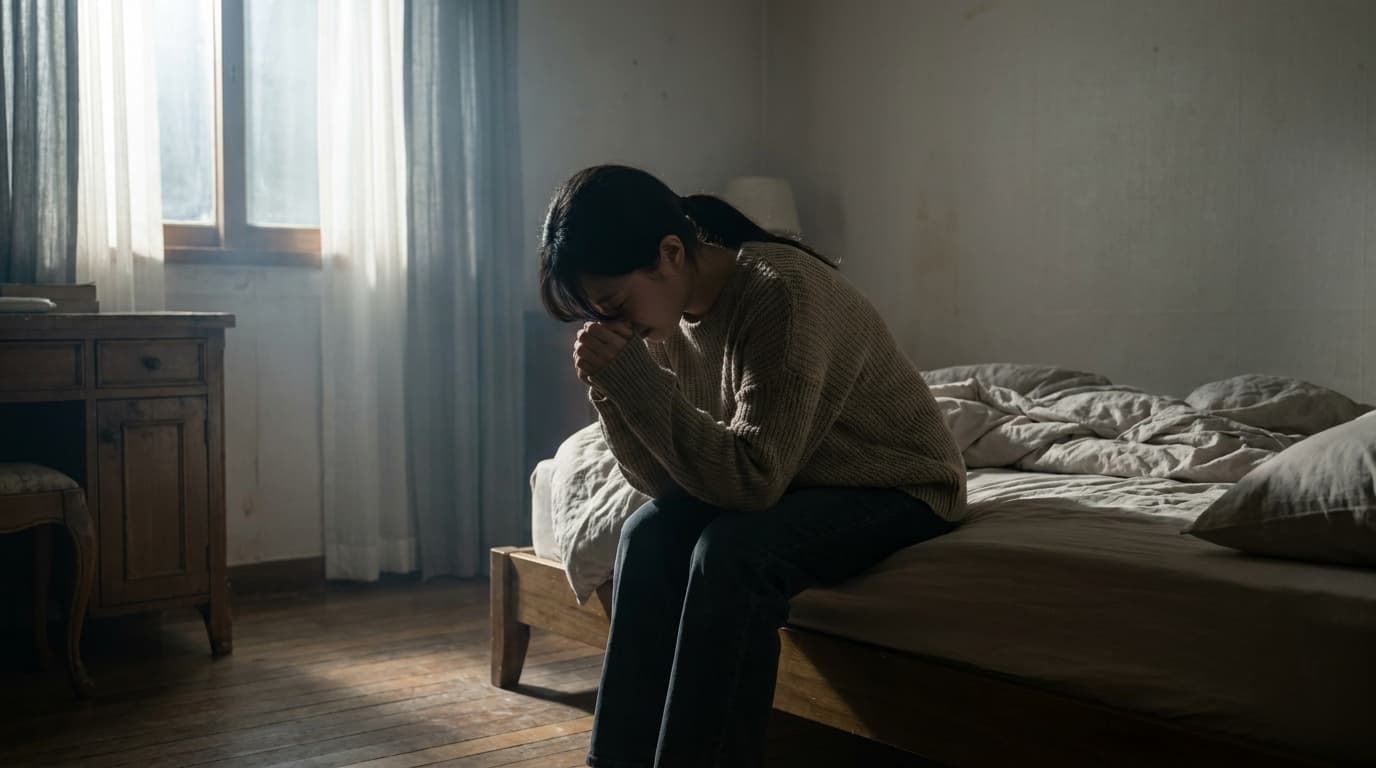
Why You Feel Like Doing Nothing and Cry: Is It Your Autonomic Nervous System Signaling?
Have you ever experienced a sudden reluctance to do anything and found yourself bursting into tears over trivial matters, leaving you bewildered? Perhaps you have been brushing off these emotions as merely 'just a mood' or 'temporary stress'. While many people think such mood swings and lethargy are simply due to being tired, this may actually be a powerful warning sign sent by your autonomic nervous system, our body's vital control system. In this article, we will examine closely why you feel like doing nothing and crying, how these symptoms connect with autonomic imbalance, and find solutions together.
💡 [Key Answer] Top 3 most common causes of why you feel like doing nothing and crying: ① Autonomic nervous system dysfunction caused by excessive stress / ② Brain fatigue accumulation and neurotransmitter imbalance / ③ Energy depletion due to chronic psychological pressure (burnout). Dalimchae Korean Medicine Clinic helps your brain recover and stabilize on its own by correcting autonomic imbalance, the root cause of these symptoms.
Why Does Lethargy Finding It Hard to Do Anything Find Us?
Lethargy, where your whole body lacks energy and even getting out of bed feels burdensome, is not simply caused by a lack of willpower. The autonomic nervous system in our body reacts to stress by hyperactivating the sympathetic nervous system, triggering a 'fight-or-flight' response that rapidly consumes energy. If such stress situations persist, the excessive activation of the sympathetic nervous system disrupts the balance with the parasympathetic nervous system, eventually depleting energy in body and mind and leading to severe lethargy.
Mood Swings with Sudden Tears: What Is the Connection to the Autonomic Nervous System?
Sudden sadness, getting easily angry over minor things, and rapid shifts to depression—these unpredictable emotional changes confuse many people. These mood swings are closely related to the brain's emotional regulation center and can be further amplified when the autonomic nervous system is unstable. The autonomic nervous system not only regulates unconscious bodily functions such as heartbeat, digestion, and respiration, but also plays a crucial role in stress response and emotional regulation. When autonomic balance is broken, the brain reacts excessively to small stimuli, expressed as anxiety, nervousness, depression, and excessive crying.
According to a study published in the 2023 journal "Integrative Medicine Research" on 60 patients complaining of stress-induced depression symptoms treated with oriental medicine (acupuncture, moxibustion, and herbal medicine combined) for 8 weeks, heart rate variability (HRV) analysis confirmed that autonomic nervous system balance was significantly improved. The results showed that Total Power increased by an average of 20% compared to pre-treatment (p<0.01), and specifically the low-frequency/high-frequency (LF/HF) ratio decreased, showing reduced sympathetic hyperactivation and recovered parasympathetic activity. The researchers concluded that these changes were closely related to the decrease in patients' depression and anxiety scale (HAM-D, HAM-A) scores.
Furthermore, a 2021 study in the "Journal of Korean Medical Science" observed 80 adults suffering from chronic stress for 12 weeks regarding the effects of specific herbal prescriptions on stress response and autonomic function. In this study, the herbal medication group showed a 15% average decrease in cortisol levels, a stress hormone, compared to the control group (p<0.05), and SDNN (Standard Deviation of NN intervals) values of HRV, an autonomic balance indicator, increased significantly, showing overall autonomic activity improvement. The research team emphasized that oriental medicine treatment can help alleviate chronic lethargy and mood swings by reducing brain fatigue and improving autonomic regulation capacity. Based on these scientific data, Dalimchae Korean Medicine Clinic Songdo Branch focuses on strengthening the recovery capacity of the brain and autonomic nervous system through personalized oriental medicine treatments.
Autonomic Stabilization: Creating an Environment Where the Brain Rests and Recovers on Its Own
Dalimchae Korean Medicine Clinic diagnoses the core of why people feel like doing nothing and crying as 'brain overload and fatigue caused by autonomic imbalance.' When autonomic balance collapses, the brain cannot rest. Much like a car engine running continuously at high speed overheating, our brain also loses the capacity to protect itself amidst excessive stress and tension. If this state persists, it manifests as various physical and mental symptoms such as depression, lethargy, insomnia, headaches, and dizziness.
Dalimchae Korean Medicine Clinic Songdo Branch aims for autonomic stabilization treatment to fundamentally resolve this issue. This is not simply suppressing symptoms, but lowering neural heat and creating an environment where the brain can rest on its own—in traditional medicine, this is called 'water up, fire down' (수승화강). We help the brain regain balance by stabilizing excessively hyperactive sympathetic nerves and restoring reduced parasympathetic activity. Through this, the brain can increase stress resistance, regulate emotions, and return to a state capable of deep rest. Many people visiting the Songdo Autonomic Nervous Clinic are recovering healthy daily lives through such fundamental treatments.
Could It Be Autonomic Imbalance? Symptom Checklist
Check if any of the following questions apply to you:
- Recently feeling depressed and down for no special reason.
- Having no interest in things that used to be enjoyable.
- Easily annoyed or unable to control anger over minor things.
- Sudden tears bursting out frequently, causing embarrassment.
- Lacking energy in the body and feeling chronic fatigue.
- Difficulty falling asleep or feeling unrefreshed even after sleep.
- Poor digestion, stuffiness, or occasional heart palpitations.
- Always stiff neck and shoulders, frequent headaches or dizziness.
Criteria:
- 3 or more items apply: Suspected autonomic imbalance stage. It is recommended to consider stress management and combined oriental medical treatment.
- 5 or more items apply: Advanced autonomic imbalance stage. Professional diagnosis and active treatment at a Songdo Depression Oriental Clinic are needed.
FAQ: Questions About Why You Feel Like Doing Nothing and Cry
Q. Can symptoms of feeling unmotivated and crying resolve naturally? A. If they are mild symptoms due to temporary stress, they can improve with sufficient rest and self-care. However, if symptoms persist for more than 2 weeks or interfere with daily life, autonomic imbalance is likely advanced, making professional help important.
Q. Can depression be treated with traditional medicine? A. Yes, oriental medicine can be an effective alternative for emotional problems like depression. Traditional medicine views body and mind integrally, helping to alleviate depression and improve overall quality of life by restoring autonomic balance and improving brain function.
Q. How long does treatment take? A. The duration of treatment varies depending on the individual's symptom severity, onset duration, and lifestyle habits. Generally, meaningful improvement can be expected through consistent treatment and management for 3 to 6 months, and Dalimchae Korean Medicine Clinic Songdo Branch offers systematic treatment plans.
Q. Insomnia and headaches accompany this; can they be treated together? A. Yes, insomnia, headaches, and dizziness are often accompanied due to autonomic imbalance. Dalimchae Korean Medicine Clinic pursues an integrated approach to improve various accompanying symptoms together by stabilizing the autonomic nervous system, the root cause of symptoms.
The reason you feel like doing nothing and crying is not a problem that can be solved by simply enduring. You no longer need to turn away from the bodily signals you have been sending for a long time. When approached in the right direction, the body responds faster than you think. Bring the symptoms you are currently experiencing just as they are. Dalimchae Korean Medicine Clinic will find the causes together.
Where life blooms. Herbal medicine is Dalimchae Oriental Clinic. Check out similar symptoms with Dalimchae Korean Medicine Clinic homepage AI consultation first!
Medical Review | Dalimchae Korean Medicine Clinic Songdo Branch Oriental Medicine Doctor Oh Hyunmin (Depression Column) #Depression #Lethargy #AutonomicImbalance #Stress #MoodSwings #SongdoDepressionClinic #SongdoOrientalClinic #OrientalTreatment