
Hello. This is Dalimchae Korean Medicine Clinic.
Wide Awake When Trying to Sleep: Sleepless Nights Must Be Addressed from the Root Cause
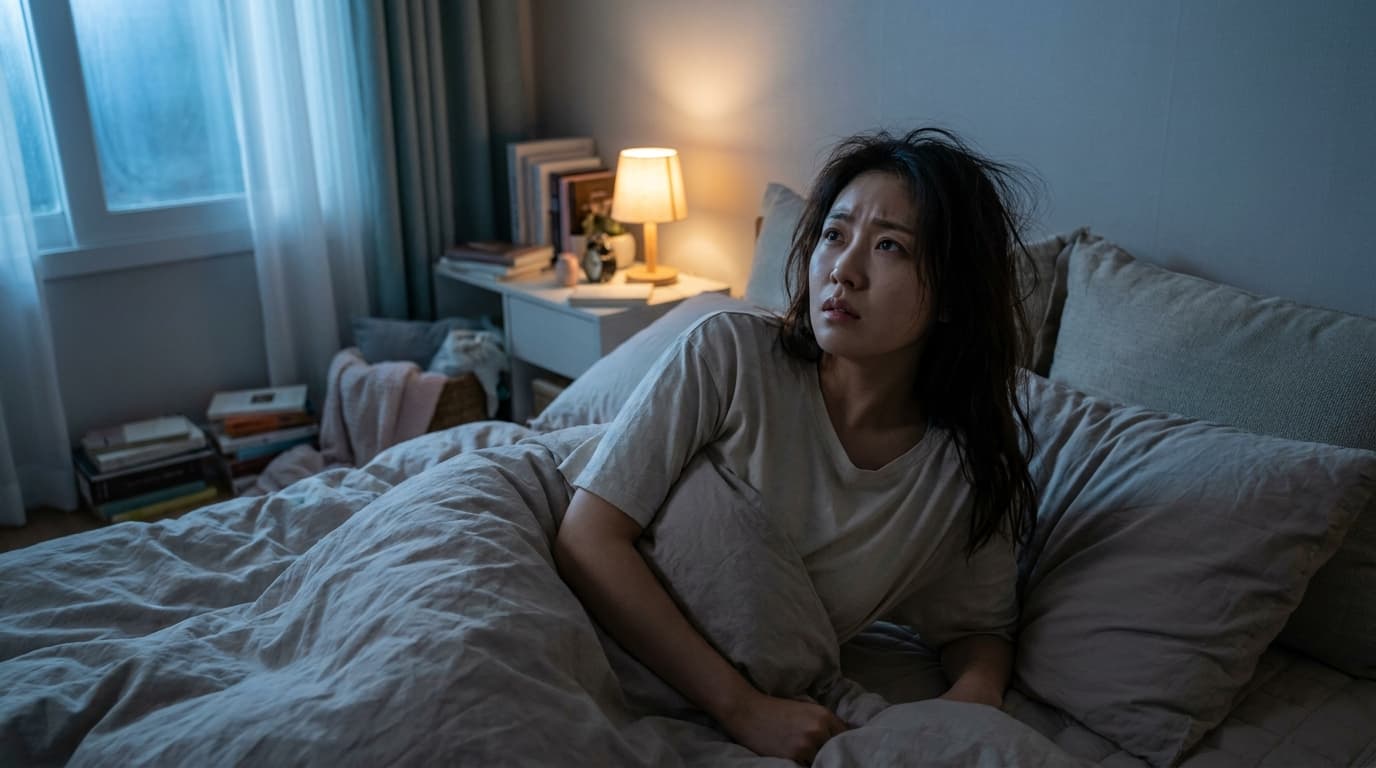
When night falls and you lie in bed, many people spend sleepless nights tossing and turning with racing thoughts despite feeling tired in their body. You might feel even more anxious wondering, 'Am I the only one experiencing this?' Such experiences are not just temporary phenomena caused by being 'sensitive.' Insomnia, which many people complaining of being "wide awake when trying to sleep" experience, can be a sign that something is wrong with important systems in our body. Sleep is far more than simple rest; it is an essential process to recover and reorganize the brain and body damaged during the day. However, if sleepless nights repeat, you lose vitality in daily life and can lead to chronic fatigue, decreased concentration, headaches, dizziness, and further anxiety disorders and depression. Now is the time to accurately identify the reasons for sleepless nights and find fundamental solutions to restore a healthy sleep rhythm.
💡 [Core Answer] 3 most common causes of being "wide awake when trying to sleep": ① Excessively hyperactive sympathetic nerves / ② Restless and hyper-aroused brain waves / ③ Disturbed biological clock (circadian rhythm) Dalimchae Korean Medicine Clinic helps the brain fall asleep comfortably on its own by restoring autonomic balance and cooling brain heat.
Why am I wide awake when trying to sleep at night?
The symptom of feeling clear-headed, having a pounding heart, or constantly staring at the clock despite going to bed suggests a problem with our autonomic nervous system. The autonomic nervous system regulates essential functions for maintaining life, such as heartbeat, breathing, body temperature regulation, and digestion, regardless of our will. This autonomic nervous system is divided into the 'sympathetic nervous system', which is responsible for activity and tension, and the 'parasympathetic nervous system', which is responsible for rest and relaxation. For healthy sleep, the parasympathetic nervous system should be activated at night to induce a relaxed state in the body.
However, when stress, overwork, anxiety, and irregular lifestyle habits persist, the sympathetic nervous system becomes excessively hyperactive, maintaining an emergency state in the body even at night. The symptom of being "wide awake when trying to sleep" is a representative sleep disorder symptom caused by this excessive activation of the sympathetic nervous system. The brain maintains a continuously hyper-aroused state like an engine with a warning light on 24 hours a day, making it difficult to fall into deep sleep.
How does autonomic imbalance disrupt sleep?
Autonomic imbalance, especially sympathetic hyperactivity, induces a hyper-aroused state in the brain. Brain hyperarousal can also be confirmed through brainwave tests, meaning that the brain is not sufficiently relaxed and remains activated even during sleep. In Korean medicine, this is explained as a state where 'Suseunghwagang' (water rises and fire descends) is broken. In other words, cold energy should go down and hot energy should go up to maintain body balance, but autonomic imbalance causes heat to crowd into the head while the lower body becomes cold. When heat rises to the head, the brain stays awake all night without resting, making it difficult to enter deep sleep (NREM sleep) by easily reacting to small sounds or body temperature changes.
Ultimately, the complaint of being "wide awake when trying to sleep" is a clear sign that something is wrong with the recovery system, the autonomic nervous system, and brain function, rather than simple stress. Many people visiting Songdo insomnia Korean medicine clinics suffer from pain caused by this autonomic imbalance, and relying solely on sleeping pills or hypnotics cannot be a fundamental solution. Instead of forcibly paralyzing the brain, it is important to restore autonomic balance and create an environment where the brain can induce healthy sleep on its own.
Is deep sleep without sleeping pills really possible? Scientific basis of Korean medicine insomnia treatment
Solving insomnia fundamentally without relying on sleeping pills is fully possible, and Korean medicine treatment can play an important role in achieving this goal. Recent research results scientifically prove that Korean medicine treatment is effective in improving sleep quality and stabilizing the autonomic nervous system.
In a multi-center clinical study by senior researcher Lee Joon-hwan's team at the Korea Institute of Oriental Medicine (KIOM), reported in various media such as HelloDD, YTN, and Daejeon MBC in 2021, the effect of electroacupuncture treatment was identified in 150 patients suffering from chronic insomnia for 3 months or more. The patient group that received electroacupuncture treatment 10 times in total over 4 weeks showed a reduction of about 47% in the Insomnia Severity Index (ISI) score from an average of 19.02 points before treatment to 10.13 points after the end of treatment (p<0.001), showing a sleep efficiency improvement rate about 1.9 times higher than the sham electroacupuncture treatment group. In addition, anxiety (HADS-A) and depression (HADS-D) scales also improved, and this treatment effect was confirmed to last up to 8 weeks after the end of treatment. The researchers concluded through these results that electroacupuncture treatment reduces the severity of insomnia, improves sleep quality, and contributes to improving anxiety and depressive symptoms. These data support that the autonomic stability treatment pursued by Dalimchae Korean Medicine Clinic is an effective approach to calm brain hyperarousal and induce deep sleep.
How does Dalimchae Korean Medicine Clinic's autonomic stability treatment work?
Dalimchae Korean Medicine Clinic conducts 'autonomic stability' treatment focusing on correcting the autonomic imbalance that causes insomnia. This is not just putting people to sleep, but creating an environment where the brain can rest on its own so that they can regain vitality during the day and sleep comfortably at night.
In the study "A Case Report of an Insomnia Patient Improved by Gamiguibi-tang" reported in the 2024 「Journal of Oriental Neuropsychiatry」, the results of applying Korean medicine treatment (herbal medicine, acupuncture, moxibustion) including Gamiguibi-tang for 1 month to a patient complaining of insomnia due to stress along with cold-heat fluctuation and palpitations were published. The Pittsburgh Sleep Quality Index (PSQI) of this patient improved significantly from 27 points before treatment to 9 points after treatment. In particular, as a result of Heart Rate Variability (HRV) tests to check objective changes in the autonomic nervous system, the mean heart rate (Mean HR) decreased from 94 cycle/min before treatment to 70 cycle/min after treatment, consistent with the improvement of palpitation symptoms. In addition, SDNN, which indicates the coping degree of the autonomic nervous system, increased from 20.827 ms to 28.956 ms, and RMSSD, which indicates parasympathetic control over the heart, also significantly increased from 11.328 ms to 31.133 ms, confirming that the stability and adaptability of the autonomic nervous system improved.
These research results show that autonomic stability treatment improves the sleep quality of insomnia patients and can confirm the recovery of autonomic balance through an objective indicator, HRV. Dalimchae Korean Medicine Clinic Songdo branch focuses on releasing excessive tension of the autonomic nervous system to lower the heat of the nervous system and creating an environment where the brain can rest on its own. In Korean medicine, this is called Suseunghwagang, which is a treatment that lowers the heat soaring upward and fills the deficient energy downward to restore the balance of the whole body. This is a fundamental treatment that maximizes the body's natural healing power to induce deep sleep, rather than inducing sleep in a coercive manner.
Sleepless nights, no longer struggle alone.
Are you experiencing any of the following symptoms? Check the possibility of insomnia and autonomic imbalance through the following checklist.
[Insomnia and Autonomic Imbalance Self-Diagnosis Checklist]
- □ When lying down to sleep, the mind actually becomes more wide awake and there are many stray thoughts.
- □ It takes 30 minutes or more to fall asleep 3 or more times a week.
- □ I wake up frequently in the middle of the night and find it difficult to fall back asleep.
- □ I wake up too early in the dawn and start the day without fatigue being relieved.
- □ I suffer from drowsiness, chronic fatigue, and lethargy during the day.
- □ I experience heart palpitations, stuffiness, indigestion, dizziness, and headaches together.
- □ I easily wake up from small sounds or light, or find it even harder to fall asleep when my sleeping place changes.
- □ I easily tense up and feel anxious in stressful situations.
- □ I am worried about whether taking sleeping pills does not refresh me or dependency on medication.
Criteria:
- If 3 or more apply: Suspected insomnia due to autonomic imbalance. Consider precise diagnosis and complex Korean medicine treatment at Songdo Autonomic Korean Medicine Clinic.
- If 5 or more apply: High possibility of severe insomnia and autonomic ataxia. Active treatment is required, so we recommend visiting immediately for a consultation with an expert.
"Wide awake when trying to sleep" is not a problem that can be solved by enduring it. You no longer need to ignore the body's signals sent for a long time. If you approach in the right direction, your body reacts faster than you think. Bring the symptoms you are experiencing as they are. Dalimchae Korean Medicine Clinic Songdo branch will find the cause together.
Q. How long should insomnia be treated? A. The duration of insomnia treatment varies depending on the individual symptom severity, onset period, and presence of comorbid diseases. Usually, we aim to improve sleep quality and recover autonomic function through steady treatment for 4 to 12 weeks or more.
Q. Can I fall asleep without sleeping pills? A. Yes, it is possible. Dalimchae Korean Medicine Clinic aims for fundamental treatment that helps the brain fall asleep comfortably on its own by restoring autonomic balance, rather than forcibly suppressing the brain like sleeping pills.
Q. I have headaches or dizziness along with insomnia, can they be treated together? A. Insomnia is often accompanied by various symptoms such as headaches, dizziness, and indigestion due to autonomic imbalance. Dalimchae Korean Medicine Clinic's autonomic stability treatment takes an integrative approach that also improves these related symptoms together.
Where life blooms. Herbal medicine is Dalimchae Korean Medicine Clinic. Check symptoms similar to yours first through AI consultation on the Dalimchae Korean Medicine Clinic website!
This health information was organized together by Dalimchae medical staff based on questions actually received frequently in the treatment room. Medical Supervision | Department of Neurology & Autonomic System, Songdo Branch of Dalimchae Korean Medicine Clinic, Korean Medicine Doctor Oh Hyun-min (Insomnia Column)
#insomnia #sleepdisorder #autonomic #songdoinsomnia #koreanmedicine #hyperarousal #hrv #headache #dizziness Brain & Autonomic System - Insomnia