
Hello, this is Dalimchae Korean Medicine Clinic.
Why haven't I had my period for months? Could it be early menopause? For anxious women in their 20s.
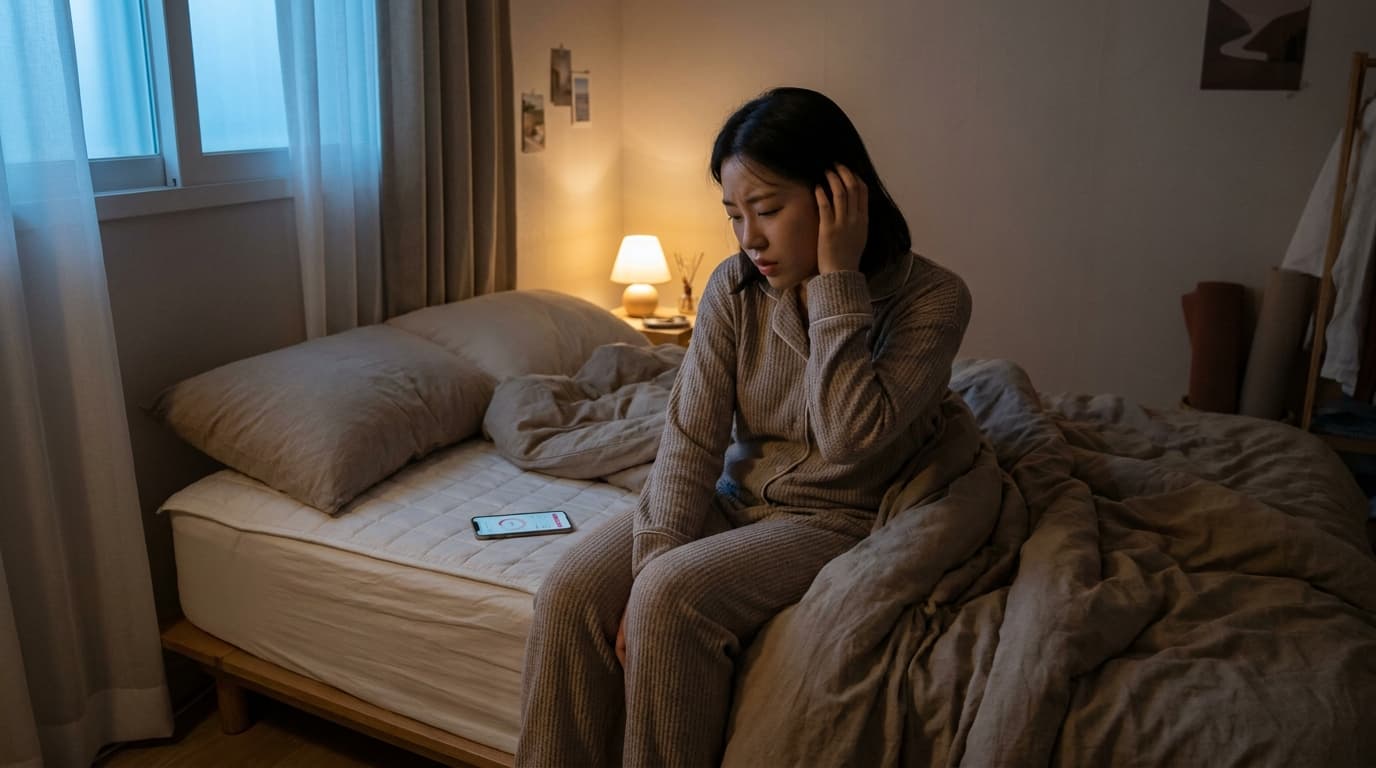
"Doctor, I haven't had my period for several months. Could it be early menopause?" This is one of the most common concerns shared by young women in their 20s visiting Dalimchae Korean Medicine Clinic. When periods skip for a few months after skipping a time or two, anxiety keeps them awake at night, searching online for "20s amenorrhea" or "reasons for missed periods," only to worry more. Especially with rising rates of amenorrhea among young women due to stress, dieting, and irregular lifestyle habits, this is a serious issue that cannot be overlooked. Menstrual cycles are not merely signals of pregnancy; they are vital barometers of female health and important indicators of overall bodily balance, requiring attention to the signals our bodies send.
💡 Key Answer Top 3 most common reasons for not having periods for months: ① Excessive stress and rapid weight changes / ② Hormonal imbalances such as polycystic ovary syndrome (PCOS) / ③ Ovarian function decline and tendency toward early menopause. Dalimchae Korean Medicine Clinic helps restore the body's natural circulation functions through constitutional improvement to naturally regain a healthy menstrual cycle.
Normal menstrual cycles are maintained through the intricate interaction of the hypothalamus-pituitary-ovary-uterus hormone system. If any part of this network experiences a problem, it can lead to disrupted menstrual cycles or amenorrhea where periods stop entirely. The main causes of amenorrhea in young women in their 20s are as follows.
Stress and weight changes disrupt hormonal balance
Women in their 20s today face various stresses from academics, employment, and social life. Excessive stress affects the hypothalamus in the brain, disrupting hormone secretion. Furthermore, drastic dieting or rapid weight changes place immense physical stress on the body, temporarily reducing ovarian function and suppressing ovulation, making it a common cause of amenorrhea. According to 2013 statistics on menstrual irregularity treatment status per 100,000 women by age group, those in their 20s accounted for the highest proportion at 4,298 people. This shows that young women are vulnerable to stress and weight fluctuations, which frequently lead to amenorrhea.
Polycystic ovary syndrome is a common cause of amenorrhea
Polycystic ovary syndrome (PCOS) is one of the most common causes of amenorrhea in young women, characterized by multiple small follicles in the ovaries, ovulatory dysfunction, and increased male hormones. Persistent irregular menstrual cycles may indicate PCOS, and if severe, it can lead to infertility, making early diagnosis and treatment crucial. Korean medicine treatment studies targeting women with PCOS experiencing amenorrhea for 6 months or more have shown an 85.7% improvement rate, proving effective in restoring menstrual cycles.
Ovarian function decline and early menopause are no longer distant stories
The concern of "not having periods for months" often leads to fear of "early menopause," beyond simple menstrual irregularity. Menopause occurring before age 40 is termed early menopause (premature ovarian insufficiency), where ovarian function declines and female hormone secretion decreases, causing menopausal symptoms. Although once considered rare, cases of diminished ovarian function in young women in their 20s and 30s are increasing and require attention. Progression of ovarian function decline not only lowers pregnancy potential but can also cause various health problems such as osteoporosis and cardiovascular disease due to female hormone deficiency.
How does Korean medicine view and treat amenorrhea?
At Dalimchae Korean Medicine Clinic Songdo branch, amenorrhea is not viewed simply as the absence of periods, but as the result of disrupted overall bodily balance. In particular, the uterus and ovaries require smooth "qi and blood circulation"; if qi and blood circulation stagnate due to stress, overwork, coldness, or nutritional imbalance, it can lead to amenorrhea. If periods do not return despite no special abnormalities found in tests, it is highly likely that our body's "autonomous recovery capacity" has weakened.
Confirming the efficacy of Korean medicine through research
A meta-analysis study by Weiping Liu's research team from Guangzhou University of Chinese Medicine, introduced in Hydoc in 2019, demonstrates the positive effects of Korean medicine treatment on patients with premature ovarian failure (POF). In this study, 1,178 women across 12 clinical studies were evaluated, confirming that combined herbal medicine and hormone therapy significantly improved hormone levels such as follicle-stimulating hormone (FSH), luteinizing hormone (LH), and estradiol (E2) and ultrasound results compared to hormone therapy alone. This suggests that Korean medicine treatment goes beyond symptom relief to contribute to hormonal balance recovery.
Furthermore, a 2023 case report study published in the journal Explore (NY) reported that applying 3 months of Korean medicine treatments—including herbal medicine, electroacupuncture, moxibustion, and placenta pharmacopuncture—to patients with premature ovarian failure resulted in all patients resuming menstruation, with one successfully achieving pregnancy. The researchers concluded that these findings demonstrate Korean medicine can improve ovarian function and be effective in restoring menstruation. Based on these data, Dalimchae Korean Medicine Clinic Songdo branch focuses on constitutional improvement treatments that help women's bodies naturally regain hormonal balance and enable ovaries and the uterus to function healthily.
Dalimchae Korean Medicine Clinic constitutional improvement treatment: Turning the body's power switch back on
Dalimchae Korean Medicine Clinic proposes constitutional improvement treatment for young women suffering from amenorrhea. The goal goes beyond merely inducing periods; it aims to build a body where symptoms do not recur. Tailored treatment plans are established by thoroughly diagnosing each patient's constitution, health status, and causes of amenorrhea.
- Ovarian and uterine function-strengthening herbal medicine: Customized herbal medicine is prescribed according to individual constitution and symptoms to replenish qi and blood, remove stasis, and warm the uterus, restoring ovarian and uterine functions and regulating hormone balance. It increases blood flow to the ovaries and supports healthy follicle growth.
- Acupuncture and moxibustion treatment: Promotes blood circulation around the uterus and ovaries, unblocks stagnant energy to activate ovarian function, and smooths overall qi and blood circulation to enhance the body's recovery capacity. In particular, it improves lower abdomen coldness to create a healthy uterine environment.
- Lifestyle correction: Helps maintain healthy lifestyle habits such as stress management, regular diet, moderate exercise, and sufficient sleep. Avoiding drastic dieting or excessive exercise and keeping the body warm is important.
These constitutional improvement treatments help reduce the risks of infertility and early menopause caused by amenorrhea and help regain healthy menstrual cycles. In particular, Dalimchae Korean Medicine Clinic Songdo branch focuses on fundamental treatment to help women's bodies regain their own rhythm.
Could I also have amenorrhea? Self-diagnosis checklist
If 3 or more of the following symptoms apply to you, it is recommended to suspect amenorrhea and diminished ovarian function and consult a professional medical institution.
- You have not had a period for 3 months or more recently.
- Your menstrual cycle has become increasingly irregular or extended beyond 40 days.
- Your menstrual volume has significantly decreased compared to before, or the menstrual period has shortened.
- You experience menopausal-like symptoms such as hot flashes, sweating, and emotional mood swings.
- You feel severe fatigue and loss of energy for no special reason.
- You have experienced high stress or rapid weight changes.
- You suffer from severe cold hands/feet or cold lower abdomen.
When 3+ items apply: Suspected diminished ovarian function -> Consult with Dalimchae Korean Medicine Clinic Songdo branch (women's disease clinic) to review combined Korean medicine treatments. When 5+ items apply: Immediate clinic visit recommended -> Accurate diagnosis and customized treatment are urgent.
FAQ: Frequently asked questions about amenorrhea
Q. I am in my 20s and haven't had my period for months. Could it be early menopause? A. Amenorrhea in your 20s does not necessarily mean early menopause. There can be various causes such as stress, dieting, or polycystic ovary syndrome. However, leaving it untreated can lead to diminished ovarian function, making accurate diagnosis and treatment important.
Q. How long should amenorrhea be treated for periods to return? A. Treatment duration varies depending on individual causes, duration, and body condition. Generally, menstrual cycles recover through 3 months or more of consistent treatment and lifestyle improvements.
Q. How do herbal treatments differ from inducing periods with contraceptive pills? A. Contraceptive pills artificially induce periods by injecting external hormones. In contrast, Korean medicine treatment aims for fundamental recovery by helping the body restore hormone balance on its own and strengthening ovarian and uterine functions to naturally resume menstrual cycles.
Q. What problems can occur if amenorrhea is left untreated? A. Leaving amenorrhea untreated for a long period can lead to infertility, and female hormone deficiency can adversely affect overall health, increasing risks of decreased bone density and cardiovascular disease.
Amenorrhea is not a problem that can be resolved by enduring it. You no longer need to ignore the signals your body has been sending for a long time. When approached in the right direction, your body responds faster than you think. Bring the symptoms you are currently experiencing just as they are. Dalimchae Korean Medicine Clinic will find the causes together with you.
The place where life blossoms. Herbal medicine is Dalimchae Korean Medicine Clinic. Check your similar symptoms first through the Dalimchae Korean Medicine Clinic website AI consultation!
Medical Supervision | Women & Pregnancy Care Standards, Dr. Oh Hyun-min, Korean Medicine Doctor, Songdo Branch, Dalimchae Korean Medicine Clinic (Early Menopause Column)