
Hello. This is Dalimchae Clinic.
Ringing in My Ears: Exam-Related Tension Tinnitus, Could It Be You?
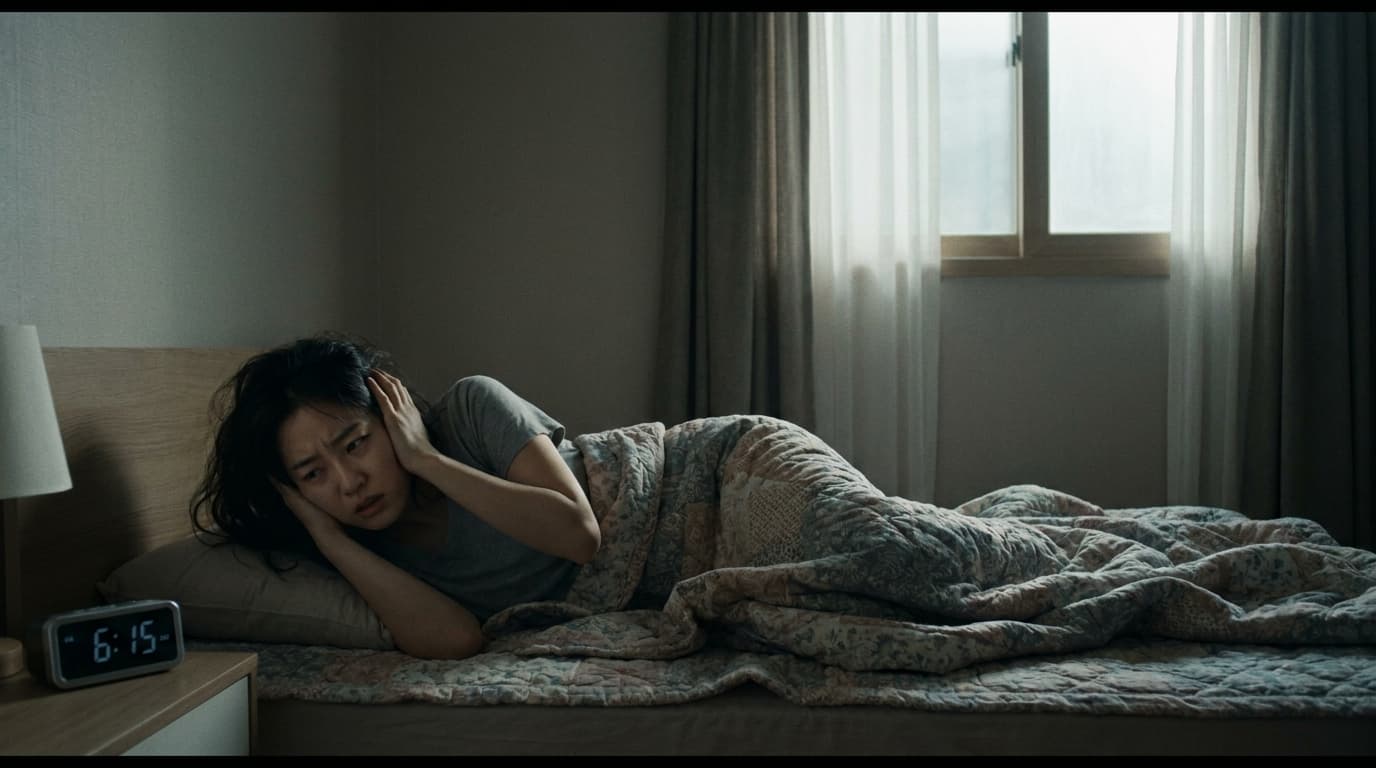
If you are studying day and night ahead of an important exam, you might suddenly notice a sharp 'beep' sound in your ears. At first, you might brush it off, but over time, the sound gets louder and more irregular, disrupting your concentration and even making it hard to sleep. Have you gone to the hospital only to be told "there's nothing unusual," leaving you sighing in frustration? Tinnitus, which becomes particularly severe not only for students facing important tasks or exams but also when stress is extreme, is it simply a problem with the ears?
💡 [Key Answer] The 3 most common causes of the symptom "Ringing in My Ears": ① Stress and tension / ② Autonomic nervous system imbalance / ③ Brainstem function decline Dalimchae Clinic creates an environment where the brain can recover on its own through autonomic stability, breaking the vicious cycle of tinnitus.
Why does tinnitus occur especially when stress is severe?
Tinnitus is a symptom where you hear a 'beep', 'ringing', or 'swish' sound in your ears or head even without external sound stimuli. While many people think of tinnitus as solely an ear problem, it is actually closely connected to overall health such as stress, overwork, and lack of sleep. In particular, mental stress like tension and anxiety from studies or work is cited as a major cause of triggering or worsening tinnitus. This is because stress directly affects our body's autonomic nervous system.
The autonomic nervous system regulates overall life activities such as heart rate, respiration, digestion, and blood circulation regardless of our will. When stressed, the sympathetic nervous system is excessively activated while the parasympathetic nervous system is suppressed, breaking the balance of the autonomic nervous system. This imbalance can reduce blood flow to the brain and ears, make auditory nerves hypersensitive, and affect brainstem functions, triggering abnormal sensations like tinnitus.
The autonomic nervous system is divided into sympathetic and parasympathetic nerves to maintain body balance. When stress repeats, our body always recognizes it as an 'emergency state' and excessively hyperactivates the sympathetic nervous system, maintaining a state of tension. This hyperactivation constricts microvessels around the ears and hinders blood circulation, making it difficult to supply necessary nutrients and oxygen to auditory cells. In addition, the brain is placed in an excessively excited state, reacting sensitively even to small stimuli, making even non-existent sounds seem loud.
A 2013 study analyzed the autonomic state of tinnitus patients through Heart Rate Variability (HRV). Comparing 40 tinnitus patients (19 acute, 21 chronic) with 40 healthy controls, the study revealed that high-frequency components (HF) and total power (Total Power) of HRV significantly decreased, and the low-to-high frequency ratio (LF/HF ratio) significantly increased in the tinnitus group (p<0.05). This means tinnitus patients experience decreased parasympathetic activity and sympathetic hyperactivation. These autonomic changes were especially pronounced in chronic tinnitus patients. The researchers concluded that this provides evidence that Oriental medical treatments like acupuncture or qigong training can modulate cardiac autonomic function to improve tinnitus. Based on these data, Dalimchae Clinic views tinnitus not just as an ear problem, but as a systemic problem caused by autonomic imbalance, focusing on autonomic stability treatment.
How does Dalimchae Clinic's autonomic stability treatment manage tinnitus?
Dalimchae Clinic Incheon branch approaches tinnitus problems caused by stress and autonomic imbalance in-depth. Rather than simply suppressing the sound in the ears, it restores the balance of the autonomic nervous system—our body's most fundamental control system—creating an environment where the brain can recover and stabilize itself.
When the balance between the brain and autonomic nervous system collapses, the brain cannot rest and continues to operate like an overheated engine. In Oriental medicine, this is explained as the disharmony of 'Water Up, Fire Down' (水昇火降). Unlike the ideal state where the head is cool and the lower abdomen is warm, an imbalance occurs where heat gathers in the head and the lower abdomen becomes cold. Dalimchae Clinic's autonomic stability treatment focuses on lowering this excessive heat in the nervous system and creating an environment where the brain can rest comfortably.
A study published in the 2025 'World Journal of Clinical Cases' by Dr. Hwang Ji-hye and Dr. Choi Kyung's team demonstrated the effectiveness of combination Oriental medical treatment for chronic tinnitus. This study targeted a 35-year-old female patient suffering from left-sided tinnitus, headache, and neck pain for over 10 years. As a result of 11 sessions of combined Oriental medical treatment including acupuncture and Chuna therapy, the patient's Tinnitus Handicap Inventory (THI) score improved significantly from 68 to 0, Headache Impact Test-6 (HIT-6) score from 64 to 36, and Neck Disability Index (NDI) score from 21 to 0. Notably, tinnitus showed great improvement after just 2 sessions, intermittent tinnitus completely disappeared after 9 sessions, and the effect was maintained during the 2-month follow-up period. This suggests that personalized combination Oriental medical treatment is effective in improving chronic tinnitus and accompanying symptoms. Dalimchae Clinic Incheon branch also treats each patient by identifying the causes of autonomic imbalance through this personalized approach.
If 3 or more of the following items apply to you, it is recommended to suspect tinnitus due to stress and autonomic imbalance and receive professional consultation at an Incheon Tinnitus Clinic like Dalimchae Clinic Incheon branch.
- Currently experiencing excessive stress or tension.
- Hearing 'beep', 'ringing', or 'swishing' sounds in the ears, making it hard to concentrate.
- Sleep quality has worsened, making it hard to fall asleep or waking up frequently.
- Frequently experiencing headaches or dizziness.
- The back of the neck or shoulders are frequently stiff and sore.
- Frequently feeling heart palpitations, anxiety, or restlessness.
- Often experiencing indigestion or feeling stuffy.
If 3+ apply: Suspect autonomic imbalance-type tinnitus → Consider Oriental combination treatment If 5+ apply: Immediate visit and precise diagnosis recommended
Tinnitus can be accompanied by insomnia, headaches, or dizziness, and in severe cases can lead to depression or anxiety disorders. When these symptoms appear complexly, Dalimchae Clinic, an Incheon Autonomic Nervous System Clinic, provides treatment considering the harmony of the entire body.
Q. How long does tinnitus treatment take? A. The duration of tinnitus treatment varies depending on the severity of symptoms, duration of tinnitus, cause, and health condition. Acute tinnitus can improve in a relatively short period, but chronic tinnitus requires steady treatment and management, usually expecting 2 to 3 months or more of treatment.
Q. Can tinnitus be managed after treatment with Oriental medicine? A. Rather than post-treatment management, tinnitus treatment focuses on symptom improvement and relief of daily discomfort. Oriental medical treatment aims to improve the root cause of tinnitus—autonomic imbalance—reduce the brain's hypersensitivity, lower the loudness and awareness of the tinnitus sound, and improve quality of life.
Q. Is it okay that the 'beep' sound only happens when stress is severe? A. Tinnitus that appears only when stress is severe is also an important signal sent by the body. Appropriate management in the early stages to restore autonomic balance can prevent progression to chronic tinnitus. If left neglected, symptoms can become fixed, so it is advisable to consult early.
Q. Tinnitus, dizziness, and headaches are present together. Can they be treated together? A. Yes, tinnitus, dizziness, and headaches are closely related to autonomic nervous system imbalance and often appear together. Dalimchae Clinic's autonomic stability treatment aims to integratively improve not only tinnitus but also these accompanying symptoms.
Tinnitus is not a problem to be endured and solved. You no longer have to ignore the body's signals you have sent for a long time. When approached in the right direction, the body responds faster than you think. Bring the symptoms you are experiencing just as they are. Dalimchae Clinic will find the cause together.
A place where life blooms. Herbal medicine is Dalimchae Clinic. Check your similar symptoms first through Dalimchae Clinic website AI consultation!
This health information was compiled together by Dalimchae medical staff based on questions frequently received in the clinic room. Medical Supervision | Brain & Autonomic Nervous System Treatment Standards, Dalimchae Clinic Incheon Branch, Korean Medicine Doctor Yang Yu-chan (Tinnitus Column)