
Hello, this is Dalimchae Korean Medicine Clinic.
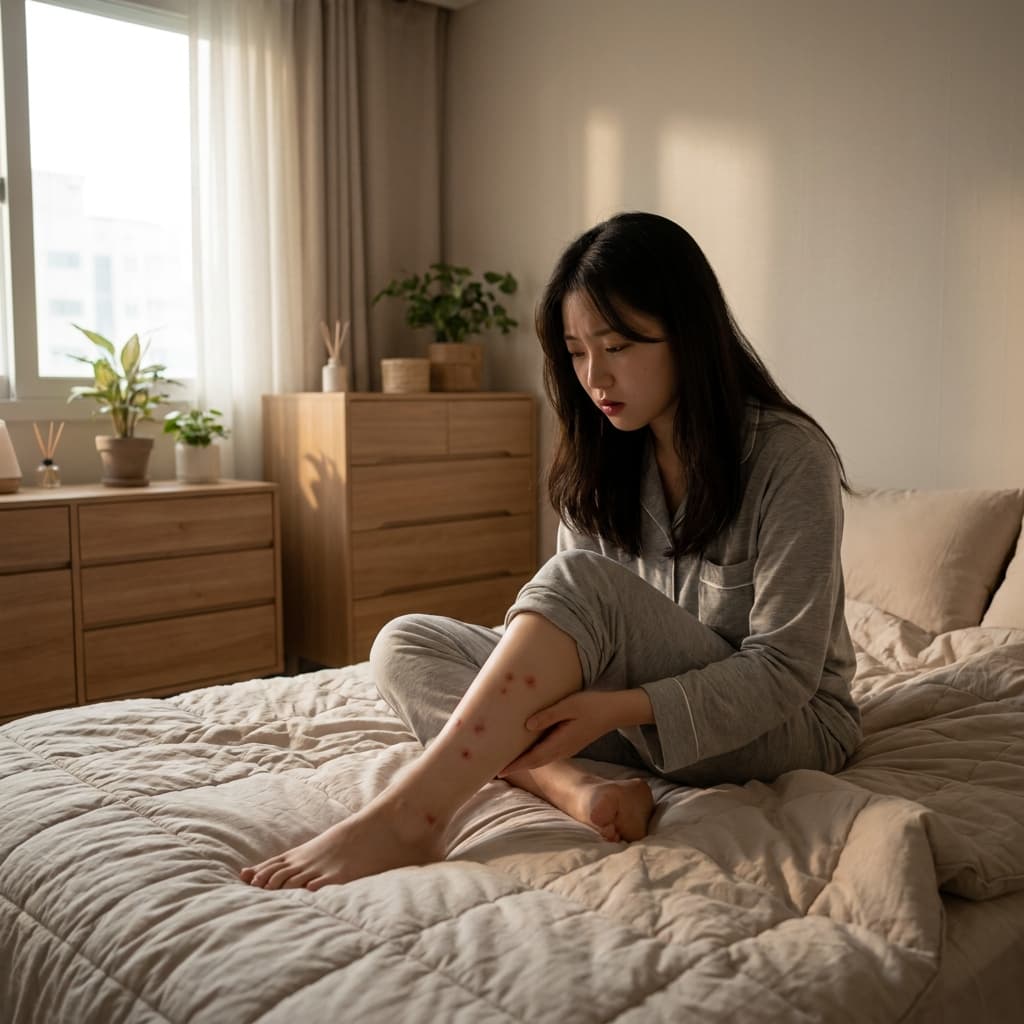
Red Spots Spreading on Legs, Could It Be Purpura?
Have you ever experienced sudden red spots appearing on your legs that gradually spread wider over time? At first, you might have thought nothing of it, but when the spots don't disappear and instead are accompanied by itching, pain, or even abdominal pain, anxiety inevitably grows. These symptoms may not just be skin problems, but a signal that something is wrong with our immune system, and you need to suspect 'purpura'. In particular, allergic purpura (Henoch-Schönlein purpura) is common in children, but it also occurs in adults, and if it becomes chronic, there is a risk of kidney complications, making early diagnosis and treatment important.
💡 [Core Answer] Top 3 most common causes of red spots spreading on legs: ① Vascular inflammation due to immune system imbalance / ② Increased permeability and bleeding of small capillaries / ③ Hypersensitivity reaction to external factors (infection, medication, stress) Dalimchae Korean Medicine helps restore fundamental immunity and vascular health through constitution improvement.
Why red spots appear on legs: It is not a simple skin problem.
Red spots appearing on the legs, namely purpura (紫斑), are a phenomenon where blood leaks out of the skin. This is often not simply a surface skin problem, but occurs because inflammation occurs in the small blood vessels inside our body, weakening them and causing bleeding. In particular, 'allergic purpura' is regarded as a type of autoimmune response where the immune system overreacts to specific causes (upper respiratory infections such as colds, medications, food, etc.) and attacks its own blood vessels. When inflammation occurs in blood vessels, blood components leak out and create red spots on the skin.
At first, it appears like small dots on areas where gravity acts heavily, such as the legs or ankles, but when severe, it can spread to the buttocks, arms, and even the abdomen or face. The problem is that such purpura can be accompanied by various systemic symptoms besides skin symptoms, such as joint pain, abdominal pain, vomiting, and hematuria or proteinuria due to kidney involvement. Especially in adults, the probability of kidney involvement is higher than in children, and there is a risk of progressing to chronic renal failure, so active treatment is necessary.
How does Korean medicine view and treat purpura?
In Korean medicine, purpura is not simply viewed as a bleeding phenomenon appearing on the skin, but is interpreted as the result of a broken balance within the body. Classically, it has been recorded as 'balban (發斑)', 'podo-yeok (葡萄疫)', and 'hyeolpungchang (血風瘡)', and it is believed that blood vessels are damaged and bleeding occurs due to various causes such as blood heat (血熱), toxins (熱毒), blood stasis (瘀血), and Qi deficiency (氣虛).
In treating purpura, herbal medicine plays an important role in symptom alleviation and recurrence prevention. Tailored to the patient's constitution and symptoms, herbs that improve blood circulation, reduce inflammation, and enhance immunity are used.
According to a report by Kim Sung-gyun's research team published in the Journal of Pharmacopuncture in 2014, when Jarotang (a herbal medicine) alone was administered to 5-year Henoch-Schönlein purpura (HSP) patients showing Yin deficiency (陰虛) symptoms, it was confirmed that symptoms improved in all patients. Lower body purpura and abdominal pain, which were not controlled by steroids before treatment, disappeared, and the condition was maintained without recurrence for up to 6 months after the end of treatment. The researchers concluded that despite the limited number of cases, Jarotang can be an effective and safe treatment for Yin deficiency-type HSP patients.
In addition, a clinical review study on 106 cases of allergic purpura by Dr. Han Dong-ha, published in the Journal of Internal Korean Medicine in 2007, showed positive results where Korean medical treatment lowered steroid dependency and significantly reduced recurrence rates through immune stabilization effects. In particular, it showed low recurrence rates in pediatric patients, and positive effects were also reported in adult patients. These studies suggest that the Korean medical approach to purpura goes beyond simply suppressing symptoms, contributing to stabilizing the body's immune system and fundamentally improving vascular health. Dalimchae Korean Medicine aims for constitution improvement treatment that closely diagnoses each patient's physical state to solve the causes of purpura and prevent recurrence based on these research results.
Dalimchae Korean Medicine's constitution improvement: Correcting immunity as if 'rechecking a fading fire'.
For immune diseases like purpura, it is important not just to suppress symptoms, but to reorganize the body's fundamental system so that symptoms do not occur again. Dalimchae Korean Medicine aims through constitution improvement to create a body where symptoms are not turned back on, rather than just putting them out.
Our body's immune system plays an important role in protecting the body from external invaders, but when disturbances occur in the immune system due to stress, overwork, poor dietary habits, environmental pollution, etc., it can develop into an autoimmune disease attacking itself. Purpura is also a case where the immune system mistakenly recognizes its own blood vessels as foreign substances and causes inflammation.
Dalimchae Korean Medicine's constitution improvement treatment is conducted in the following directions:
- Immunity Stabilization: Calms our body's hypersensitive immune response and helps restore normal immune function. Dalimchae Songdo Branch prescribes herbal medicine that lowers blood heat and reduces inflammation to prevent vascular damage.
- Blood Circulation Improvement and Blood Stasis Removal: Promotes blood circulation in damaged blood vessel areas, removes stagnant blood stasis (dead blood), and helps new tissue regeneration.
- Gut Health Enhancement: The gut is an important immune organ where about 70% of our body's immune cells exist. If gut health collapses, it can lead to immune system disturbance, so gut function is strengthened to lay the foundation of immunity.
- Individualized Custom Treatment: Even with the same purpura, the causes and symptom patterns vary for each patient. Dalimchae Korean Medicine Songdo Branch grasps the patient's constitution and pathology through precise diagnosis, and maximizes treatment effect by combining 1:1 custom herbal medicine prescription, acupuncture treatment, and pharmacopuncture treatment.
Such constitution improvement treatment helps stabilize the immune system and restore vascular health, helping you escape the vicious cycle of recurrence and regain a healthy daily life. Purpura is closely related to low immunity beyond just red spots, so it is common to experience other skin diseases like hives and atopic dermatitis together.
Purpura self-diagnosis checklist
If you correspond to 3 or more of the following items, it is recommended to suspect purpura and consult an expert.
- Red or purple spots have formed on specific areas such as legs, ankles, and buttocks.
- You have had a cold or other infectious disease before spots appeared.
- Spots do not disappear even when pressed.
- Joint pain (especially knees, ankles), abdominal pain, or vomiting symptoms appear along with spots.
- Spots tend to worsen or recur when fatigue and stress are severe.
- Hematuria or proteinuria has been observed in urine.
- Symptoms do not improve or repeatedly recur even after receiving steroid treatment.
When 3 or more apply: → Purpura suspicion stage → Recommended to review accurate diagnosis and Korean medical treatment possibility at Dalimchae Korean Medicine Songdo Branch. When 5 or more apply: → Immediate visit, precise diagnosis, and treatment are important to prevent further progression.
Q. Can purpura heal naturally? A. Some mild pediatric purpura cases improve naturally, but in adult purpura, severe symptoms, or cases accompanied by kidney complications, natural improvement is difficult to expect. Leaving it unattended can lead to chronic conditions or serious aftereffects such as kidney function damage, making early treatment and management very important.
Q. How long does purpura treatment take? A. Purpura treatment duration varies depending on the patient's symptom severity, onset cause, constitution, and treatment response. It usually takes several weeks to several months, and steady management for recurrence prevention is also important. Dalimchae Korean Medicine flexibly establishes a treatment plan tailored to your condition.
Q. Are purpura and vasculitis the same disease? A. Purpura means the appearance of red spots on the skin, and vasculitis refers to a disease where inflammation occurs in blood vessel walls. Allergic purpura is a representative case where purpura occurs due to vasculitis, and you can understand it as a type of purpura. In Korean medicine, symptoms are similar, so there are often no major differences in treatment methods.
Q. Does herbal medicine burden the kidneys? A. Herbal medicine used for purpura treatment does not damage kidney function; rather, it can help improve kidney involvement symptoms. In research cases by Dongkyung Korean Medicine Clinic, single administration of Jarotang showed results where kidney involvement symptoms such as hematuria and proteinuria in nephritis patients improved. Dalimchae Korean Medicine prescribes safe and effective herbal medicine considering each patient's health status.
If you are feeling anxious because red spots are spreading on your legs, do not suffer alone anymore. You no longer have to ignore the body's signals sent for a long time. When approached in the right direction, the body responds faster than you think. Bring the symptoms you are experiencing right now as they are. Dalimchae Korean Medicine will find the cause together.
Where life blossoms. Herbal medicine is definitely Dalimchae Korean Medicine. Check similar symptoms first through Dalimchae Korean Medicine homepage AI consultation!
This article is health information organized together by Dalimchae medical staff based on questions frequently received in the clinic room. Medical Supervision | Skin Disease Treatment Standard Dalimchae Korean Medicine Songdo Branch Korean Medicine Doctor Oh Hyunmin (Purpura Column) #Purpura #RedSpots #ImmuneSystem #SongdoPurpuraClinic #ConstitutionImprovement #SkinDisease #Vasculitis #AllergicPurpura Immunity - Supplement Therapy - Allergy Immunity