
Hello, this is Dalimchae Clinic.
Reasons Why Your Breath Catches and Hands Tremble. Could It Be Panic Disorder?
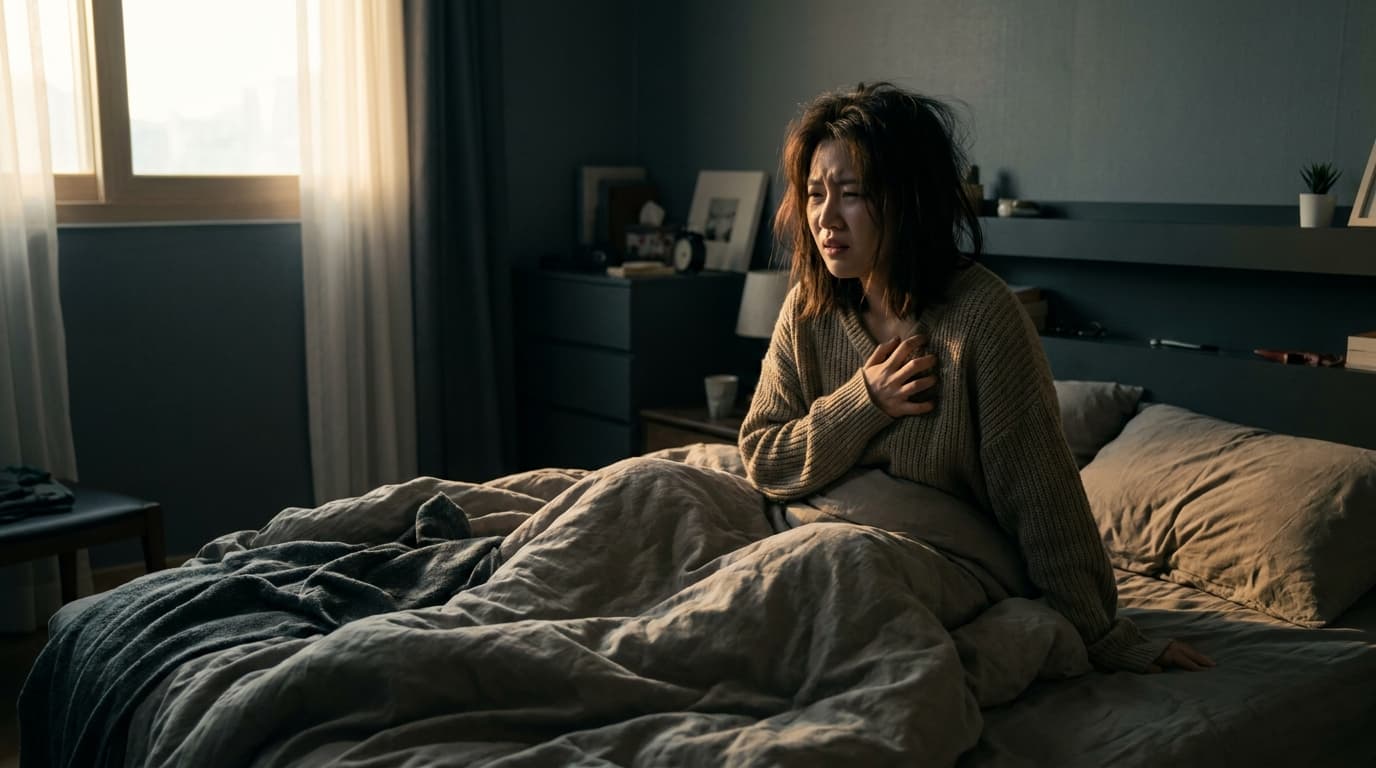
Does your breath suddenly catch, your heart pound as if it will burst, your hands and feet tremble, and cold sweat break out? You might have visited the emergency room due to intense fear of dying, only to be told that your test results are "normal." These unexplained symptoms shake your daily life and bring anxiety: "Am I really in big trouble?" Many people visit Dalimchae Clinic Incheon branch to find the reasons behind these unexplained sufferings.
💡 [Core Answer] The 3 most common reasons why your breath catches and hands tremble: ① Autonomic Imbalance / ② Excessive Stress Response / ③ Brain Overload and Fatigue Dalimchae Clinic turns off your body's warning lights and helps you regain the power to recover on your own through autonomic stabilization treatment.
Why does it feel like your breath suddenly catches and your hands tremble?
Most of these symptoms are closely related to a phenomenon called "panic attack." A panic attack is a state where intense anxiety and various physical symptoms occur simultaneously at unexpected moments. Our body's autonomic nervous system plays an important role in maintaining life activities. When the balance of the autonomic nervous system is broken due to stress or overwork, the sympathetic nervous system becomes excessively hyperactive. The sympathetic nervous system prepares the body for an emergency; when overly activated, it causes rapid heartbeat, shortness of breath, elevated blood pressure, and muscle tension, leading to hand tremors and other symptoms. These physical symptoms send a signal back to the brain that "there is danger," maximizing fear, which in turn creates a vicious cycle that further activates the sympathetic nervous system.
Is panic disorder different from simple anxiety symptoms?
While everyday anxiety stems from worry about a specific situation or object, the core of panic disorder is unpredictable panic attacks. It is sometimes accompanied by "agoraphobia," the fear of having symptoms in enclosed or hard-to-help places like subways or elevators. As a result, patients avoid certain places or situations, narrowing their radius of life and suffering. It is important to understand panic disorder not merely as a mental issue, but as a "body warning light" stemming from functional changes in the brain and malfunction of the autonomic nervous system.
Why do I keep hurting even when tests show nothing wrong?
Many panic disorder patients undergo various tests at emergency rooms or multiple hospitals, only to be diagnosed with no special abnormalities. This is because panic disorder is not a structural problem of the heart or lungs themselves, but a functional problem of the autonomic nervous system that regulates heart rate and breathing. Since the autonomic nervous system is not a visible organ, it is difficult to identify abnormalities through general tests.
However, research actively measuring autonomic activity and balance through Heart Rate Variability (HRV) tests is underway. In a study by Jin-goo Lee's research team published in Clinical Psychopharmacology and Neuroscience in 2025, predicting panic disorder symptom severity by integrating psychological scales and HRV in 507 panic disorder patients confirmed that prediction accuracy significantly improved when HRV data was used together (F1-score 76.50%, sensitivity 75.35%). The researchers concluded that this objectively demonstrates the link between panic disorder and autonomic imbalance, and that HRV can serve as a useful biomarker for psychiatric disorder evaluation.
These objective indicators go beyond subjective complaints and serve as important clues for Dalimchae Clinic to accurately grasp autonomic problems and establish customized treatment plans. Do not be discouraged by the phrase "normal on tests." The signals your body sends have clear reasons.
How can panic disorder be overcome through oriental medical treatment?
Dalimchae Clinic Incheon branch finds the fundamental cause of panic disorder in the imbalance of the autonomic nervous system, restoring this balance to help the body regain homeostasis on its own. In oriental medicine, symptoms like panic attacks are diagnosed as "Simdamheogeop (heart and gallbladder timidity)" or "Giheolyeoknan (qi and blood turbulence)," focusing on calming excessive excitement of the brain and nervous system and harmoniously restoring the functions of the viscera.
In a study by Hyun-jun Kim's research team at the Korea Institute of Oriental Medicine published in the Journal of John Wiley & Sons, Ltd. in 2004, the efficacy of the herbal medicine Ondamtanggamibang was evaluated in a randomized controlled study of 40 healthy medical students. The results showed that the group taking herbal medicine during exam stress had significantly reduced systolic blood pressure, norepinephrine, and cortisol levels compared to the placebo group, and showed positive changes in psychological variables such as anxiety, depression, stress, and emotional state. The researchers stated that these results suggest herbal medicine can stabilize the sympathetic nervous system and reduce stress-related psychoneuroendocrine responses.
Oriental medical treatment does not simply suppress symptoms; it lowers excessive heat in the nervous system and creates an environment where the brain can rest comfortably, helping the body find balance on its own. Oriental medicine calls this "Suseunghagang (water ascending and fire descending)," meaning that when the head is cool and the lower abdomen is warm, the body and mind become healthy. Dalimchae Clinic's autonomic stabilization treatment calms the brain and nervous system according to individual constitution and symptoms, increasing resistance to stress and reducing the frequency and intensity of panic attacks. Many people visiting the Incheon panic disorder clinic are regaining peaceful daily lives through this oriental medical treatment.
Panic Disorder Self-Diagnosis Checklist
Count how many of the following questions apply to you.
- Unexpectedly intense fear along with breathing difficulties occurs.
- Heart pounds as if it will burst or chest pain is felt.
- Hands and feet feel numb or tremble, and cold sweat flows.
- Overwhelmed by a feeling of dying or going crazy.
- Always anxious and worried that such panic attacks will return.
- Avoiding certain places (subways, elevators, etc.) or situations for fear panic attacks will occur.
- Experiencing other physical symptoms such as dizziness, headache, or indigestion.
- Sleep disorders such as difficulty falling asleep or waking up frequently during sleep.
- Tendency for symptoms to worsen when stressed.
Judgment Criteria:
- 3 or more items apply: Suspected autonomic imbalance-type panic disorder. Consider herbal complex treatment.
- 5 or more items apply: Stage requiring active treatment. Immediate visit is recommended.
Q. How often do panic attacks occur? A. The frequency of panic attacks varies greatly from person to person. At first, they may appear once every few months, but gradually become more frequent to once a week or even multiple times a day.
Q. Can panic disorder be treated with oriental medicine? A. Yes, panic disorder can be sufficiently improved with oriental medicine treatment. Dalimchae Clinic Incheon branch helps restore the balance of the autonomic nervous system to reduce brain overload and help the body build resistance to stress on its own.
Q. Can panic disorder be cured without medication? A. While medication helps alleviate symptoms, many consider oriental medical treatment due to concerns about drug dependence or side effects. Oriental medical treatment aims to resolve the root causes of symptoms and build a body that can recover on its own without medication.
Q. Can panic disorder and anxiety disorder be treated together? A. Yes, since panic disorder and anxiety disorder often share the common root of autonomic imbalance, they can be treated together. Dalimchae Clinic provides integrated treatment considering the patient's overall symptoms and constitution.
Breathing difficulties and hand tremors are not problems solved by endurance. You no longer have to ignore the signals your body has sent for a long time. When approached in the right direction, the body responds faster than you think. Bring the symptoms you are experiencing right now as they are. Dalimchae Clinic will find the cause together with you.
Where life blooms. Herbal medicine is, of course, Dalimchae Clinic. Check your similar symptoms first through Dalimchae Clinic website AI consultation!
Medical Supervision | Brain & Autonomic Nervous System Treatment Standard Dalimchae Clinic Incheon Branch Oriental Medicine Doctor Yang Yoo-chan (Panic Disorder Column)