
Hello. This is Dalimchae Korean Medicine Clinic.
[Postpartum Menstrual Overload] Postpartum Abnormal Uterine Bleeding, Stop Worrying Now
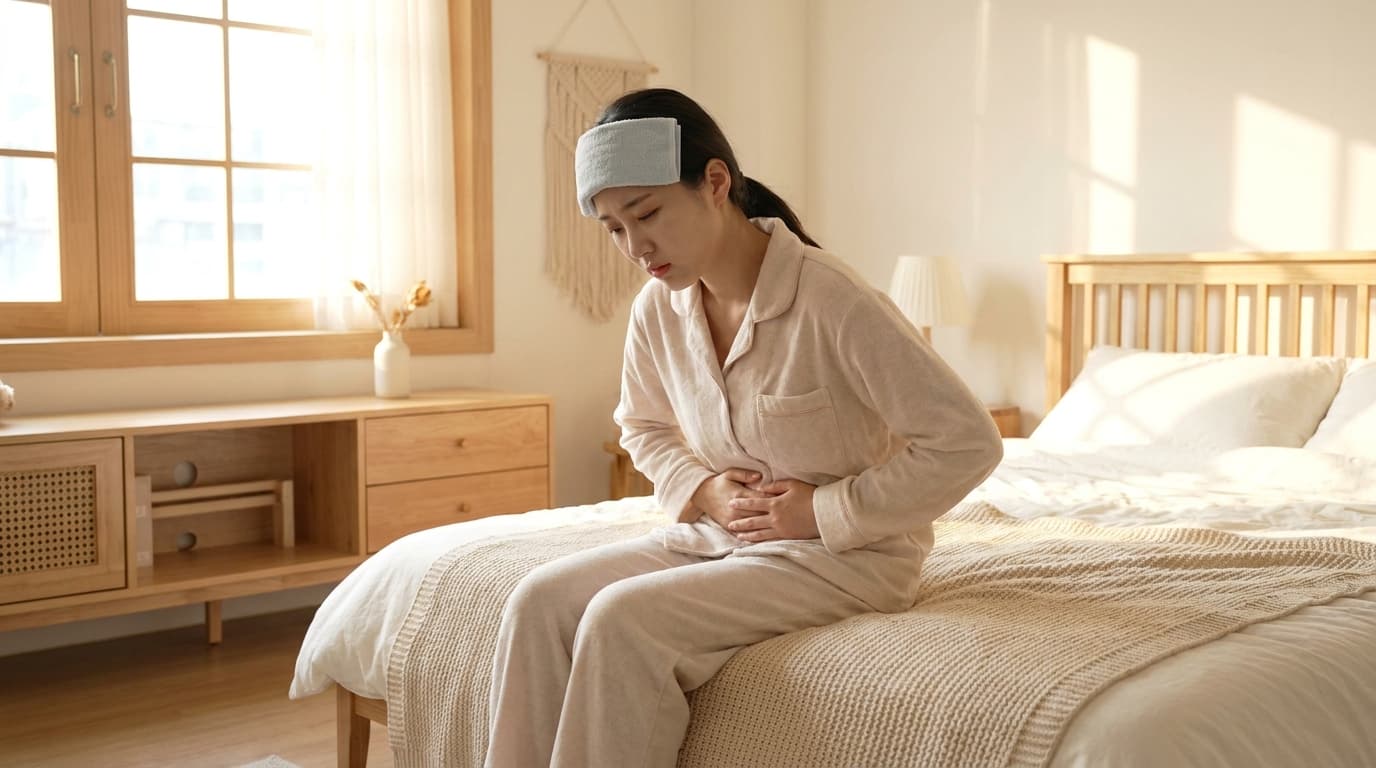
The joy of childbirth is often accompanied by deep concern for many mothers who experience an unusual surge in menstrual volume. "Could something be wrong with my body?", "It's so hard to focus on childcare with this worsening menstrual overload," they express with anxiety. As the phrase "[Postpartum Menstrual Overload]" suggests, when heavy bleeding disrupts daily life beyond a simple increase in flow, it can be an important signal from your body. Especially after childbirth, as the uterus undergoes various recovery processes, these symptoms should not be simply dismissed with the thought that "it will get better with time."
💡 [Key Answer] 3 most common causes of postpartum menstrual overload: ① Uterine Contraction Failure or Residual Stagnant Blood (Erysipelas/Stasis): When the uterus fails to contract properly after childbirth, leaving waste products inside. ② Hormonal Imbalance: Issues in endometrial regeneration and shedding cycles due to rapid postpartum hormonal shifts. ③ Underlying Uterine Conditions: Rarely, conditions such as adenomyosis, uterine fibroids, or endometrial polyps may contribute. Dalimchae Korean Medicine Clinic focuses on constitutional improvement therapy, enhancing the weakened body's fundamental resilience to normalize uterine function and stabilize the menstrual cycle.
Why is postpartum menstrual overload not a normal recovery sign?
Childbirth has a profound impact on a woman's body. In particular, the uterus goes through a major change—expanding to carry a baby and then contracting rapidly back to its original size after birth. During this process, lochia is discharged and the endometrium regenerates before menstruation resumes. If uterine recovery is sluggish or if there are issues with qi and blood circulation during this time, menstrual volume can become excessively heavy.
In Korean medicine, this is viewed as a problem of "stagnant blood (uhyeol)" and "qi-blood deficiency." Bleeding and physical exhaustion during childbirth make qi and blood deficient, while undischarged waste or blood clots (stasis) remain in the uterus, hindering normal contraction and recovery. This stasis impairs blood circulation in the uterus and causes inflammation, increasing menstrual flow as well as triggering lower abdominal pain, dizziness, postpartum wind (sanhu-pung), and chronic fatigue.
How can Korean medicine improve postpartum abnormal uterine bleeding? Latest research trends
Postpartum abnormal uterine bleeding can seriously threaten a mother's health by causing anemia and chronic fatigue beyond mere discomfort. Traditional Korean medicine has utilized various treatments to improve these postpartum recovery issues.
A 2018 study by Park Eoh-jin, Cho Hee-geun, and Choi Ji-hyun published in the Journal of Korean Obstetrics and Gynecology, titled "Herbal Medicine Treatment for Functional Uterine Bleeding: A Systematic Review," comprehensively evaluated the efficacy and safety of herbal treatment. Analyzing 16 randomized controlled trials (RCTs) involving 1,659 patients with functional uterine bleeding, 10 studies reported that the herbal treatment group showed a statistically significant higher effective rate compared to the control group (standard Western medicine treatment or placebo). Furthermore, 6 studies showed a lower recurrence rate in the herbal treatment group, with no serious adverse events reported during treatment, confirming safety. The researchers concluded that herbal medicine can be a safe and effective alternative for functional uterine bleeding, particularly helping to reduce recurrence.
These research findings suggest that when postpartum menstrual flow is excessively heavy, Korean medicine approaches can contribute beyond symptom relief to fundamental uterine function recovery and recurrence prevention. Dalimchae Korean Medicine Clinic Songdo branch prescribes customized herbal medicines tailored to each mother's physical condition and uterine recovery stage based on these systematic principles.
Additionally, a 2025 study in Frontiers in Medicine by Dr. Northella and colleagues, titled "Management of symptoms of suspected adenomyosis uteri using herbal medicine modified Bojungikgi-tang: a case report with ultrasound monitoring," objectively demonstrated that herbal monotherapy can be effective in improving uterine hyper-bleeding symptoms. This study reported a case of a woman under 40 presenting with excessive bleeding due to adenomyosis, severe dysmenorrhea, chronic anemia, and dizziness who was treated with modified Bojungikgi-tang. Within 6 weeks, dysmenorrhea (NRS) eased from 7-8 down to 4-5, hemoglobin levels recovered to 10.4 after 5 months, and by 8 months, the menstrual cycle normalized to 28-29 days with PBAC hyper-bleeding scores dropping significantly from 400 to 55. Ultrasound examination also showed a reduction in uterine size (AP length) from 8.7cm to 7.5cm. Although a single case report, this study shows that herbal medicine can improve both clinical symptoms and objective numerical and imaging findings in hyper-bleeding uterine conditions, serving as a great non-surgical treatment option for women experiencing postpartum menorrhagia.
Dalimchae’s Constitutional Treatment: Creating a body where symptoms don't return
At Dalimchae Korean Medicine Clinic, constitutional improvement treatment is core for postpartum symptoms such as heavy menstruation. Childbirth causes immense energy depletion and can accentuate existing constitutional weaknesses. Simply suppressing the current symptom of excessive bleeding is merely a stopgap measure.
Dalimchae’s constitutional treatment focuses not on temporarily turning off symptoms, but on building fundamental physical strength so the body naturally maintains health and symptoms do not return. The goal is to replenish depleted qi and blood, effectively eliminate stagnant waste from the uterus, and restore the harmony of disrupted hormone balance and autonomic nervous system. This approach helps normalize uterine function and jointly improves various issues commonly accompanying postpartum such as chronic fatigue, dizziness, edema, and postpartum wind.
Postpartum Menorrhagia Checklist
- □ Difficulty going out due to worry about menstrual blood leaking through undergarments.
- □ Flow so heavy that sanitary pads need changing within an hour.
- □ Menstrual blood frequently contains chestnut-sized blood clots.
- □ Menstrual period lasts longer than 7 days or is accompanied by spotting.
- □ Frequent dizziness, anemia, and lethargy due to heavy flow.
- □ Pale complexion and shortness of breath with sharply decreased physical stamina.
- □ Lower abdominal pain or heavy discomfort persisting throughout the period.
- □ Postpartum lochia lasting longer than expected or stopping and restarting.
Evaluation:
- 2+ items checked: Suspected postpartum uterine recovery delay and menorrhagia → Active consultation and treatment recommended.
- 4+ items checked: Moderate or higher menorrhagia and postpartum sequelae likelihood high → Immediate visit to Dalimchae Songdo recommended.
- 6+ items checked: Severe menorrhagia and systemic health deterioration concern → Precise diagnosis and intensive treatment essential.
FAQ: Frequently Asked Questions about Postpartum Menorrhagia
Q. My postpartum menstrual flow is too heavy. Will it resolve naturally? A. While some mild cases recover naturally over time, most postpartum menorrhagia stems from complex causes like uterine recovery failure, retained stasis, and hormonal imbalance, making active treatment necessary to improve. Leaving it unattended can lead to chronic anemia or postpartum wind.
Q. Is it safe to take herbal medicine during breastfeeding? A. Yes, the postpartum herbal medicines prescribed at Dalimchae are carefully selected to be completely safe and harmless for both mother and baby during breastfeeding. Rather, they help restore qi and blood, eliminate stasis, and positively influence milk quality.
Q. How long does postpartum menorrhagia treatment take? A. Treatment duration varies depending on individual constitution, symptom severity, and recovery capacity. Generally, consistent treatment for 3 to 6 months aims to stabilize uterine function and normalize the menstrual cycle.
Q. Can postpartum wind and fatigue be treated together? A. Yes, Dalimchae's constitutional treatment resolves the root causes of qi-blood deficiency and stasis while promoting autonomic nervous stability. Thus, it effectively alleviates menorrhagia alongside postpartum wind, chronic fatigue, dizziness, and numbness.
[Postpartum Menstrual Overload] is not a problem to simply endure. Bring your current symptoms to Dalimchae Clinic. We will find the causes together.
Where life blooms. For herbal medicine, it's Dalimchae. Check your symptoms via our AI consultation on the website!
Medical Supervision | Dr. Oh Hyunmin, Dalimchae Korean Medicine Clinic Songdo Branch (Menorrhagia Column)