
Hello, this is Dalimchae Korean Medicine Clinic.
Postpartum Facial Paralysis: What to Do If Your Mouth Crooked After Childbirth
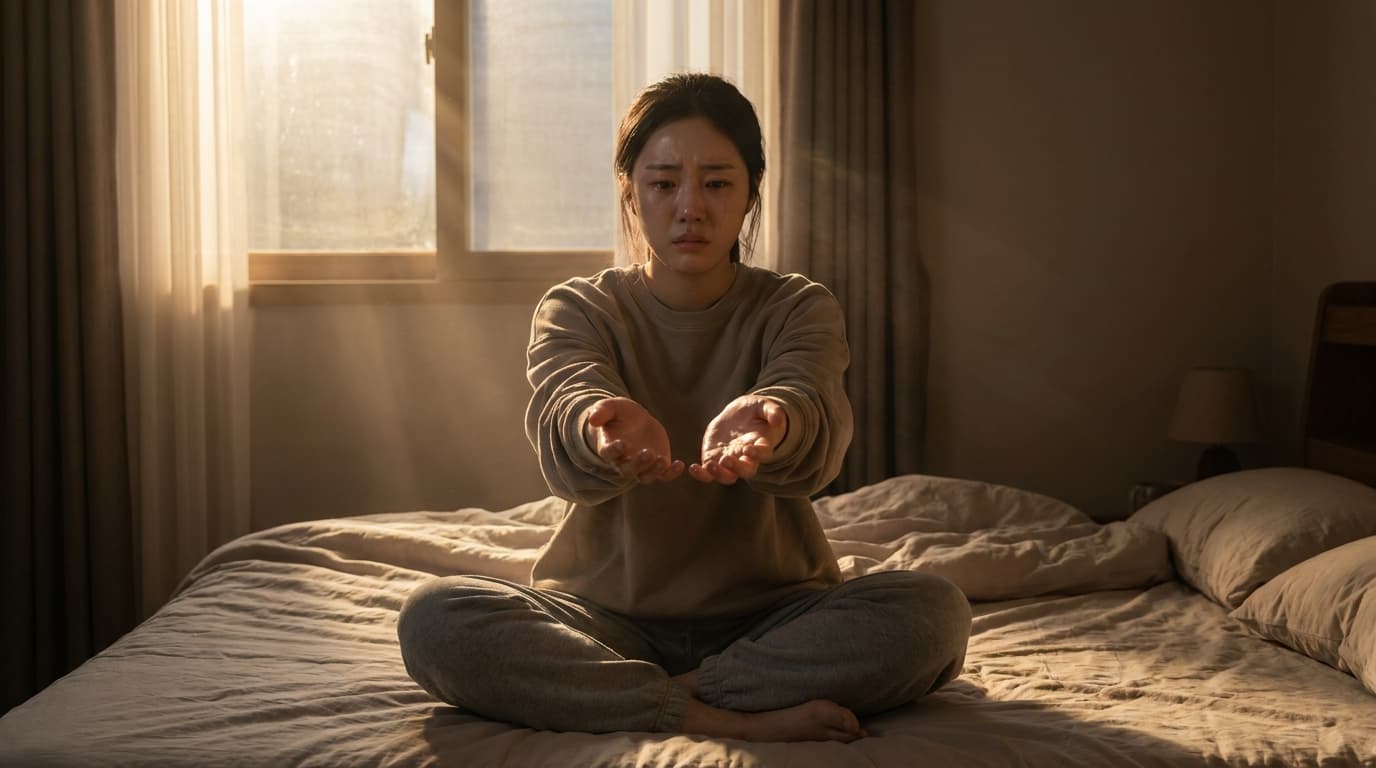
The joy of welcoming new life is short-lived, and many mothers are embarrassed and anxious about their altered appearance in the mirror. In particular, "My mouth crooked after giving birth," complaining of loss of strength in the face and paralysis symptoms, postpartum facial paralysis brings great shock and pain to mothers. The rapid physical changes and stress that come after childbirth can be the main cause of postpartum facial paralysis, which leads to psychological shrinkage beyond simple discomfort.
💡 [Key Answer] 3 most common causes of postpartum facial paralysis: ① Immune system decline and viral infection / ② Rapid physical decline and stress after childbirth / ③ Autonomic nervous system imbalance and nerve edema Dalimchae Korean Medicine Clinic helps restore immunity and regenerate facial nerves through autonomic stability, and focuses on restoring natural facial movement.
Sudden facial paralysis after childbirth, why does it happen?
Postpartum facial paralysis is a form of idiopathic facial nerve paralysis called Bell's palsy, and the exact cause is often unclear. However, certain factors occurring during pregnancy and childbirth are known to increase the risk of onset.
One of the major factors is immune system decline. Childbirth is accompanied by tremendous energy consumption and stress on a woman's body, which can weaken the immune system. Weakened immunity can reactivate herpes simplex virus or varicella-zoster virus dormant in the facial nerve, causing inflammation in the facial nerve and inducing paralysis. In particular, facial paralysis caused by shingles virus is called Ramsay Hunt syndrome, and is sometimes accompanied by blisters around the ear, extreme pain, dizziness, and hearing loss.
In addition, rapid hormonal changes and fluid retention (edema) after childbirth can put pressure on the facial nerve and cause paralysis. The high incidence of facial paralysis in the late pregnancy and immediately after childbirth is closely related to these physical changes. These complex factors promote inflammation and damage to the facial nerve, eventually leading to paralysis of facial muscles.
Why is early treatment important for facial paralysis?
It is known that starting treatment within 72 hours of the onset of facial paralysis is very important for the prognosis. This period is called the 'golden time' because it can quickly calm inflammation and edema of the damaged facial nerve and promote nerve regeneration, minimizing the occurrence of sequelae. If treatment is delayed, facial nerve damage deepens, making complete recovery difficult or leaving sequelae such as synkinesis or contracture.
These sequelae appear as unintentional movement of other muscles when making a specific facial expression, or as stiff facial muscles. In modern society where interest in appearance is high, this can cause greater pain to the patient than the facial paralysis itself. Therefore, Incheon Facial Paralysis Korean Medicine Clinic aims for optimal recovery through active treatment from the early stages for patients in special situations such as postpartum facial paralysis.
How does Korean medicine contribute to recovery from postpartum facial paralysis? (Latest clinical research paper)
In Korean medicine, facial paralysis is viewed and treated as an invasion of wind-cold evil (風寒邪) due to decreased immunity, and qi and blood (氣血) circulation disorder. Especially for women after childbirth, it is diagnosed that facial paralysis is likely to occur because they become vulnerable to external stimuli in a state where their body is weakened due to severe qi and blood consumption. Accordingly, rather than simply stimulating paralyzed facial muscles, we focus on creating an environment for nerve regeneration through systemic vitality recovery and immunity enhancement.
In a study by the research team of Bucheon Jaseng Korean Medicine Hospital to be published in 『Journal of Clinical Korean Medicine』 on October 31, 2025, Korean medical treatment including acupuncture, pharmacopuncture, moxibustion, cupping, and Chuna manipulation was applied to 2 facial paralysis patients during pregnancy, showing significant recovery. In one patient, the House-Brackmann grade improved significantly from grade 4 to grade 2 (mild dysfunction), and the Yanagihara score improved from 14 to 40 (normal function), while the other patient also improved from grade 5 to grade 2, and the Yanagihara score improved from 9 to 34 (mild dysfunction). Both patients completed treatment in 46 and 38 days after onset, respectively. The researchers concluded that for pregnant facial paralysis patients, Korean medicine treatment including acupuncture, pharmacopuncture, moxibustion, cupping, and Chuna can be a safe and effective alternative to steroids. Likewise, Dalimchae Korean Medicine Clinic considers weakened physical conditions such as pregnancy and childbirth, and provides treatment focused on immunity and nerve recovery while being safe.
In addition, on May 14, 2015, a study published in the journal 『PLOS ONE』 announced the meta-analysis results analyzing 14 randomized controlled trials (RCTs) to verify the effectiveness of acupuncture treatment for Bell's palsy patients. In this study involving 1,541 patients, the acupuncture treatment group showed a significantly higher total effective response rate compared to the control group (relative risk 1.14; 95% confidence interval, 1.04–1.25; p < 0.005). The total effective response rate of the acupuncture group was 95.48%, showing a higher recovery rate compared to 82.81% of the control group. The researchers concluded that acupuncture treatment appears to be an effective treatment for Bell's palsy. Based on these grounds, Dalimchae Korean Medicine Clinic Incheon Branch focuses on reducing inflammation of the facial nerve, promoting regeneration, and restoring the function of paralyzed muscles through acupuncture treatment.
Rooting out postpartum facial paralysis through autonomic stability treatment
At Dalimchae Korean Medicine Clinic, the core of postpartum facial paralysis treatment is placed on 'autonomic stability'. After childbirth, autonomic imbalance easily occurs where sympathetic nerves are excessively hyperactive and parasympathetic nerves are decreased due to extreme fatigue and stress. When the balance of the autonomic nervous system collapses, our body's brain cannot rest, which further intensifies immune decline and inflammatory response, making it vulnerable to facial nerve damage. It is like the system of the body not working properly like an overheated engine.
At Dalimchae Korean Medicine Clinic, we focus on restoring this balance of the autonomic nervous system to create an environment where the brain can sufficiently rest and recover. We lower the heat of the nervous system and smooth the qi and blood circulation of the whole body to help supply sufficient nutrition to the damaged facial nerve. In Korean medicine, this is called 'Suseunghwagang' (水昇火降), which considers the harmony of raising the cold energy of the body upward and lowering the hot energy downward as important.
This autonomic stability treatment not only improves facial paralysis symptoms, but also helps restore the overall health of the mother by alleviating various physical and mental discomforts commonly accompanied during the postpartum recovery process, such as insomnia, headache, dizziness, and anxiety. As an Incheon Guanwasa Korean Medicine Clinic, Dalimchae Korean Medicine Clinic is committed not just to chasing symptoms, but to restoring the fundamental balance of the body to create a healthy body where facial paralysis does not return.
Could I also have postpartum facial paralysis? Self-checklist
If you correspond to 3 or more of the following symptoms, it is recommended to suspect postpartum facial paralysis and consult an expert for an accurate diagnosis.
- One eye does not close well, and water enters when washing your face.
- Your mouth is crooked to one side, making it unnatural when smiling or talking.
- It is difficult to whistle, or you spill food to one side when eating.
- Wrinkles do not form well on your forehead, or your eyebrows look drooping.
- Pain is felt behind the ear or on the face.
- Sounds sound louder than usual, or certain tastes are not felt well.
- Facial muscles feel stiff and tight.
- Suffering from extreme fatigue and stress after childbirth.
Judgment: If 3 or more apply → Suspected facial paralysis due to autonomic imbalance → Consider complex Korean medicine treatment.
FAQ: Frequently asked questions about postpartum facial paralysis
Q. How long does postpartum facial paralysis take? A. The treatment period for postpartum facial paralysis may vary depending on the degree of symptoms, cause, and start of treatment. Generally, active treatment in the early stages can be expected to improve within weeks to months, but missing the golden time can prolong the recovery period or leave sequelae.
Q. My mouth crooked after childbirth, can it heal naturally? A. In the case of Bell's palsy, some recover naturally, but postpartum facial paralysis is a state where the body's recovery ability is lowered due to the special situation of childbirth, so rather than relying solely on natural healing, it is important to prevent sequelae and promote rapid recovery through active treatment. In particular, for mothers at risk of postpartum sequelae, receiving immunity enhancement and nerve regeneration treatment is recommended.
Q. I have insomnia along with postpartum facial paralysis, can they be treated together? A. Yes, since Dalimchae Korean Medicine Clinic treats autonomic imbalance, which is the root cause of facial paralysis, accompanying symptoms such as insomnia, headache, and dizziness can also be improved together. We provide integrated treatment focusing on restoring overall body balance and function.
Postpartum facial paralysis is not a problem that can be solved by enduring. You no longer need to ignore the body's signals you have sent for a long time. If you approach in the right direction, your body reacts faster than you think. Bring the symptoms you are experiencing as they are. Dalimchae Korean Medicine Clinic will find the cause together.
Where life blooms. Herbal medicine is Dalimchae Korean Medicine Clinic. Check symptoms similar to yours first through the AI consultation on the Dalimchae Korean Medicine Clinic website!
Medical Supervision | Department of Brain & Autonomic Nervous System Standards, Incheon Branch of Dalimchae Korean Medicine Clinic, Korean Medicine Doctor Min Jihong (Facial Paralysis Column)