
Hello, this is Dalimchae Korean Medicine Clinic.
Pelvic Pain Outside Menstrual Period Could It Be Endometriosis
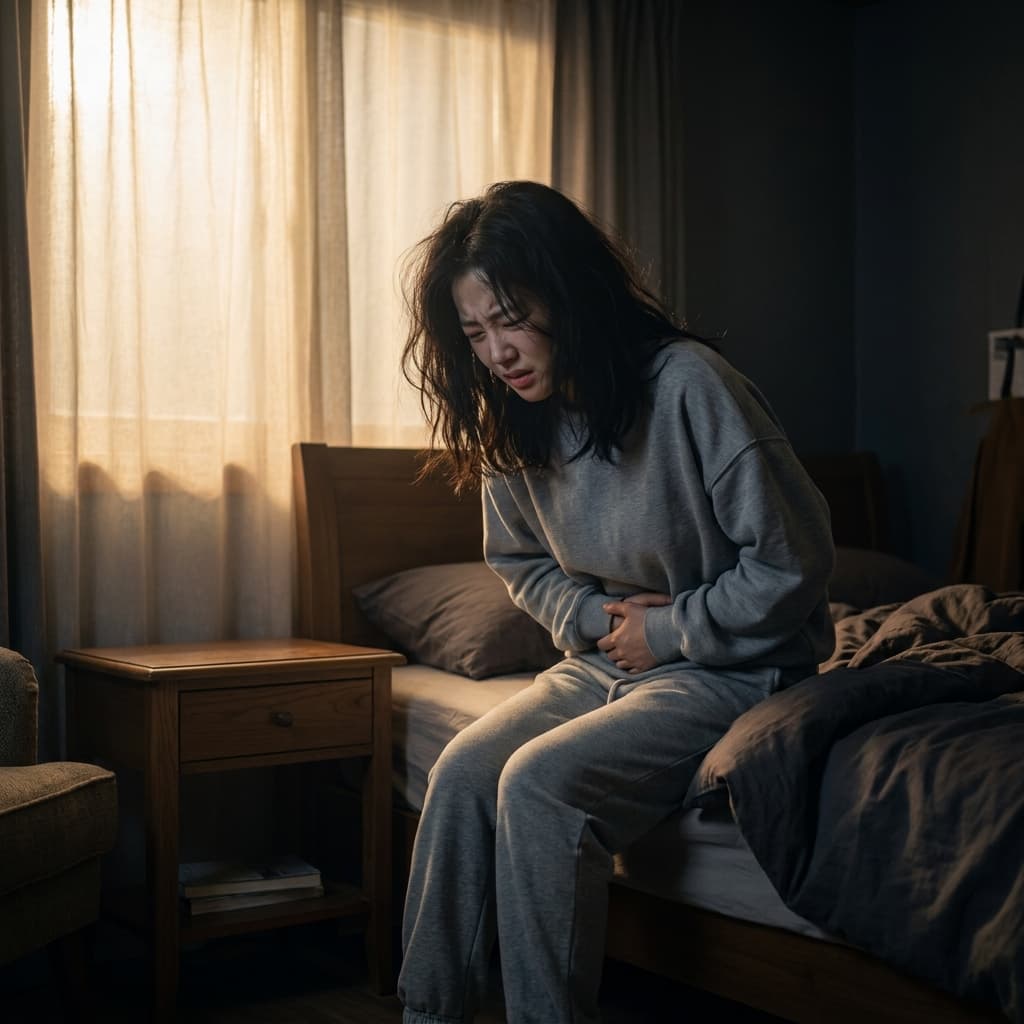
If you suddenly feel a stabbing and uncomfortable pain in your pelvis even when it is not your menstrual period, you may feel embarrassed and anxious. Many women experience this non-menstrual pelvic pain, but it is easy to dismiss it as simply due to stress or fatigue and neglect it. However, these signals sent by our body can be symptoms of important women's diseases such as endometriosis, beyond simple discomfort. Like a car warning light, pelvic pain is an important signal that something is wrong somewhere in our body.
💡 Key Answer Top 3 most common causes of "Pelvic pain continues even outside the menstrual period": ① Endometriosis / ② Chronic pelvic inflammatory disease / ③ Overactive bladder or irritable bowel syndrome Dalimchae Korean Medicine Clinic improves the fundamental inflammatory environment through constitutional improvement and restores uterine and pelvic functions to prevent the recurrence of chronic pelvic pain.
Why Does Pelvic Pain Occur Outside Menstrual Period? Is It Simply a 'Uterine Problem'?
Pelvic pain occurring independently of menstruation can appear due to various causes. Representative examples include endometriosis, chronic pelvic inflammatory disease, and overactive bladder or irritable bowel syndrome. In addition, tension in muscles around the pelvis, nerve compression, and even stress and autonomic nervous system imbalance can cause chronic pain. A woman's pelvis has a complex structure where various organs such as reproductive, urinary, and digestive organs are densely packed, making it difficult to pinpoint pain to a single cause. In particular, chronic pelvic pain that persists even when no special abnormalities are found on tests is highly likely to be deeply related to systemic balance problems.
Endometriosis: Why Does It Cause Pain Even When Not Menstruating?
Endometriosis is a disease where endometrial tissue, which should be inside the uterus, implants and grows outside the uterus such as the ovaries, fallopian tubes, and peritoneum. This abnormal endometrial tissue also undergoes processes of proliferation and shedding under the influence of hormones according to the menstrual cycle. At this time, bleeding and inflammatory reactions cause adhesions and pain in surrounding tissues, and the problem is that this bleeding cannot be discharged out of the body and accumulates, sustaining inflammation and pain. Due to this, chronic pelvic pain, back pain, dyspareunia, and even infertility can be induced not only during menstruation but also usually. In particular, endometriomas where endometrial tissue accumulates in the ovaries are also called chocolate cysts, which worsen pain and cause decreased ovarian function. In the Incheon area, many female patients are visiting Incheon pelvic pain oriental clinics for this non-menstrual pelvic pain.
How Does Oriental Medicine View and Treat Chronic Pelvic Pain?
In Oriental medicine, chronic pelvic pain, especially diseases such as endometriosis, is viewed as the result of waste products such as blood stasis (Eohyeol) and phlegm-dampness (Dameum) accumulating, blocking qi and blood circulation, and creating an inflammatory environment. This corresponds to chronic inflammatory response and immune imbalance discussed in modern medicine. Beyond simply suppressing pain, the goal is fundamental treatment by removing accumulated waste products in the body, improving blood circulation around the uterus and pelvis, and restoring systemic immunity and autonomic balance.
According to a comprehensive systematic literature review evaluating the effectiveness of herbal medicine treatment for endometriosis published in 2024, analysis of 11 studies showed that herbal medicine treatment had positive effects in various aspects such as relieving endometriosis-related pain, improving pregnancy rates, reducing recurrence rates, improving quality of life, and reducing CA-125 levels. In particular, the strength that herbal medicine treatment is safe with fewer side effects compared to Western medical treatment was highlighted.
In addition, a meta-analysis of 11 randomized controlled trials (total 1,401 patients participating) published in PubMed in 2025 confirmed that herbal medicine treatment significantly reduced menstrual pain and dyspareunia caused by endometriosis (p=0.0484 and p=0.0031, respectively). This suggests that herbal medicine is related to the effect of significantly lowering blood inflammatory mediator levels such as TNF-α and IL-6 (p<0.0001), showing the mechanism of alleviating pain through systemic inflammatory response regulation. However, it was noted that significant effects on general pelvic pain itself still require additional studies. Dalimchae Korean Medicine Clinic Incheon Branch manages pain and inflammation caused by endometriosis through customized herbal medicine prescriptions tailored to individual constitutions and symptoms based on these research results, and helps restore the environment around the uterus and pelvis.
[Dalimchae Korean Medicine Clinic's Constitutional Improvement Treatment]
At Dalimchae Korean Medicine Clinic, we focus on constitutional improvement treatment with the goal of "making a body where symptoms do not turn back on, rather than simply turning off symptoms" for women's chronic pelvic pain and endometriosis. The inflammatory response in our body is closely related to the excessive activation of the immune system. Constitutional improvement helps correct this body imbalance to improve the inflammatory environment, strengthen uterine and ovarian functions, and restore hormonal balance to prevent recurrence. This is a process of fostering the ability of the body to maintain and recover health on its own, rather than temporarily relieving pain. As an Incheon endometriosis oriental clinic, Dalimchae Korean Medicine Clinic presents an integrated treatment plan combining the most appropriate herbal medicine prescriptions, acupuncture treatment, and moxibustion treatment by closely grasping each patient's constitution, lifestyle habits, and symptom severity.
Menstrual Pain vs. Other Pelvic Pain: Self-Diagnose Endometriosis
Check through the following checklist whether pelvic pain outside the menstrual period could be related to endometriosis.
[Pelvic Pain Self-Diagnosis Checklist]
- There is a heavy or aching pain in the lower abdomen or around the pelvis even when it is not menstrual period.
- Menstrual pain tends to get progressively worse and the dosage of painkillers increases.
- Pain often spreads to the lower back, legs, and anus during menstruation.
- Pain is felt deep in the pelvis during sexual intercourse (dyspareunia).
- There is pain or discomfort when having a bowel movement or urinating.
- Chronic fatigue, indigestion, or changes in bowel habits (constipation or diarrhea) are accompanied.
- Diagnosed with infertility without a specific cause.
Judgment Criteria:
- 3+ apply: Suspect endometriosis or chronic pelvic pain. We recommend reviewing Korean medicine complex treatment through precise diagnosis and consultation at Dalimchae Korean Medicine Clinic Incheon Branch.
- 5+ apply: It is important to start accurate diagnosis and treatment through immediate clinic visits.
FAQ
Q. What is the cause of pelvic pain outside the menstrual period? A. Pelvic pain outside the menstrual period can occur due to various causes such as endometriosis, chronic pelvic inflammatory disease, overactive bladder, or irritable bowel syndrome. Inflammation or adhesions around the uterus and neurological imbalance are major causes.
Q. Can endometriosis be treated with Oriental medicine? A. Yes, endometriosis is treated in Oriental medicine by viewing it as qi and blood circulation stagnation due to blood stasis and phlegm-dampness. It helps reduce inflammation, improve the uterine environment, and enhance immunity to relieve pain and prevent recurrence.
Q. What are lifestyle habits to alleviate chronic pelvic pain? A. Regular exercise, stress management, and warm compresses help blood circulation around the pelvis. Also, reducing instant food or cold food intake and maintaining a balanced diet is important.
Q. How does Dalimchae Korean Medicine Clinic Incheon Branch treat pelvic pain? A. At Dalimchae Korean Medicine Clinic Incheon Branch, Oriental medicine treatments such as herbal medicine, acupuncture, moxibustion, and pharmacopuncture are integrated according to individual constitution and symptoms. The goal is fundamental treatment by improving the body's inflammatory environment and restoring autonomic balance.
Pelvic pain outside the menstrual period is not a problem solved by enduring it. You no longer need to ignore the signals your body has sent for a long time. When approached in the right direction, the body responds faster than you think. Bring your current symptoms as they are. Dalimchae Korean Medicine Clinic Incheon Branch will find the cause together.
Where life blooms. Herbal medicine is Dalimchae Korean Medicine Clinic. Check symptoms similar to yours first through Dalimchae Korean Medicine Clinic homepage AI consultation!
Medical Supervision | Women & Pregnancy Treatment Standard: Dalimchae Korean Medicine Clinic Incheon Branch Oriental Medical Doctor Yang Yuchan (Endometriosis Column)