
Hello, this is Dalimchae Korean Medicine Clinic.
My Heart Is Racing As If It Will Burst: Could It Be Because of This?
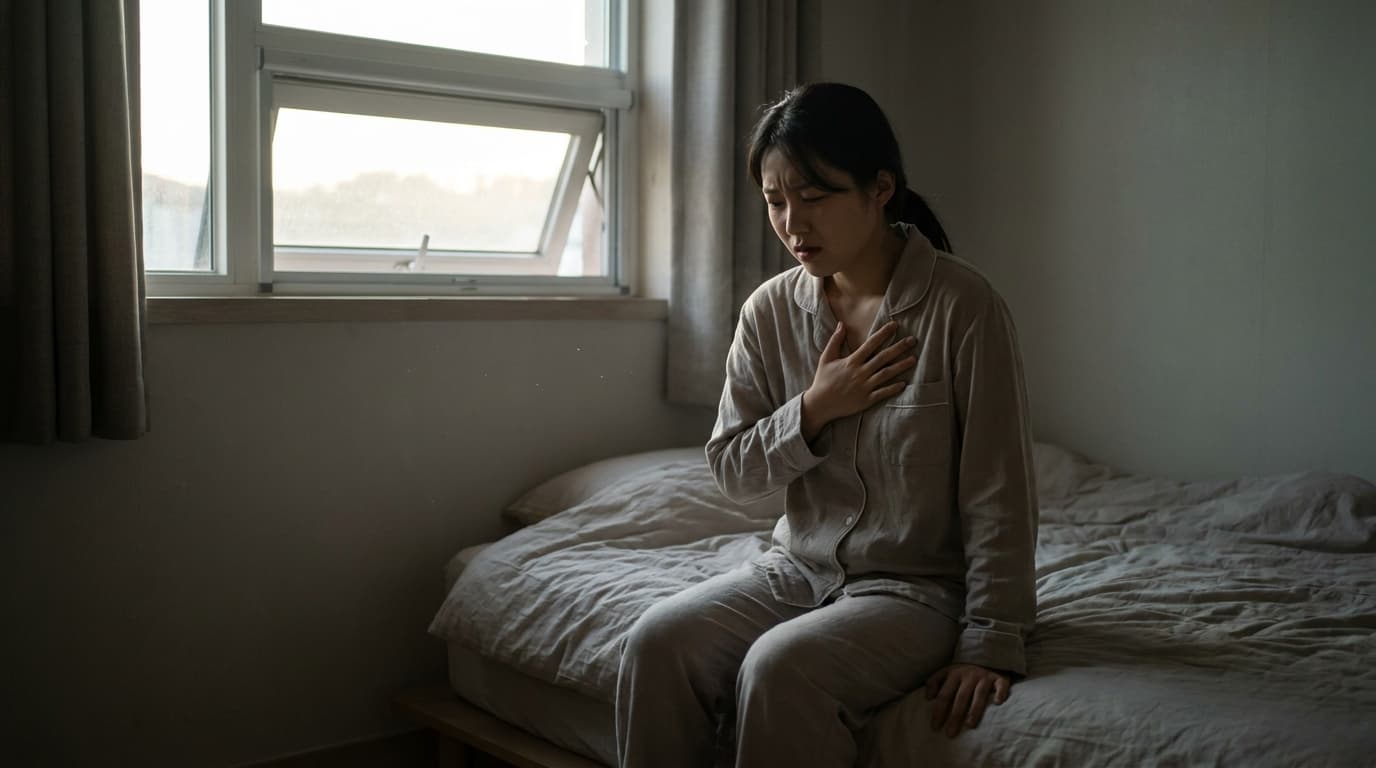
Many people visit hospitals complaining that their heart feels like it's going to burst. Sudden and intense chest palpitations in the middle of everyday life often come with a terrifying feeling that the heart might stop and suffocating anxiety. They tend to worsen late at night, preventing sleep, or cause extreme anxiety before important presentations or exams. Many even rush to the emergency room worried it might be a serious illness because of the unstable, pounding sensation in their chest, only to feel deflated when told test results are 'normal.' But are these symptoms really just temporary?
💡 Key Answer Top 3 most common causes of "My Heart Is Racing As If It Will Burst": ① Autonomic nervous system imbalance ② Chronic stress and anxiety ③ Overactive reaction in brain function Dalimchae Korean Medicine Clinic helps calm the overheated brain through autonomic stabilization so the heart can beat comfortably on its own.
Suddenly my heart feels like it's going to burst. Why do these symptoms appear?
Unannounced chest palpitations can be looked at from two main causes. First is organic heart problems. However, in most cases, special abnormalities are not found even after receiving echocardiograms, ECGs, and 24-hour Holter monitors. At this time, autonomic nervous system imbalance should be suspected. The autonomic nervous system governs automatic physiological functions such as heartbeat, digestion, body temperature regulation, and blood pressure without conscious control. Divided into sympathetic and parasympathetic nerves, they maintain balance and regulate bodily functions. When this balance breaks, it appears as various abnormal bodily signals, especially heart palpitations or chest tightness. Chronic stress, overwork, and lack of sleep excessively hyperactivate the sympathetic nervous system, keeping our bodies in a constant 'state of emergency,' leading to increased heart rate and irregular heart rhythms.
Are chest palpitations and associated anxiety linked to panic disorder?
Chest palpitations are one of the representative symptoms of anxiety disorders, especially panic disorder. Panic disorder is a condition accompanied by sudden, extreme fear and anxiety, along with physical symptoms such as rapid heartbeat, difficulty breathing, or chest tightness. These attacks induce anticipatory anxiety about when they might recur, significantly impacting daily life. Many panic disorder patients complain of severe heart palpitations along with feelings of unreality, fear of dying, dizziness, and numbness in hands and feet. These symptoms are closely related to hypersensitive reactions of the autonomic nervous system, and brain function imbalance is cited as their cause. Particularly when recurrent heart palpitations and anxiety persist despite a 'normal' diagnosis on tests, therapeutic approaches to restore autonomic balance can be considered at Incheon Panic Disorder Korean Medicine Clinic.
How does autonomic imbalance affect my body?
The autonomic nervous system is like our body's engine. The sympathetic nerve acts as the accelerator and the parasympathetic nerve acts as the brake, regulating body functions. When stress or fatigue accumulates, the sympathetic nerve becomes excessively hyperactive, putting the body in a state like an engine continuously overheating. This can be objectively confirmed through Heart Rate Variability (HRV) testing; the more severe the autonomic imbalance, the more HRV tends to decrease. When the sympathetic nerve becomes dominant, blood vessels constrict, heart rate accelerates, digestive function declines, and sleep quality deteriorates, affecting the entire body. Eventually, these chronic imbalances can develop into brain and autonomic nervous system disorders such as panic disorder, anxiety disorder, insomnia, headaches, and dizziness. At Songdo Autonomic Nervous System Korean Medicine Clinic, Dalimchae Korean Medicine Clinic approaches these complex symptoms not as isolated problems, but within the broad framework of the autonomic nervous system to resolve the root cause.
How does Oriental medicine treat heart palpitations and panic?
In Oriental medicine, heart palpitations (palpitations) and panic symptoms are viewed under categories such as 'startle and palpitations' (驚悸, 怔忡) and treated in relation to imbalances of the viscera, especially the heart (心), liver (肝), and spleen (脾). Excessive stress stagnates liver qi, which leads to heart burden, causing palpitations and anxiety. Furthermore, customized treatments are conducted by finding various pathological causes such as phlegm-fluid (痰飮) or blood deficiency (血虛).
A study research team led by Dr. Young-Bum Roh published in the Journal of the Society of Korean Medicine for Functional Diagnostics in 2012 reported that meaningful effects were achieved solely through herbal medicine treatment in two patients, including a woman in her 30s who had suffered from panic disorder for 4 years. This patient, who showed a Beck Anxiety Inventory (BAI) score of 36 ('severe anxiety state'), took an herbal decoction called Yeonggyegamjo-tang (苓桂甘棗湯) for about 3 months. As a result, heart palpitations and anxiety symptoms improved 15 days into treatment, and panic attack symptoms completely disappeared after two months. The researchers concluded that this result was due to herbal medicine correcting neurotransmitter functions in the central nervous system and activating the fundamental function enabling the autonomic nervous system to regulate itself.
Additionally, a retrospective study published in PubMed in 2024 evaluated 67 anxiety patients who received complex Korean medicine treatments—including acupuncture, Korean medical psychotherapy, Chuna manual therapy, aromatherapy, and herbal medicine—for over 4 weeks. The results confirmed that anxiety (STAI X-1; STAI X-2; BAI, p < 0.0001), depression (BDI-II, p < 0.0001), and anger (AKI-K-I; AKI-K-O, p < 0.05) symptoms significantly decreased, while quality of life (EQ-5D; EQ-VAS, p < 0.0001) increased. This suggests that Oriental medical treatment positively impacts not only anxiety symptoms but also accompanying depression and anger control, improving overall quality of life.
Based on these data, Dalimchae Korean Medicine Clinic focuses on autonomic stabilization treatments that help calm the body's overheated state and regain balance on its own, rather than merely suppressing symptoms. When autonomic balance collapses, the brain cannot rest and maintains a constant unstable state. Our goal is to lower excessive heat in the nervous system and create an environment where the brain can comfortably rest—known in Oriental medicine as Su-seung-hwa-gang (水昇火降). By replenishing weakened body energy and stabilizing heart function, Incheon Dalimchae Korean Medicine Clinic helps patients recover peaceful daily lives.
Autonomic Imbalance Heart Palpitation Checklist
If you check 3 or more of the following items, you should suspect autonomic hyperactivity and consider complex Oriental medical treatment. If 5 or more, immediate clinic visits are recommended.
- Your heart beats fast or pounds suddenly for no apparent reason.
- Your chest feels tight and it is often hard to breathe.
- Your heart pounds intensely when going to bed at night, making it hard to fall asleep.
- Extreme anxiety or panic washes over you without warning.
- Your head feels foggy, making it hard to concentrate or memory seems impaired.
- Your hands and feet are cold and sweaty, or certain body parts feel numb.
- Digestion is poor, stomach feels bloated or gassy.
- You are more sensitive than usual and startled or irritated easily by small things.
- You suffer from chronic fatigue and don't feel refreshed even after adequate rest.
- You frequently experience dizziness or vertigo.
Q. How long does it take for chest pounding symptoms to resolve? A. Recovery time varies depending on the cause and severity of symptoms. In cases caused by autonomic imbalance, consistent treatment and lifestyle improvements can lead to symptom improvement within weeks to months.
Q. Can panic disorder be treated with Korean medicine? A. Yes, panic disorder is viewed and treated in Oriental medicine as autonomic imbalance and visceral dysfunction. Herbal medicine, acupuncture, pharmacopuncture, and counseling are used to stabilize the nervous system, improve root causes, alleviate panic symptoms, and prevent recurrence.
Q. Can autonomic ataxia resolve naturally? A. Mild autonomic imbalance caused by temporary stress or fatigue can resolve naturally with rest. However, if symptoms become chronic or interfere with daily life, seeking professional help for active treatment is important.
Q. Heart palpitations and insomnia occur together—can they be treated together? A. Yes, heart palpitations and insomnia often appear together due to the common cause of autonomic nervous system imbalance. Dalimchae Korean Medicine Clinic provides customized treatments that approach both symptoms integrally, stabilizing the autonomic nervous system and improving sleep quality.
The discomfort of "My heart feels like it's going to burst" cannot be solved by simply enduring it. You no longer have to ignore the signals your body has been sending for a long time. When approached in the right direction, the body responds faster than you think. Bring the symptoms you are experiencing right now as they are. Dalimchae Korean Medicine Clinic will find the cause together with you.
A place where life blossoms. Herbal medicine is Dalimchae Korean Medicine Clinic. Check similar symptoms first through Dalimchae Korean Medicine Clinic's website AI consultation!
This health information was compiled together by Dalimchae medical staff based on questions frequently received in the treatment room. Medical Supervision | Dr. Yang Yoo-chan, Incheon Branch of Dalimchae Korean Medicine Clinic (Brain & Autonomic Nervous System Department)
#PanicDisorder #ChestPalpitations #AutonomicAtaxia #IncheonPanicDisorderClinic #SongdoKoreanClinic #AnxietyDisorder #AutonomicStabilization Brain & Autonomic Nervous System - Autonomic Nervous System