
Hello, this is Dalimchae Korean Medicine Clinic.
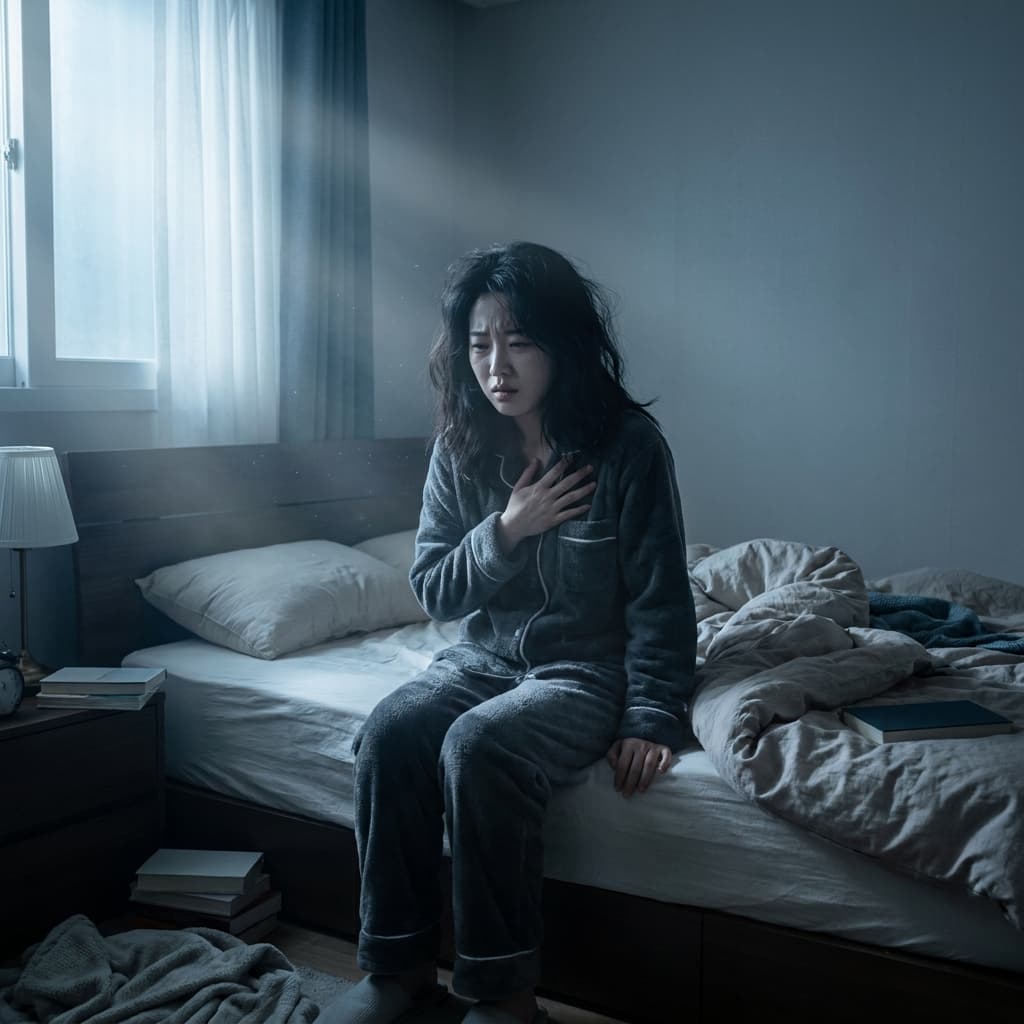
My chest feels tight and I cannot breathe deeply, it might be an emergency signal from your brain.
Whenever you suddenly feel tightness in your chest and find it hard to breathe deeply, you might worry if something is wrong with your heart or lungs. However, test results often come back "normal." Even if you try to brush it off thinking it is nothing, the repeated tightness and anxiety consume your daily life, eventually leading to sleepless nights and extreme fatigue. Like a car with broken brakes, this symptom where body and mind seem to run wild on their own can actually be an important sign that the balance of your brain and autonomic nervous system has collapsed.
💡 [Key Answer] Top 3 most common causes of "My chest feels tight and I cannot breathe deeply": ① Autonomic imbalance due to excessive stress / ② Anxiety symptoms due to brain neurotransmitter imbalance / ③ Physical sensory hypersensitivity Dalimchae Korean Medicine Clinic approaches fundamental treatment so that the brain can restore balance by itself and maintain comfort through autonomic stabilization.
Chest tightness and shortness of breath are representative symptoms of panic attacks, where the heart beats rapidly and breathing is difficult. These symptoms are deeply related to malfunction of the autonomic nervous system. The autonomic nervous system in our body consists of the sympathetic and parasympathetic nervous systems, and like the accelerator and brake of a car, they achieve mutual balance to regulate overall life activities such as heartbeat, breathing, and digestion. However, when continuously exposed to excessive stress or anxiety, the sympathetic nervous system becomes excessively hyperactive, breaking this balance. This causes the brain to perceive the body as being in an 'emergency situation,' inducing physical symptoms such as violent heart beating and shortness of breath.
These symptoms can cause even more frustration because no special abnormalities are found in medical tests. In fact, according to the 'Clinical Survey on Autonomic Ataxia in Korean Medicine' published in the Journal of Oriental Neuropsychiatry in 2023, as a result of a survey of 959 clinical Korean medicine doctors, 'heart palpitations' accounted for 59% of the main physical symptoms of autonomic ataxia patients, and 'anxiety/agitation' accounted for the highest proportion at 88% as psychological and psychiatric symptoms. This suggests that physical symptoms such as chest tightness are not simply body problems, but are deeply connected to mental problems originating from imbalance in the brain and autonomic nervous system.
How does Korean medicine approach anxiety and panic disorder?
In Korean medicine, anxiety symptoms accompanied by chest tightness, heart palpitations, and shortness of breath are not viewed simply as a single symptom. We place emphasis on finding and solving the root cause by comprehensively considering the patient's constitution, overall physical state, and stress factors. In particular, we focus on 'stabilization of the brain and autonomic nervous system.'
In a research case published by Dr. Noh Young-beom in the Journal of the Dae韓 Sanghan Geumgwe Medical Society in 2012, when 'Yeonggyegamjo-tang' was administered to two male and female patients in their 30s diagnosed with panic disorder in Western medicine, meaningful symptom improvement appeared. At that time, one patient (Patient A) who had been suffering from panic disorder for 4 years saw her BAI (Beck Anxiety Inventory) score drop from 36 points (extreme anxiety state) after receiving Korean medicine treatment for 3 months, and after fifteen days of treatment, heart palpitations and anxiety symptoms improved, and after two months, seizure symptoms completely disappeared. The researchers explained that Yeonggyegamjo-tang played a role in correcting the neurotransmitter function of the central nervous system to help the autonomic nervous system regulate itself.
These research findings are in line with the direction of autonomic stabilization treatment pursued by Dalimchae Korean Medicine Clinic. At our Incheon branch of Dalimchae Korean Medicine Clinic, we go beyond simply suppressing symptoms, helping the brain escape from excessive stress response on its own and maintain a peaceful state.
How does Dalimchae Korean Medicine Clinic's autonomic stabilization treatment soothe the brain?
Dalimchae Korean Medicine Clinic's autonomic stabilization treatment focuses on restoring the balance of the brain and autonomic nervous system to create an environment where the body can rest comfortably. When the balance of the autonomic nervous system collapses, the brain cannot rest like an overheated engine and continues to maintain a state of tension. If this state persists, various brain and autonomic system symptoms such as chest tightness, difficulty breathing, as well as headaches, dizziness, and insomnia can appear.
To solve these problems, we use Korean medical diagnosis (pulse diagnosis, abdominal diagnosis, tongue diagnosis, etc.) along with autonomic tests (heart rate variability tests) to accurately grasp the patient's current autonomic state. Based on this, we prescribe customized herbal medicine for each individual to calm excessive excitement of the nervous system and create an environment where the brain can rest. In Korean medicine, this is explained as 'lowering the heat of the nervous system and creating an environment where the brain can rest — in Korean medicine, this is called Suseung-hwagang' — lowering sympathetic hyperactivity and increasing parasympathetic activity to regain autonomic balance. In addition, acupuncture, moxibustion, and pharmacopuncture treatments improve circulation in tense body parts, help regulate brain neurotransmitters, and build the strength to tune the autonomic nervous system by oneself.
[Symptom Checklist] Do you correspond to any of the following symptoms within the last 3 months?
- Suddenly my chest feels tight and it's hard to breathe deeply.
- My heart pounds severely or feels like it is sinking.
- Unjustified anxiety or restlessness frequently visits.
- Hands and feet feel numb, sweat a lot, and the body trembles.
- Dizziness or a foggy head feeling frequently occurs.
- It is difficult to fall asleep at night or I wake up frequently, and sleeping doesn't feel refreshing.
- Digestion is poor or there is a feeling of fullness in the pit of the stomach.
- Easily fatigued and lethargic even with routine activities.
- Becoming sensitive and startled or angered easily by small stimuli.
Criteria:
- If 3 or more apply: Suspected autonomic imbalance type → Consider complex Korean medicine treatment at Dalimchae Korean Medicine Clinic Incheon Branch.
- If 5 or more apply: Possibility of moderate or higher autonomic ataxia → Immediate visit for precise diagnosis and treatment is recommended.
FAQ: Questions about chest tightness and panic disorder
Q. How long should chest tightness last before I should receive treatment? A. If chest tightness or shortness of breath repeatedly appears, disrupting daily life or accompanied by anxiety, it is important to consult an expert early to identify the cause and start treatment. Early treatment yields better prognosis.
Q. Can panic disorder be treated with Korean medicine? A. Yes, panic disorder is understood as autonomic imbalance and brain function problems and can be sufficiently improved with Korean medicine treatment. Treatments such as herbal medicine, acupuncture, and moxibustion help stabilize the autonomic nervous system and increase the brain's resilience to alleviate panic symptoms and prevent recurrence.
Q. I have insomnia along with chest tightness, can they be treated together? A. Chest tightness and insomnia are symptoms often accompanied by autonomic imbalance. Dalimchae Korean Medicine Clinic treats the root causes of both symptoms together, improving overall quality of life by restoring autonomic balance and inducing comfortable sleep.
Q. What makes Dalimchae Korean Medicine Clinic special among Incheon panic disorder clinics? A. Dalimchae Korean Medicine Clinic Incheon Branch does not stop at mere symptom relief, but establishes a delicate treatment plan tailored to each patient's constitution and symptoms through autonomic tests and thorough consultation. We aim for recurrence prevention and a healthy return to daily life through treatment that helps fundamental recovery of the brain and autonomic nervous system.
Chest tightness and difficulty breathing deeply are not problems that can be solved by enduring them. You no longer need to ignore the body's signals you have sent for a long time. If you approach in the right direction, your body reacts faster than you think. Bring the symptoms you are experiencing as they are. Dalimchae Korean Medicine Clinic will find the cause together.
Where life blooms. Herbal medicine is Dalimchae Korean Medicine Clinic. Check symptoms similar to yours first through AI consultation on the Dalimchae Korean Medicine Clinic website!
This article is health information organized together by Dalimchae medical staff based on questions frequently received in the consultation room. Medical Supervision | Department of Neurology & Autonomic System, Incheon Branch of Dalimchae Korean Medicine Clinic, Korean Medicine Doctor Min Jihong (Panic Disorder Column)
#PanicDisorder #ChestTightness #AutonomicNervousSystem #IncheonPanicDisorderClinic #DifficultyBreathing #AnxietyDisorder #KoreanMedicineTreatment #IncheonKoreanMedicineClinic Brain & Autonomic System - Autonomic System