
Hello, this is Dalimchae Oriental Clinic.
Is a Lump in the Lower Abdomen Uterine Fibroids? Hidden Causes and Solutions
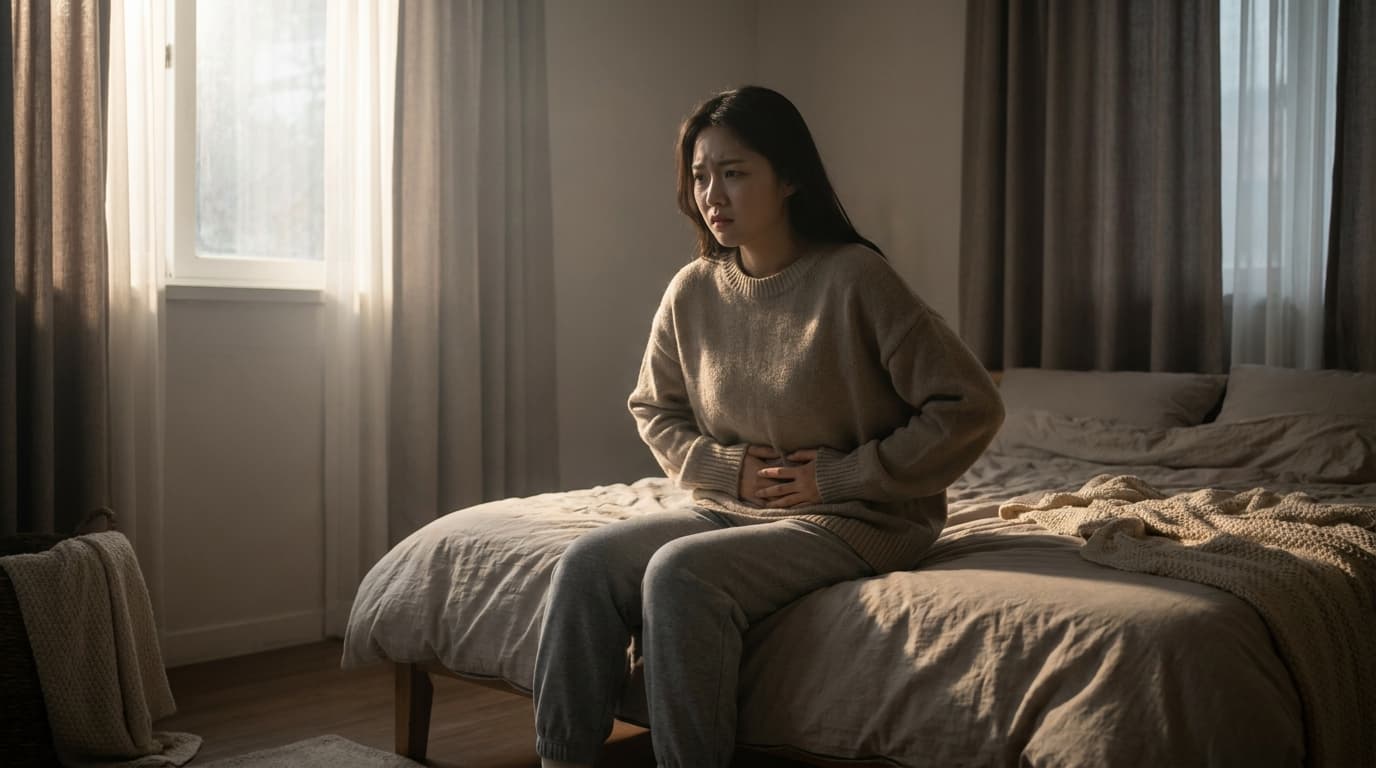
Suddenly discovering a hard, unfamiliar lump in your lower abdomen can be alarming and unsettling. Especially for women, the immediate fear is often whether there is a problem with the uterus. You might feel lost, wondering if this is a serious condition and where to start looking for answers. If you are experiencing such symptoms, the first thing to suspect is uterine fibroids. Uterine fibroids are common enough to be found in about 1 in 3 women of childbearing age, but because symptoms are often mild, they are frequently neglected. Depending on their size and location, however, they can cause significant daily discomfort.
💡 [Core Answer] Top 3 most common causes of a lump-like feeling in the lower abdomen: ① Stagnant blood circulation in the uterus (blood stasis /瘀血) / ② Hormonal imbalance and chronic stress / ③ Uterine fibroids Dalimchae Oriental Clinic focuses on constitutional improvement to resolve the root causes of symptoms and recreate a healthy uterine environment.
Why is a lump felt in the lower abdomen? Could it be an early sign of uterine fibroids?
A lump felt in the lower abdomen is one of the classic symptoms of uterine fibroids. Uterine fibroids are benign tumors that develop in the muscular layer of the uterus, causing various symptoms depending on their location and size. In the early stages, there are often no subjective symptoms, and they may be discovered incidentally during health checkups. As the fibroids grow, however, they can manifest as lower abdominal pressure, bloating, and the physical sensation of a lump. Additional symptoms include heavy menstrual bleeding, severe menstrual cramps, abnormal uterine bleeding, frequent urination, back pain, and even infertility.
Why do uterine fibroids occur? Root causes from an Oriental medicine perspective
While modern medicine has not clearly pinpointed the exact cause of uterine fibroids, they are known to be influenced by female hormones such as estrogen. In Oriental medicine, uterine fibroids are referred to as 'Jeongha' or 'Seokga' and are viewed primarily as imbalances in the uterine environment, specifically 'blood stasis' (어혈) and 'qi stagnation' (기체).
- Blood Stasis (어혈): Refers to a state where waste products or pooled blood stagnate due to impaired blood circulation within the uterus. Cold and chilly pathogens invading the uterus, or a weakened uterine state after childbirth or miscarriage, can lead to blood stasis.
- Qi Stagnation (기체): Refers to the restriction of qi and blood circulation caused by stress or overwork. Chronic stress disrupts hormonal balance, affects the autonomic nervous system, hinders uterine blood circulation, and promotes fibroid growth.
Thus, uterine fibroids are understood not as a single cause, but as the result of complex factors harming uterine health. Westernized dietary habits, visceral obesity, and vitamin D deficiency are also cited as risk factors that increase the likelihood of uterine fibroids. At Dalimchae Oriental Clinic in Incheon, we emphasize treatments that identify these root causes to restore bodily balance.
Can uterine fibroids be improved through Oriental medical treatment? Latest research trends
Oriental medical treatment for uterine fibroids focuses on symptom relief, inhibition of fibroid growth, and recovery of uterine health. Positive effects of herbal medicine treatments have been reported in various clinical studies.
A systematic review and meta-analysis published in Annals of Palliative Medicine in 2021 by Li Q et al. analyzed the effects of herbal medicine prescriptions containing Ejiao (gelatin) or Velvet antler for managing uterine fibroids. By pooling data from 9 randomized controlled trials (RCTs) involving 844 patients, the study found that herbal prescriptions containing Ejiao or Velvet antler were more effective than control groups in reducing fibroid size and improving related symptoms, while decreasing estradiol (E2) and progesterone levels. Furthermore, the herbal medicine group exhibited a lower incidence of adverse events, demonstrating advantages in safety. This study suggests that herbal medicine containing Ejiao or Velvet antler can serve as a meaningful conservative treatment option for uterine fibroids.
A case report published in Integrative Medicine Research in 2018 described an Oriental medical treatment case of a 47-year-old female patient diagnosed with both thyroid cancer and uterine fibroids. The patient underwent concurrent herbal medicine, acupuncture, moxibustion, and pharmacopuncture treatments for 3 months from January to April 2018. As a result, her menstrual pain (measured on a visual analog scale, VAS) decreased from 8 to 5, frequent urination occurring over 10 times a day reduced to 6-7 times, and vaginal discharge duration shortening from 3-4 days to 1 day. Ultrasound examination also showed a decrease in uterine fibroid size (from 9.13 x 6.64 cm to 9.81 x 6.56 cm, with vertical diameter decreasing and horizontal diameter changes within margin of error). The researchers concluded that Oriental medical treatments can have a positive impact on uterine fibroids as an alternative to surgery or hormone therapy.
These research findings support the importance of constitutional improvement treatment pursued by Dalimchae Oriental Clinic. Beyond merely suppressing symptoms, we focus on improving the underlying environment where uterine fibroids grow, thereby preventing recurrence and enhancing the self-healing capacity of the uterus.
Find a healthy uterus again with Dalimchae Oriental Clinic's 'Constitutional Improvement' treatment
In treating uterine fibroids, Dalimchae Oriental Clinic applies the core principle of constitutional improvement. The goal is not just to extinguish symptoms, but to create a body where they do not ignite again. Uterine fibroids are simultaneously a problem of a specific organ—the uterus—and a signal reflecting systemic health imbalance.
Constitutional improvement treatment at Dalimchae Oriental Clinic proceeds in the following directions:
- Removal of uterine blood stasis and circulation improvement: Through herbal prescriptions that dissolve blood stasis, stagnant blood and waste products within the uterus are eliminated, smoothing blood circulation around the uterus. This helps inhibit fibroid growth and prevent the formation of new fibroids.
- Hormonal balance regulation and autonomic stabilization: Treatments are provided to stabilize hormonal balance and autonomic nerves disrupted by stress and irregular lifestyle habits. This improves environmental factors affecting fibroid growth and helps the female body maintain a healthy state on its own.
- Enhancement of uterine self-healing power and constitutional care: Customized herbal prescriptions tailored to individual constitutions and symptoms, alongside acupuncture, moxibustion, and thermal therapy, are combined to strengthen uterine and ovarian functions and boost overall immunity. This contributes to preventing recurrence and creating a uterine environment conducive to healthy pregnancy and childbirth.
Such holistic constitutional improvement treatment helps many visiting the Incheon branch manage uterine fibroids without surgery and recover their health. Even when experiencing worsening menstrual pain or chronic lower abdominal coldness, a check on uterine health is essential.
Are you also at risk for uterine fibroids? Symptom checklist
Check the items below. If many apply to you, it is recommended to receive a professional diagnosis at the Incheon branch of Dalimchae Oriental Clinic:
- Menstrual volume has suddenly increased or menstruation period has lengthened.
- Menstrual cramps are getting worse and painkillers are no longer effective.
- Abnormal bleeding occurs frequently outside of the menstrual period.
- A hard lump-like thing is felt in the lower abdomen or pressure is felt.
- Urination is too frequent or there is discomfort when urinating.
- Chronic lower abdominal pain or pelvic pain is present.
- Pain or discomfort during sexual intercourse.
- Unexplained fatigue or anemia symptoms.
If 3 or more apply: Uterine fibroid suspicion stage. It is recommended to check uterine health status and start preventive care. If 5 or more apply: High likelihood of discomfort caused by uterine fibroids. Immediate visit to an Incheon Oriental clinic for precise diagnosis and treatment is advised.
FAQ: Frequently Asked Questions about Uterine Fibroids
Q. Can uterine fibroids disappear naturally? A. Uterine fibroids are benign tumors that tend to shrink in size or stop growing after menopause due to decreased female hormones. However, complete natural disappearance is rare, and consistent management during childbearing years is important.
Q. Are lower abdominal lumps and uterine fibroids always the same symptom? A. While a lump felt in the lower abdomen is a common symptom of uterine fibroids, it can sometimes be caused by ovarian cysts or other factors. Professional medical examination is essential for accurate diagnosis.
Q. Is pregnancy possible even with uterine fibroids? A. Having uterine fibroids does not mean pregnancy is impossible. However, depending on the location and size of the fibroids, they can cause infertility or miscarriage, making active treatment and management important if pregnancy is planned.
Q. Does herbal treatment prevent the recurrence of uterine fibroids? A. Dalimchae Oriental Clinic's herbal treatment focuses on improving the intrauterine environment and systemic health to inhibit fibroid growth and lower recurrence potential rather than surgically removing the fibroid itself. This creates a healthy uterine environment and supports continuous management.
Uterine fibroids are not problems solved by enduring. You no longer have to ignore the signals your body has been sending for a long time. Approaching in the right way brings faster bodily responses than you think. Bring your current symptoms as they are. We will find the cause together at the Incheon branch of Dalimchae Oriental Clinic.
A place where life blossoms. Herbal medicine is Dalimchae Oriental Clinic. Check your symptoms first via AI consultation on the Dalimchae Oriental Clinic website!
This health information was compiled together by Dalimchae medical staff based on frequent questions in the treatment room. Medical Supervision | Incheon Branch of Dalimchae Oriental Clinic, Oriental Medical Doctor Ji-hong Min (Uterine Fibroids Column)