
Hello, this is Dalimchae Korean Medicine Clinic.
If You Sweat Elsewhere After Surgery, Concerns About Hyperhidrosis Surgery Side Effects Have an Answer in Korean Medicine
Many people suffer from hyperhidrosis, sweating excessively. Shaking hands is awkward due to damp hands and feet, armpits are soaked, and sweat pours from the face, making interpersonal relationships difficult. While considering surgery for this discomfort, many hesitate due to concerns about unexpected side effects like compensatory hyperhidrosis ("If I have surgery, I'll sweat somewhere else, right?"). Let's understand the root cause of hyperhidrosis and find a healthy way to control sweat without side effects.
💡 [Key Answer] Why do hyperhidrosis surgery side effects happen ("If I have surgery, I'll sweat somewhere else")? Top 3 causes: ① Autonomic nervous system imbalance leading to compensatory action ② Sympathetic nerve hyperactivity commanding sweat secretion ③ Body system imbalance caused by artificial nerve blocking Dalimchae Korean Medicine Clinic restores the balance of disturbed autonomic nerves to create a fundamental environment where the body controls sweat on its own.
Sweating excessively, is it just a constitutional issue?
Sweating is an important physiological phenomenon regulating body temperature and discharging waste. However, when sweat is secreted excessively without special stimuli, it is 'hyperhidrosis'. Especially influenced by the nervous system, particularly the autonomic nervous system governing unconscious functions. Excessive stress, tension, and fatigue disrupt autonomic balance, causing abnormal sweat control.
Why does 'compensatory hyperhidrosis' occur after surgery?
Many consider sympathectomy for direct effects, cutting nerve signals to sweat glands. However, compensatory hyperhidrosis often occurs where sweat is reduced in hands/armpits but pours out on the back, chest, abdomen, or thighs. Artificially blocking sympathetic nerves causes the body to find other outlets for heat/sweat, overstimulating nerves elsewhere. This occurs in over half of surgery patients (up to 3% to 98%). Simply blocking sweat glands cannot perfectly control the complex autonomic nervous system.
Hyperhidrosis and Autonomic Balancing Korean Medicine Treatment
Dalimchae Korean Medicine Clinic views hyperhidrosis not just as excessive sweat, but as 'autonomic nervous system imbalance'. Overactive sympathetic nerves act like an overheated engine. Studies (such as 2022 Korean Journal of Oriental Physiology & Pathology/comparative reviews) show tailored herbal medicine (targeting spleen/stomach deficiency, kidney Yin deficiency, stomach heat) significantly improves quality of life (DLQI) and discomfort (VAS) for hyperhidrosis patients.
Dalimchae Korean Medicine's Autonomic Stability Treatment Principle
We focus on 'autonomic stability' in our Incheon branch. When autonomic balance breaks, the brain cannot rest and the body stays tense. We aim to cool nervous system heat and allow the brain to rest—known as 'Suseunghwagang' (water rises, fire descends). Tailored herbal medicine, acupuncture, and pharmacopuncture calm excited sympathetic nerves and replenish body fluids, building natural sweat regulation and preventing recurrence/compensatory hyperhidrosis.
Hyperhidrosis / Autonomic Imbalance Checklist
If 3+ apply, suspect autonomic imbalance hyperhidrosis:
- Sweat pours even when resting.
- Sweat worsens with tension or stress.
- Sweat concentrates on hands, feet, or armpits.
- Social/interpersonal difficulties due to sweat.
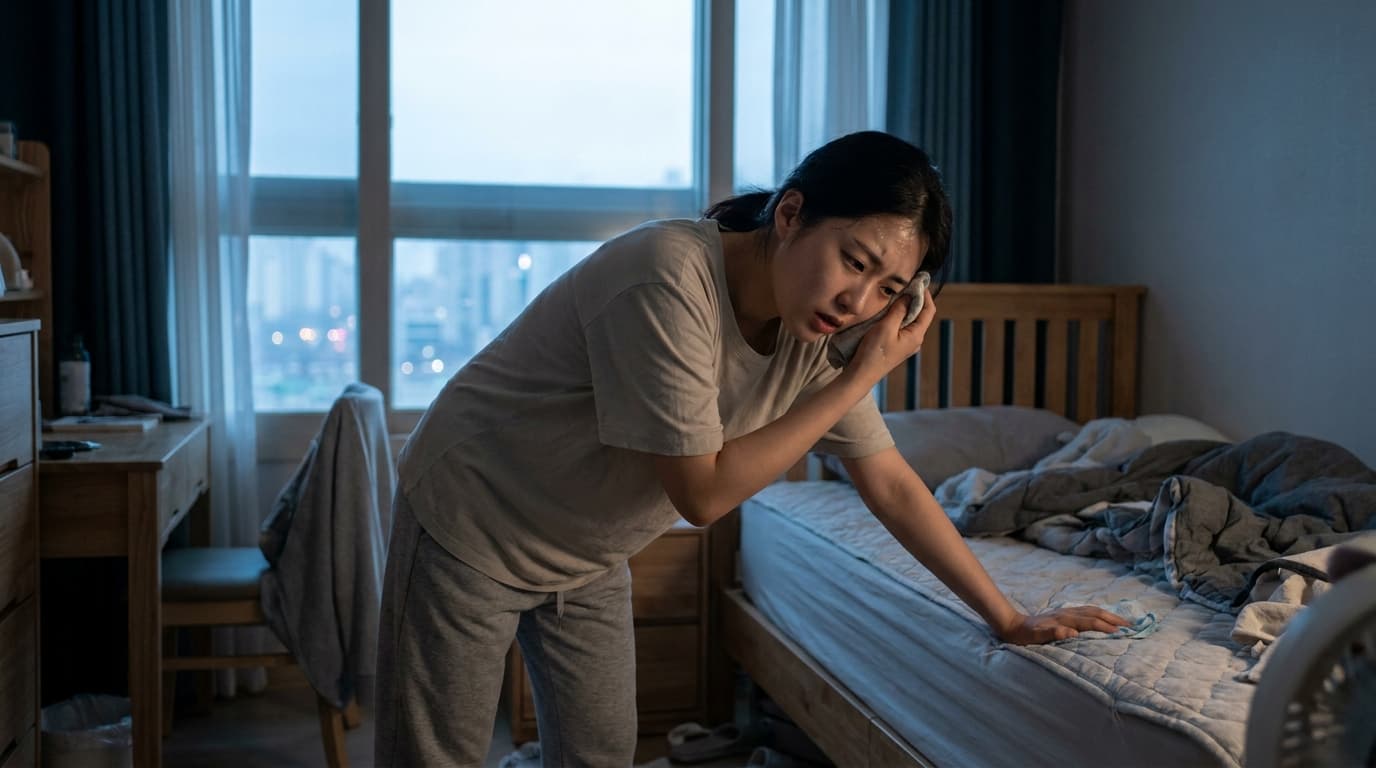
- Night sweats dampening bedding.
- Severe fatigue and easy exhaustion.
- Frequent heart palpitations or stuffiness.
- Poor digestion and frequent gas.
- Poor sleep quality.
- Unexplained anxiety or nervousness. Criteria: 3+ = Suspected autonomic imbalance hyperhidrosis; 5+ = Immediate visit recommended.
Treatment Process at Dalimchae Korean Medicine Clinic
- Precise Diagnosis: Examination, pulse diagnosis, and autonomic testing.
- Tailored Prescription: Customized herbal medicine to stabilize sympathetic nerves and replenish vital fluids.
- Acupuncture & Pharmacopuncture: Stimulate key acupuncture points regulating autonomic nerves.
- Lifestyle Guidance: Dietary, exercise, and stress management guidance.
Q. How long does treatment take? A. Varies by severity and constitution, generally weeks to months of steady treatment.
Q. Can compensatory hyperhidrosis from surgery be treated? A. Yes, restoring autonomic balance helps the body regulate sweat naturally without artificial blocking.
Q. Can hyperhidrosis heal naturally? A. Chronic hyperhidrosis is difficult to heal naturally; professional care is important.
Q. Can anxiety and insomnia be treated together? A. Yes, autonomic stability treatment improves overall nervous system stabilization, helping anxiety and insomnia.
Hyperhidrosis cannot be solved by enduring it. Let Dalimchae Korean Medicine Clinic help you find the cause.
Medical Supervision | Department of Neurology & Autonomic System, Incheon Branch of Dalimchae Korean Medicine Clinic, Korean Medicine Doctor Min Ji-hong (Hyperhidrosis Column)