
Hello. This is Dalimchae Korean Medicine Clinic.
I Feel Depressed After Retirement? It Could Be Your Body's Final Warning Light.
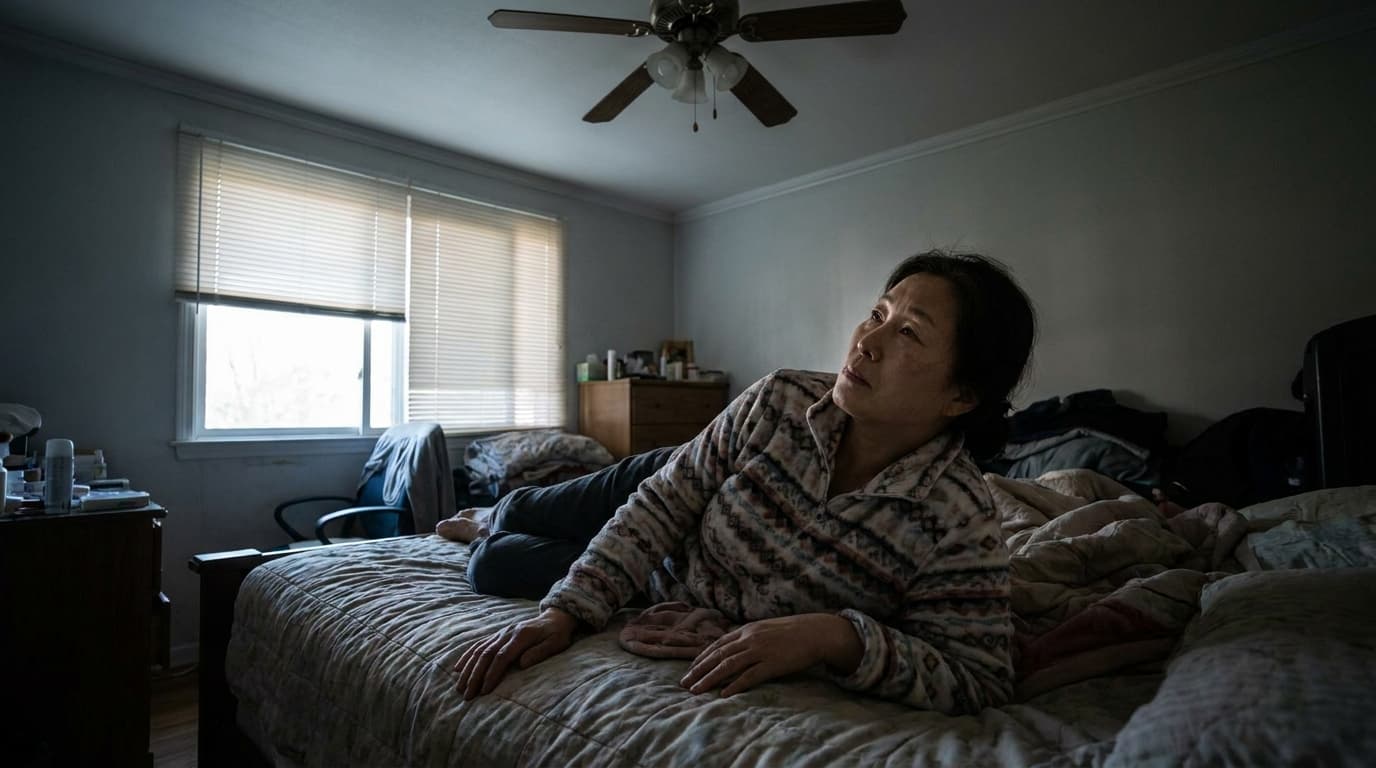
We often imagine that after retiring from a job we've dedicated our passion to for a long time, a relaxing life we've all dreamed of will unfold. However, reality is often not that simple. Feelings of emptiness like "What should I do now?" and "What is my value?" rush in, and as it becomes difficult even to open your eyes in the morning, many people complain, "I feel depressed after retirement." The disappearance of a vibrant daily life being filled by lethargy and a sense of loss is one of the common psychological changes experienced in old age. The depression that appears during this period can be a significant signal that the balance of the body and mind is seriously broken, beyond just a drop in mood.
💡 [Key Answer] The 3 most common causes of "I feel depressed after retirement": ① Sense of loss and role change: Emptiness that comes with the loss of social roles. ② Autonomic nervous system imbalance: Decreased nervous system function due to chronic stress and physical changes. ③ Changes in brain function: Abnormal neurotransmitter secretion and increased brain inflammatory response with aging. Dalimchae Korean Medicine Clinic restores life's vitality through autonomic balance recovery and brain function stabilization.
Why is post-retirement depression so common?
Retirement means more than just quitting a job; it signifies a major turning point in life and a change in identity. It is perfectly natural to feel a great sense of loss as the social roles and sense of belonging that defined you for a long time disappear. Especially for men, the feeling of helplessness is easily felt as the pressure of family economic responsibility is relieved and the emptiness of losing life goals is added. In the case of women, the independence of children, changes in the relationship with their spouse, and menopausal hormone changes can act in combination, making them vulnerable to depression.
This psychological stress directly affects our body's autonomic nervous system. The autonomic nervous system is responsible for essential functions for maintaining life, such as heartbeat, digestion, and sleep, and the balance between the sympathetic and parasympathetic nervous systems is important. Post-retirement stress, irregular lifestyle, and decreased activity can break the balance of the autonomic nervous system, overactivating the sympathetic nervous system and lowering the parasympathetic nervous system. This does not just stop at mood problems but is accompanied by various physical symptoms such as chronic fatigue, indigestion, sleep disorders, and even dizziness or headaches, further intensifying depression in old age. If this situation continues for a long time, it can affect brain function, leading to neurotransmitter imbalance and making it difficult to feel the joy of life.
What is the relationship between autonomic imbalance and depression?
The autonomic nervous system in our body acts like a car's accelerator (sympathetic nervous system) and brake (parasympathetic nervous system), maintaining the body's balance. Post-retirement insecurity, loneliness, and helplessness act as psychological stress, keeping the sympathetic nervous system constantly excited. This makes the body tense like an 'overheated engine' and causes excessive energy consumption. On the other hand, the function of the parasympathetic nervous system, which helps the body relax and recover, gradually decreases, so the body cannot rest and suffers from chronic tension and fatigue. This imbalance of the autonomic nervous system affects the emotion regulation center of the brain and becomes a major cause of depression, anxiety, irritability, and insomnia.
In old age, physical function decreases and autonomic regulation ability weakens, making one more vulnerable to stress than in youth, and autonomic imbalance can easily become chronic. If you feel "my body is constantly uncomfortable and my mind is depressed" even though there is no particular abnormality in the examination, it is highly likely that it is a warning signal sent by the autonomic nervous system. Dalimchae Korean Medicine Clinic Incheon branch meticulously diagnoses this autonomic imbalance and restores the harmony of body and mind through Oriental medicine treatment that addresses its root.
How does Oriental medicine treatment help improve post-retirement depression?
In Oriental medicine, depression is not seen simply as a 'disease of the mind' but as a 'disease of the body' in which the functions of the internal organs, the circulation of Qi and blood, and the imbalance of the autonomic nervous system act in combination. Therefore, Dalimchae Korean Medicine Clinic identifies the physical and mental causes of depression in an integrated way and proceeds with personalized treatment.
According to a study by the Korea Institute of Oriental Medicine (KIOM) published in the journal 「Animal Models and Experimental Medicine」 in 2026, acupuncture treatment was confirmed through animal experiments to be effective in alleviating depression and anxiety symptoms caused by post-traumatic stress disorder (PTSD). The researchers observed that when electroacupuncture stimulation was applied to the Baekhoe point (GV20) at the top of the head and the Indang point (EX-HN3) on the forehead, the trigeminal nerve pathway, a major cranial nerve responsible for facial sensation, was activated, brain neuroinflammation was suppressed, and behavioral symptoms such as helplessness and anxiety behaviors decreased while exploratory behavior increased significantly. In particular, they revealed a mechanism that effectively alleviates neuroinflammation by reducing inflammatory cytokine production and regulating P2X7 receptors. Regarding this result, the researchers concluded, "We have proven that acupuncture treatment can suppress neuroinflammation and regulate anxiety and depression through the trigeminal nerve pathway, and we are developing safe brain stimulation technology that regulates the cranial nervous system and glymphatic system by verifying the neuromodulatory effects of acupuncture through clinical research." These research results suggest that acupuncture treatment can approach the fundamental cause of depression through the regulation of inflammatory responses and functions of the cranial nervous system, beyond simple symptom relief.
Also, according to the 'Senior Oriental Medicine Health Promotion Project Result Report' by the Seoul Oriental Medical Association reported through The Doctors in 2019, significant improvement effects were confirmed in all fields, including the participants' cognitive function evaluation (MMSE-DS) and depression screening test (GDSSF-K) scores, as well as overall dementia knowledge, attitude, practice, and frailty scale, in an 8-week Oriental medicine clinic-type program (acupuncture treatment and herbal medicine administration) conducted for seniors aged 60 and older. In particular, more than 70% of the 1,830 participants participated steadily in the program and showed high satisfaction. This shows that the 'autonomic stabilization' treatment pursued by Dalimchae Korean Medicine Clinic can be an effective alternative in restoring physical and mental vitality to elderly patients suffering from depression.
Dalimchae Korean Medicine Clinic focuses on restoring the balance of the autonomic nervous system and stabilizing brain function based on such scientific evidence. We create an environment where the body can recover on its own by calming the excessively excited sympathetic nervous system and activating the lowered parasympathetic nervous system. Lowering the heat of the nervous system and creating an environment where the brain can rest—referred to as 'Suseung-hwagang' in Oriental medicine—is the key to improving depression. We will do our best so that those looking for an Incheon depression Oriental medicine clinic can regain their peace of mind and physical health at Dalimchae Korean Medicine Clinic Incheon branch.
Self-Diagnosis: Am I suffering from post-retirement depression?
Through the following questions, you can gauge the degree of depression you are currently experiencing. If these symptoms persist for more than 2 weeks, it is recommended to consult a specialist.
Post-Retirement Depression Self-Checklist
- Have no interest or feel no joy in most things.
- Feel sad or empty for no reason.
- Feel fatigued easily and activity levels have decreased significantly.
- Changes have occurred in sleep patterns, such as difficulty falling asleep or sleeping too much.
- Appetite is gone or too much, leading to large weight changes.
- Speech or actions become slow or feel restless in many cases.
- Often feel useless or feel guilty.
- Concentration drops and it's hard to make decisions.
- Have had thoughts about death or self-harm impulses.
- Unexplained physical pain such as headaches, indigestion, or dizziness persists.
Judgment Criteria:
- 3 or more items: Post-retirement depression or autonomic imbalance can be suspected. Consider Oriental medicine combination treatment like Dalimchae Korean Medicine Clinic Incheon branch.
- 5 or more items: Professional diagnosis and treatment may be required. Immediate visit is recommended.
- Item 9: You must get professional help without delay.
FAQ: Frequently Asked Questions about Post-Retirement Depression
Q. Can post-retirement depression get better naturally? A. Post-retirement depression can be a natural change in emotions, but if it persists for more than 2 weeks or interferes with daily life, professional help is needed. If left unattended, it can become chronic or lead to other physical diseases, so early treatment is important.
Q. Can Oriental medicine treatment really improve depression? A. Yes, Oriental medicine treatment can be an effective alternative for improving depression. Acupuncture treatment helps regulate neurotransmitters in the brain and suppress inflammation, and herbal medicine restores autonomic balance and improves Qi and blood circulation according to individual constitution and symptoms, alleviating depression.
Q. How long does the treatment period take? A. The treatment period can vary depending on the severity of the individual's symptoms, health status, and response to treatment. Generally, in the early stages of depression, treatment of about 3 months can be considered, and for those taking Western medicine or chronic cases, 3-6 months. Steady treatment and management are important.
Q. I have other diseases along with depression, can they be treated together? A. Yes, Dalimchae Korean Medicine Clinic provides integrated treatment for various symptoms accompanied by autonomic imbalance, including depression, insomnia, chronic fatigue, indigestion, headaches, and dizziness. Since the body and mind are connected as one, several symptoms can improve together if the root cause is addressed.
The depression that comes after retirement is not a problem that can be solved by enduring it. You no longer have to ignore the signals your body has been sending for a long time. If you approach it in the right direction, your body will respond faster than you think. Bring your current symptoms as they are. We will find the cause together at Dalimchae Korean Medicine Clinic.
Where life blossoms. For herbal medicine, it's Dalimchae. Check for symptoms similar to yours through the AI consultation on the Dalimchae Korean Medicine Clinic website first!
This health information was compiled by Dalimchae's medical staff based on frequently asked questions in the clinic. Medical Supervision | Brain/Autonomic Nervous System Standards, Dr. Ji-hong Min, Dalimchae Korean Medicine Clinic Incheon (Depression Column)