
Hello. This is Dalimchae Korean Medicine Clinic.
Heavy Period Flow: When the Uterus Can't Regulate, Regain Balance with Korean Medicine
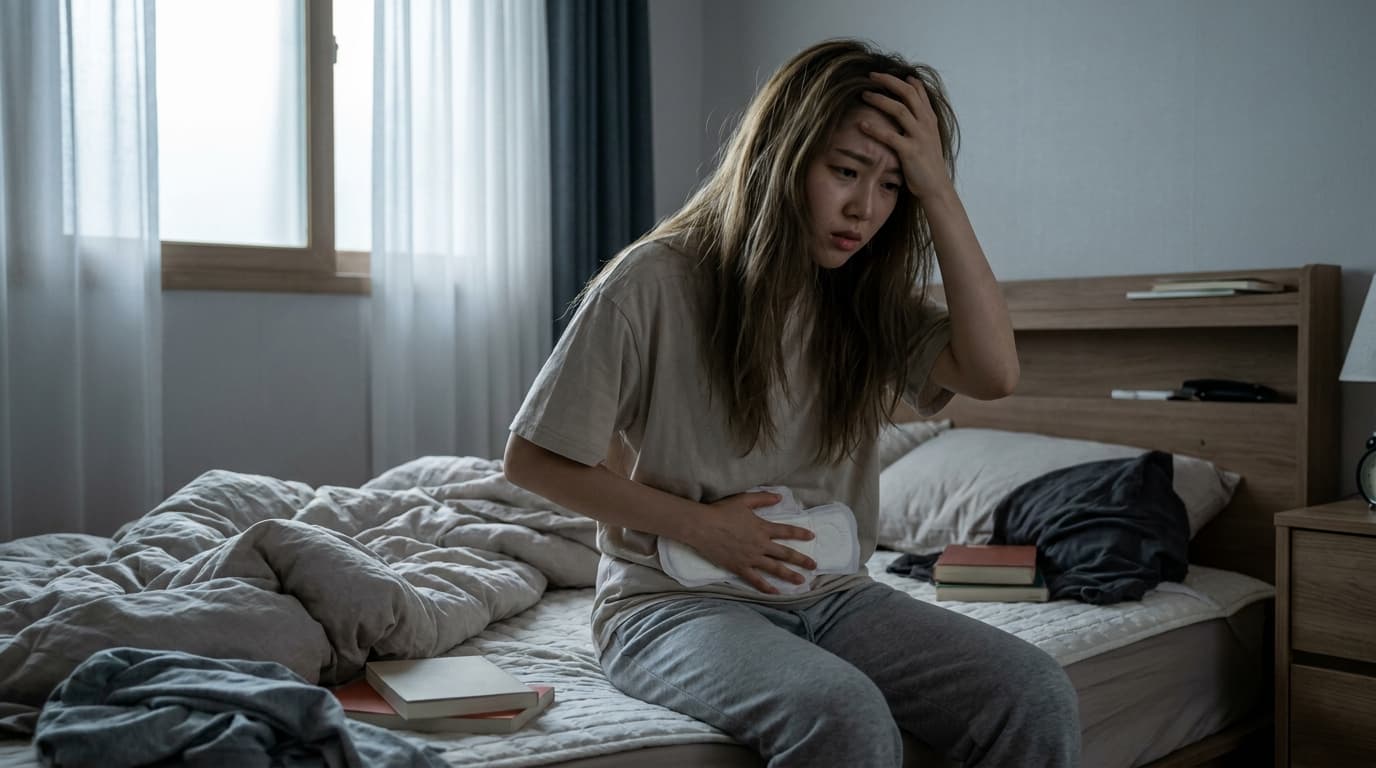
"My sanitary pad gets soaked in less than an hour." "I can't even sleep properly at night for fear of leaking." It's surprisingly common for women to experience difficulties in daily life due to heavy menstrual flow. Beyond simple discomfort, it can cause anemia, chronic fatigue, and lethargy, significantly lowering the quality of life. However, many women often overlook it, thinking, 'Maybe my body is just like that.' You shouldn't take the emergency signals sent by the uterus lightly. Heavy menstrual flow can be a strong signal that there is a problem within the uterus or that the balance of the entire body is broken.
💡 [Key Answer] 3 most common causes of the symptom "Heavy menstrual flow": ① Organic abnormalities in the uterus such as uterine fibroids and adenomyosis / ② Hormonal imbalance / ③ Stagnation of uterine and systemic Qi and blood circulation Dalimchae Clinic restores a healthy menstrual cycle by fundamentally improving the uterine environment through constitutional improvement and strengthening systemic immunity.
If the menstrual flow is too heavy, what could be the problem?
Heavy menstrual flow is medically called 'menorrhagia' or 'hypermenorrhea'. It usually refers to when it lasts for more than 7 days or when the total blood volume during the menstrual period exceeds 80 mL. But it would be difficult to measure the menstrual flow every time. Generally, if a sanitary pad gets soaked within one or two hours, if you have to change the pad at night, or if a lot of clotted blood comes out, you can suspect menorrhagia. These symptoms are warning lights sent by the uterus, and if left unattended, they can cause dizziness, shortness of breath, and chronic fatigue due to anemia, and in severe cases, can adversely affect uterine health overall.
Is hypermenorrhea due to uterine fibroids or hormone problems?
The causes of hypermenorrhea are very diverse. The most common organic causes include uterine fibroids, adenomyosis, endometrial hyperplasia, and endometrial polyps. In addition, hormonal imbalances, blood coagulation abnormalities, and pelvic inflammatory diseases can have an effect. In Korean medicine, this phenomenon is interpreted as stagnation of Qi and blood circulation in the uterus, accumulation of blood stasis (瘀血), or systemic weakness and dysfunction of the organs. In particular, stress and irregular lifestyle habits break the balance of the autonomic nervous system, affecting the hormone regulation function, which in turn leads to a vicious cycle of hypermenorrhea.
How does Korean medicine treatment help regulate menstrual flow?
At Dalimchae Clinic Songdo Branch, we apply multifaceted Korean medicine treatment for the recovery of uterine health for patients suffering from heavy menstrual flow. Beyond simply stopping bleeding, the goal is to improve the internal uterine environment and increase systemic immunity to help the uterus maintain a healthy menstrual cycle on its own. In particular, at the Songdo Hypermenorrhea Clinic, through herbal prescriptions that remove blood stasis, promote Qi and blood circulation in the uterus, and strengthen the function of the weakened uterus, positive effects can also be expected for hypermenorrhea caused by organic problems such as uterine fibroids or adenomyosis.
In fact, research results showing that Korean medicine treatment is effective for hypermenorrhea are being announced.
In a study by a research team at Hebei Medical University in China published in the Journal of Ethnopharmacology in 2019, as a result of applying a herbal prescription called Jingfuyi-tang to 120 patients suffering from uterine bleeding for 3 months, the average menstrual blood volume decreased by 46.2% from 130 mL before treatment to 70 mL after treatment (p<0.01), and in particular, hemoglobin levels were significantly improved, confirming that it was helpful in relieving anemia symptoms. The researchers concluded that Jingfuyi-tang effectively regulates hypermenorrhea by improving blood flow in the uterus and increasing the stability of the endometrium.
In addition, in a study by the Korea Institute of Oriental Medicine published in Complementary Therapies in Medicine in 2021, as a result of combining herbal medicine treatment and acupuncture treatment for 98 patients with hypermenorrhea, after 3 weeks of treatment, the menstrual volume score (PBAC score) decreased by 50% from an average of 180 points before treatment to 90 points after treatment (p<0.001), and showed a statistically significant menstrual flow reduction effect compared to the control group. This study suggests that complex Korean medicine treatment can contribute to alleviating hypermenorrhea symptoms and improving patients' quality of life. Based on this data, Dalimchae Clinic proceeds with constitutional improvement treatment that solves the fundamental cause of hypermenorrhea by strengthening the uterus and smoothing systemic Qi and blood circulation.
Dalimchae Clinic's constitutional improvement, by what principle does it treat hypermenorrhea?
The constitutional improvement treatment conducted at Dalimchae Clinic aims to create a body where symptoms do not turn on again by having the body regain a healthy balance on its own, rather than just temporarily suppressing symptoms. Heavy menstrual flow means that there are problems with Qi and blood circulation and organ functions of the entire body as well as the uterus. In particular, in Korean medicine, the health of the uterus is closely related to the functions of the liver (肝) and kidneys (腎臟). The liver plays a role in storing and regulating blood, and the kidneys govern reproductive functions. If the functions of these two organs weaken or become imbalanced, the flow of blood to the uterus is not smooth, which can lead to problems such as hypermenorrhea.
At Dalimchae Clinic, customized herbal medicine is prescribed after a thorough diagnosis according to each patient's constitution and symptoms. This herbal medicine resolves blood stasis in the uterus and strengthens the weakened liver and kidney functions to increase the uterus's self-healing power. In addition, it smoothing systemic Qi and blood circulation to raise the body's recovery power, and enhances immunity to help the uterus maintain health without shaking even from stress and external stimuli. Through this, not only is the menstrual flow regulated, but systemic symptoms such as accompanying menstrual pain, chronic fatigue, and indigestion can also be improved together. We hope you regain a healthy uterus and a comfortable daily life through this fundamental treatment at Songdo Clinic.
Hypermenorrhea, do I apply as well? Menstrual flow checklist
If any of the following items apply, visit Dalimchae Clinic for accurate diagnosis and consultation.
- My sanitary pad often gets soaked in less than an hour.
- I often lose sleep at night worrying about the pad leaking during my period.
- Fist-sized blood clots often come out.
- The menstrual flow lasts for more than 7 days.
- I often feel dizzy or lightheaded because the menstrual flow is heavy.
- Chronic fatigue and lethargy become more severe during the menstrual period.
- The menstrual cycle has become more irregular or menstrual pain has become more severe than before.
3 or more items apply → Suspect hypermenorrhea → Review Dalimchae Clinic complex treatment 5 or more items apply → Immediate visit recommended
Q. How long does hypermenorrhea treatment take? A. The duration of hypermenorrhea treatment may vary depending on individual constitution, the presence of the causal disease, and the severity of symptoms. Usually, you can feel meaningful changes through steady treatment for 2-3 months, and continuous management is necessary until the uterine environment is stabilized.
Q. I have uterine fibroids, can hypermenorrhea also be treated with Korean medicine? A. Yes, hypermenorrhea caused by uterine fibroids can also be a target of Korean medicine treatment. Through herbal prescriptions, it can help inhibit the growth of fibroids and reduce the amount of bleeding by removing blood stasis in the uterus and promoting Qi and blood circulation.
Q. Can hypermenorrhea heal naturally? A. Some hypermenorrhea due to mild hormonal imbalance may improve naturally through lifestyle improvements. However, if there are organic causes such as uterine fibroids or adenomyosis, or if anemia is severe, a specialist's diagnosis and treatment are essential.
Q. I have both hypermenorrhea and menstrual pain, can they be treated together? A. Yes, hypermenorrhea and menstrual pain often share fundamental causes such as uterine Qi and blood circulation problems or blood stasis. Dalimchae Clinic's constitutional improvement treatment is effective in improving these two symptoms at the same time and contributes to overall women's health promotion.
Hypermenorrhea is not a problem that can be solved by enduring. You no longer have to ignore the signals your body has been sending for a long time. If you approach in the right direction, the body responds faster than you think. Bring your symptoms exactly as they are. At Dalimchae Clinic, we will find the cause together.
Where life blooms. For herbal medicine, it's Dalimchae Korean Medicine Clinic. Check your symptoms similar to mine through the AI consultation on the Dalimchae Clinic website first!
This article is health information compiled by Dalimchae medical staff based on questions frequently received in the treatment room. Medical Supervision | Women & Pregnancy Treatment Standards Dalimchae Clinic Songdo Branch Korean Medicine Doctor Oh Hyunmin (Hypermenorrhea Column)