
Hello, this is Dalimchae Korean Medicine Clinic.
Heavy Menstrual Bleeding: Don't Suffer Alone
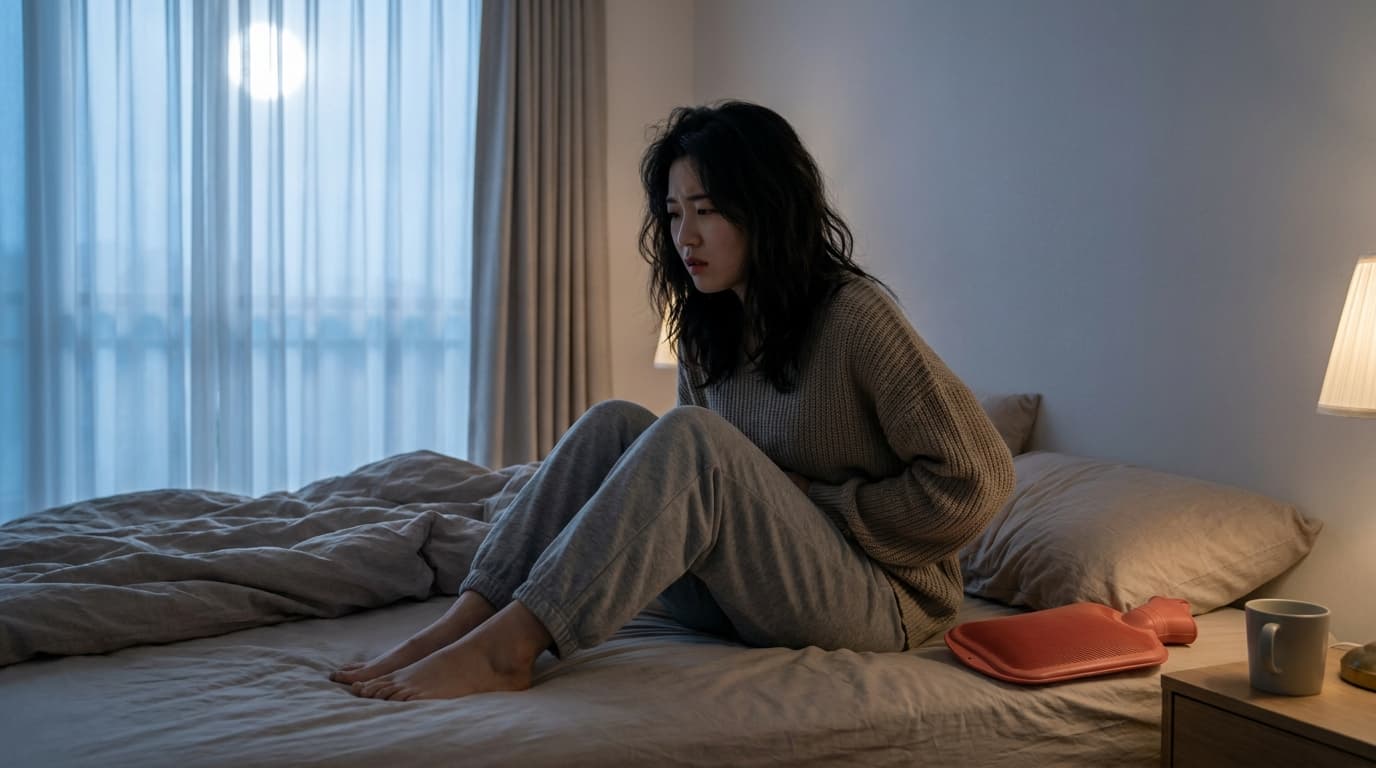
Have you ever been embarrassed by a sudden gush of heavy menstrual blood? Many women experience significant discomfort in their daily lives and worry whether it might be a serious condition due to unusual menstrual volume. Heavy menstrual bleeding, or menorrhagia, is a condition where ignoring it or relying solely on painkillers or coagulants can lead to bigger problems. Because heavy menstrual bleeding is an important signal from your body, understanding this signal properly and finding appropriate care is essential.
💡 Key Takeaways Top 3 causes of heavy menstrual bleeding: ① Hormonal imbalance / ② Uterine internal diseases (uterine fibroids, adenomyosis, etc.) / ③ Autonomic nervous system imbalance Dalimchae Korean Medicine Clinic solves the root cause of heavy menstrual bleeding by correcting broken body balance through a constitutional improvement approach.
Why is menstrual blood gushing out so heavily?
Menorrhagia, where menstrual blood is excessively heavy, can be a red flag for health beyond mere discomfort. Normal menstrual volume is usually about 2060mL and lasts within 7 days. If your menstrual volume is 80mL or more, lasts for 8 days or more, and requires changing sanitary pads every 23 hours, you should suspect menorrhagia. These changes can be caused by various factors, which can be examined through the following points.
One of the most common causes is hormonal imbalance. When the ratio of estrogen and progesterone is disrupted, the endometrium proliferates excessively, leading to increased menstrual flow. In particular, stress, overwork, and irregular lifestyle habits are main culprits that easily disrupt hormone balance. In addition, when there are internal uterine diseases such as uterine fibroids, adenomyosis, or endometriosis, menstrual flow can surge and large blood clots can occur. These structural problems definitely require professional diagnosis.
In Oriental medicine, menorrhagia is not viewed simply as a local problem. We consider that the imbalance of the autonomic nervous system, our body's overall regulatory system, can also affect the menstrual cycle and lead to excessive menstrual volume. The autonomic nervous system can be easily disturbed by stress, lack of sleep, etc., which affects hormone secretion and uterine blood circulation, thereby hindering menstrual function. Especially in women's bodies, hormone changes are large according to the menstrual cycle, causing the autonomic nervous balance to react more sensitively. Therefore, treatment that finds the root cause and restores body balance is important.
Why should you pay attention to Oriental medicine treatment for menorrhagia?
When special abnormalities are not found in Western medical examinations, or when symptoms repeat despite drug treatment, many people seek Oriental medicine treatment. Oriental medicine focuses on balancing our whole body and strengthening uterine and ovarian functions to stabilize the menstrual cycle. This goes beyond simply suppressing symptoms; it builds the body's own strength so that the phenomenon of heavy menstrual bleeding does not occur again.
In fact, the effectiveness of herbal medicine treatment for gynecological diseases such as menorrhagia has been proven through various studies.
A study published in the [Phytotherapy Research] journal in 2015 investigated the effect of ginger (Zingiber officinale) on Heavy Menstrual Bleeding (HMB) in 92 high school female students through a placebo-controlled randomized clinical trial. As a result of the study, menstrual blood loss significantly decreased in the ginger-taking group compared to the placebo group (p<0.001), and side effects were reported to a minimum. The researchers concluded that ginger could be an effective treatment option for HMB.
Also, another study published in the [Alternative Therapies in Health and Medicine] journal in 2018 conducted a randomized clinical trial evaluating the effect of aqueous alcoholic extract of shepherd's purse (Capsella bursa-pastoris) on 84 menorrhagia patients. In this study, menstrual bleeding volume significantly decreased (p < 0.001) in the experimental group taking shepherd's purse extract compared to the control group (taking mefenamic acid and placebo). The researchers reported that shepherd's purse extract is effective in reducing menstrual bleeding.
These research results show that specific herbal medicines can have a significant effect on improving menorrhagia symptoms. At Dalimchae Korean Medicine Clinic, based on such Oriental medical knowledge and modern scientific approaches, we provide customized constitutional improvement treatments tailored to each patient's constitution and symptoms. Beyond simply stopping bleeding, our goal is to resolve the root cause of menorrhagia, strengthen uterine function, and help restore women's health.
Eradicate the root of menorrhagia with ‘constitutional improvement’ at Dalimchae Korean Medicine Clinic Incheon Branch
At Dalimchae Korean Medicine Clinic Incheon Branch, we do not limit the cause of heavy menstrual bleeding simply to hormone problems or uterine diseases. Our goal is to improve the fundamental balance of our body, namely constitution, and healthily return the menstrual cycle.
Constitutional improvement means creating a body where symptoms do not turn on again, rather than temporarily turning them off. To this end, we closely diagnose individual physical condition and medical history, and comprehensively apply customized herbal medicine prescriptions, acupuncture, moxibustion, etc. For example, we remove blood stasis in the uterus and pelvic cavity to promote blood circulation and strengthen uterine function, and reinforce weak constitution due to qi and blood deficiency to restore overall body vitality. Such an approach can have a positive effect not only on menorrhagia but also on related women's diseases such as menstrual cramps or infertility.
At Dalimchae Korean Medicine Clinic Incheon Branch, we analyze each patient's constitution through a precise diagnosis system and evaluate uterine function and overall physical condition. Based on this, we establish a customized treatment plan to improve the uterine environment, normalize hormone balance, and restore the regulatory ability of the autonomic nervous system collapsed by stress. Many people looking for a Incheon menorrhagia Korean medicine clinic are recovering healthy menstrual cycles at Dalimchae Korean Medicine Clinic.
Menorrhagia Self-Diagnosis Checklist
If you correspond to 3 or more of the items below, we recommend visiting Dalimchae Korean Medicine Clinic Incheon Branch to consider precise diagnosis and Oriental complex treatment. If 5 or more, immediate visit is necessary.
- Menstrual flow is heavy, requiring pad changes during the night.
- On days with heavy flow, sanitary pads need to be soaked and changed every 1~2 hours.
- Menstrual period lasts for 8 days or more.
- Blood clots larger than a 100-won coin frequently appear.
- Experienced fatigue, lethargy, or shortness of breath during menstruation. (Suspected anemia)
- Daily life is hindered due to excessively heavy menstrual flow.
- Menstrual flow suddenly increases or decreases, showing a pattern different from usual.
- Anemia symptoms such as dizziness, headache, and heart palpitations frequently appear.
Q. How long should menorrhagia be treated? A. The treatment period for menorrhagia may vary depending on individual constitution, presence of underlying diseases, and severity of symptoms. Usually, through a 2~3 month treatment process, the goal is to stabilize the menstrual cycle, and consistent management afterward is important.
Q. Is post-treatment management possible for menorrhagia with Oriental medicine? A. Oriental medicine treatment is effective in solving the root cause of menorrhagia, recovering body balance, and lowering the possibility of recurrence. However, in the case of organic diseases such as uterine fibroids, treatment response may vary depending on size or location, and the approach shifts toward symptom improvement and management rather than post-treatment management.
Q. Is it okay if menstrual blood clots continue to come out? A. Menstrual blood clots coming out may be coagulated blood, but if the size is larger than a 100-won coin or occurs frequently, it is an important indicator of menorrhagia. Since it can be a sign of internal uterine disease, it is recommended to get an accurate diagnosis.
Q. Do menorrhagia and dysmenorrhea occur together and can they be treated together? A. Yes, menorrhagia and dysmenorrhea often appear together, and both are related to uterine and pelvic circulation problems, hormonal imbalance, and autonomic nervous system problems. Dalimchae Korean Medicine Clinic's constitutional improvement treatment helps address the root causes of these two conditions together so they can be improved simultaneously.
Heavy menstrual bleeding is not a problem that can be solved by enduring. You no longer need to ignore the body's signals sent for a long time. If you approach in the right direction, your body responds faster than you think. Bring the symptoms you are experiencing as they are. Dalimchae Korean Medicine Clinic will find the causes together.
The place where life blossoms. Herbal medicine is Dalimchae Korean Medicine. Check symptoms similar to yours first through the Dalimchae Korean Medicine Clinic homepage AI consultation!
Medical Supervision | Women & Pregnancy Treatment Standards, Dalimchae Korean Medicine Clinic Incheon Branch, Oriental Medical Doctor Min Jihong (Menorrhagia Column)