
Hello, this is Dalimchae Oriental Medicine Clinic.
Entire Body Chilly After Childbirth, Could It Be Postpartum Wind? Find Causes Without Enduring
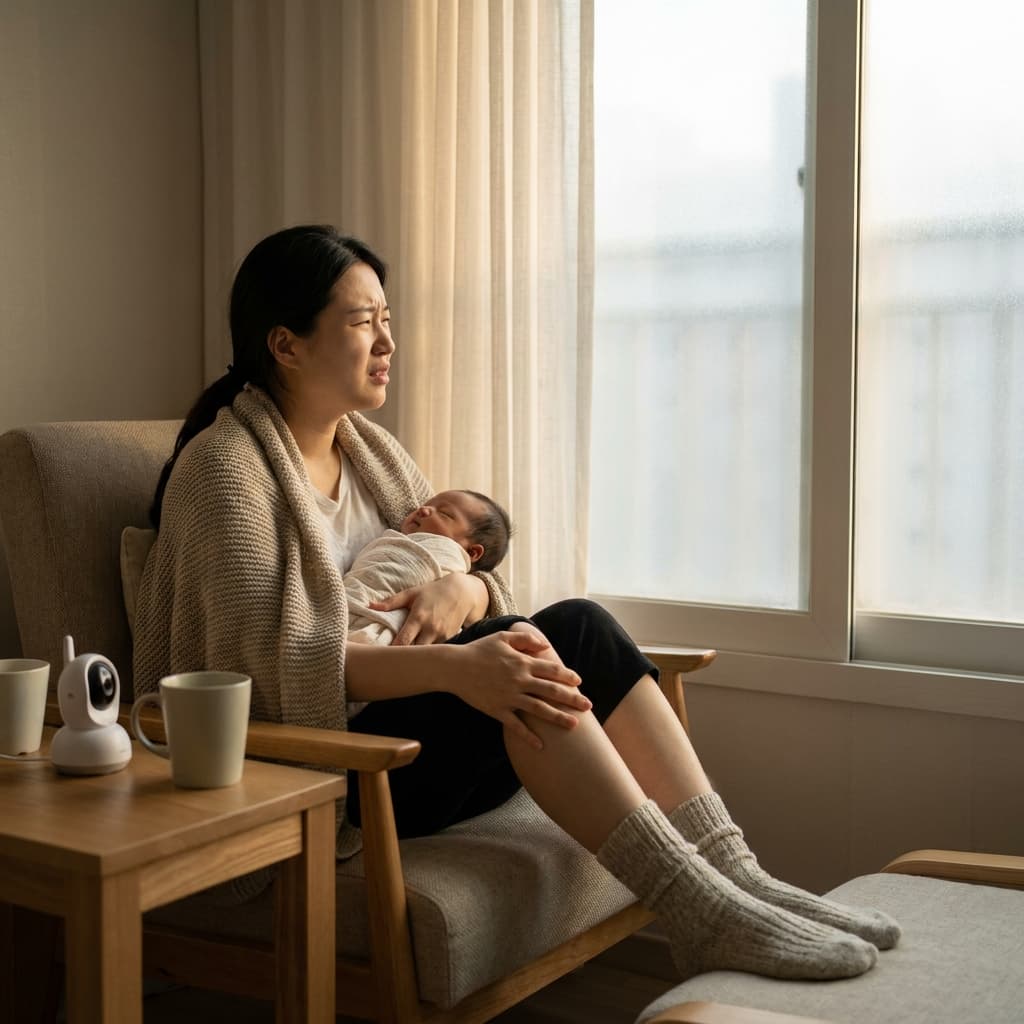
After childbirth, while enjoying happiness with your baby, are you losing sleep due to whole-body chilling and aching pain? Many mothers complaining that "my whole body is chilly after childbirth" experience chilling coldness along with joint pain, fatigue, indigestion, and even depression regardless of the season. These symptoms can be easily dismissed as simple fatigue, but they may be 'postpartum wind', an important signal sent by our body. While Western medicine has no clear diagnosis, Oriental medicine views complex symptoms occurring when the postpartum weakened body is not properly cared for as postpartum wind, warning that without proper management, you could suffer for a lifetime.
💡 [Key Answer] The 3 most common causes of "whole-body chilling after childbirth": ① Qi-Blood Deficiency and Blood Stasis Stagnation: Excessively consumed energy and blood during childbirth, along with remaining blood stasis (bad blood), hinder circulation. ② Autonomic Nervous System Imbalance: Rapid hormonal changes and parenting stress break the balance of the autonomic nervous system and lower temperature regulation. ③ Joint Laxity and External Cold Exposure: Joints and ligaments relaxed by relaxin hormone become vulnerable to coldness, causing pain and chilling. Dalimchae Oriental Medicine Clinic treats coldness and pain by enhancing the body's fundamental recovery power through constitutional improvement.
Why does chilling happen all over the body after childbirth?
Childbirth brings tremendous changes and burdens to a woman's body. Passing through the massive process of pregnancy and delivery consumes a large amount of Qi and Blood, and damages the uterus and surrounding tissues. Oriental medicine views this state as 'Qi-Blood deficiency and blood stasis stagnation'. When cold evil penetrates into a weakened defense, it causes systemic chilling and pain, typically called 'postpartum wind'.
Furthermore, relaxin hormone secreted during pregnancy and childbirth relaxes joints and ligaments so the baby can easily pass through the birth canal. This hormone remains in the body for a certain period after delivery, keeping joints in a weakened state. Exposure to cold or excessive movement during this time can cause chilling and pain in wrists, knees, waist, and other joints. In addition, rapid hormonal changes and parenting stress after childbirth collapse the autonomic nervous system balance, lowering temperature regulation capacity and making the body feel cold easily. Thus, postpartum wind is a syndrome caused by complex overall physical changes rather than a single cause.
Does postpartum wind get better on its own over time?
Many mothers suffer from postpartum wind symptoms yet leave them unattended thinking "it will get better over time" or "it's inevitable due to parenting." However, Oriental medicine views 4 to 6 weeks after childbirth as 'puerperium' where the mother's body returns to pre-pregnancy state, emphasizing that proper postpartum care during this period determines lifelong health.
The effectiveness of Oriental medicine treatment for postpartum wind is confirmed through various studies. A systematic review published in Healthcare (Basel) in 2023 analyzed 652 postpartum wind patients across 9 randomized controlled trials (RCTs), showing that herbal medicine and complex treatments significantly improved pain (VAS), quality of life, and Oriental medical symptom scores. Researchers concluded that Oriental medicine treatment can be a safe and effective option without serious adverse events.
Additionally, a survey study published in Journal of Pharmacopuncture in 2023 evaluated postpartum wind symptom improvement after herbal medicine in 68 mothers. Results showed 30.56% of mothers complaining of joint pain and 44.55% of lethargy improved, and over 50% experienced overall postpartum wind symptom improvement, with a high satisfaction rate of 76.47%. Based on these data, Dalimchae Oriental Medicine Clinic provides systematic postpartum care programs to enhance fundamental recovery power.
How does Dalimchae treat postpartum wind? — Constitutional improvement enhancing fundamental recovery
Dalimchae Oriental Medicine Clinic Incheon branch focuses on fundamental constitutional improvement so the body can restore health by itself rather than merely suppressing symptoms.
Reinforcing Qi and Blood weakened after childbirth and removing blood stasis obstructing circulation are core to postpartum wind treatment. Herbal medicine taken from right after childbirth helps lochia discharge, promotes uterine contraction, and replenishes energy and blood for systemic recovery. This expels inner coldness, promotes warm circulation, relieves chilling and pain, and boosts overall immunity and recovery. Dalimchae's postpartum herbal medicine is carefully prescribed considering the mother's constitution, health status, and breastfeeding status so it can be safely taken during breastfeeding.
Moreover, acupuncture unblocks meridians to relieve pain and aid circulation. Moxibustion warms the body and boosts immunity, while pharmacopuncture injects refined herbal extracts directly into acupoints to reduce inflammation and promote recovery. Chuna manual therapy corrects pelvic and spinal alignment to improve postpartum back and joint pain. This Oriental combination therapy helps the mother's body regain balance and transform into a healthy constitution resilient to external stimuli. Incheon postpartum wind clinic, Dalimchae Oriental Medicine Clinic Incheon branch helps you return to a healthy body through customized postpartum care.
FAQ
Q. When is the best time to treat postpartum wind? A. Intensive management starting right after childbirth is most effective.
Q. What postpartum care can be done at home? A. Keeping the body warm, avoiding cold water, resting sufficiently, and eating nutritious meals are important.
Q. Can I take herbal medicine while breastfeeding? A. Yes, Dalimchae's postpartum herbal medicine is carefully prescribed considering maternal constitution and baby's safety, focusing on replenishing Qi and Blood without hindering milk secretion.
Q. Is postpartum depression related to postpartum wind? A. Postpartum wind can be accompanied by mental symptoms such as depression, anxiety, and sleep disorders.
Postpartum wind is not something to endure. Dalimchae Oriental Medicine Clinic will help you find the root cause and restore healthy motherhood.
The place where life blossoms. Herbal medicine is Dalimchae.