
Hello, this is Dalimchae Korean Medicine Clinic.
Do You Feel Out of Breath Just Taking the Commuter Subway? You Can Escape a Stifling Daily Life.
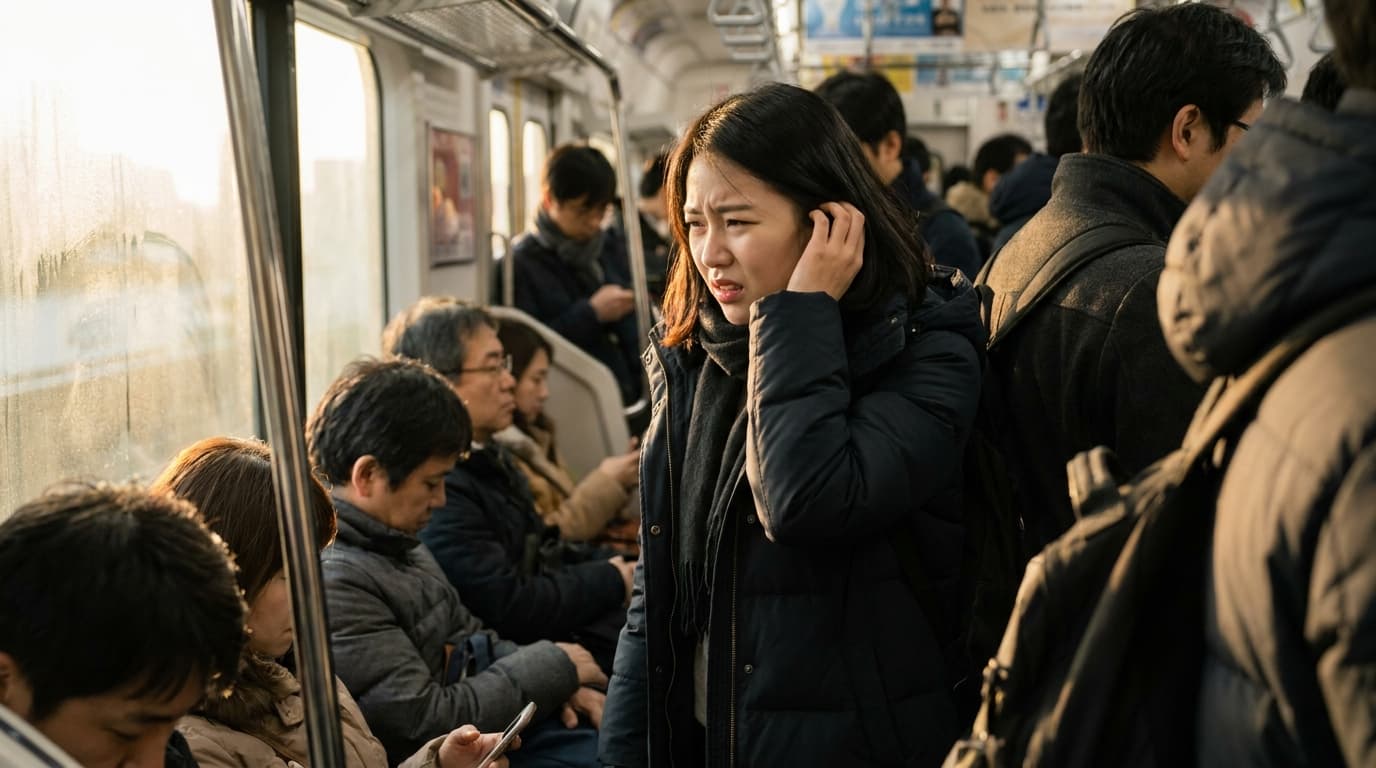
Every morning, the moment you board a crowded subway, do you ever experience feeling stuffy and short of breath? Moments when you feel trapped in a tight space, your heart pounds as if it's going to burst, and you even feel dizzy, gripped by an intense fear that you might faint. If this suffering is not a one-time occurrence but repeats day after day, it may be 'panic disorder,' going beyond simple stress. Especially when accompanied by 'anticipatory anxiety'—worrying that it might happen again next time while such symptoms appear in specific situations like commuting subways—daily life becomes even harder.
💡 [Key Answer] Top 3 most common causes of the symptom "I feel out of breath just taking the commuter subway": ① Autonomic nervous system imbalance due to excessive stress / ② Malfunction of brain neurotransmitters / ③ Learned fear of specific situations (such as confined spaces) Dalimchae Korean Medicine Clinic helps calm overactivated sympathetic nerves and helps the brain regain comfort on its own through autonomic stability treatment.
Why Does It Feel Hard to Breathe During the Commute? Is It Really Panic Disorder?
Feeling extreme fear along with physical symptoms such as a racing heart and shortness of breath suddenly in crowded, confined spaces like subways or buses is the classic presentation of a panic attack. When these panic attacks occur repeatedly without warning and anticipatory anxiety—dread that another attack will happen—persists for 1 month or more, it can be diagnosed as panic disorder. According to data from the National Health Insurance Service, the number of people seeking hospital treatment for panic disorder increased by about 44.5% from approximately 139,000 in 2017 to about 200,000 in 2021. This is not unrelated to the increase in stress in modern society and shows an aspect of becoming particularly severe in specific situations.
Panic Attacks: Why Do They Strike Suddenly?
While the causes of panic attacks are complex, at the core is 'autonomic nervous system imbalance.' The autonomic nervous system in our bodies consists of the sympathetic and parasympathetic nervous systems, protecting our bodies during stress or danger. However, when the sympathetic nervous system is excessively hyperactive due to sustained stress or brain function imbalance, the body reacts as if it's in a state of emergency even without actual threat. As a result, various physical symptoms such as increased heart rate, dyspnea, cold sweats, and dizziness appear simultaneously, leading to a panic attack accompanied by a feeling of impending doom. Such autonomic dysfunction is closely related to anxiety, depression, and stress.
A domestic study published in [Frontiers in Psychiatry] in 2025 analyzed stress and relaxation responses using heart rate variability (HRV) in 147 subjects, including patients with major depressive disorder and panic disorder and healthy controls. The results showed that panic disorder patients had greater difficulty distinguishing between stress and relaxation states compared to healthy controls, suggesting altered autonomic responses in panic disorder patients. In particular, emphasizing that HRV indicators can be utilized as biological markers of stress, the necessity of customized approaches for stress monitoring in psychiatric patient groups was mentioned. These studies clearly demonstrate that panic disorder is not merely a matter of the mind, but is deeply linked to physiological changes in the autonomic nervous system. The Songdo branch of Dalimchae Korean Medicine Clinic focuses on treatment that catches even these subtle changes in the autonomic nervous system and helps regain its balance.
Autonomic Imbalance: How Can It Be Stabilized?
At Dalimchae Korean Medicine Clinic, we find the root cause of panic disorder in the imbalance of the autonomic nervous system and core treatment focuses on 'autonomic stability.' When our body's autonomic nervous system loses balance, the brain cannot rest and always reacts hypersensitively. In Korean medicine, this state is sometimes diagnosed as Simdamheogeop (heart and gallbladder timidity) or Simbiyangheo (heart and spleen deficiency), and is also viewed as phlegm-fluid (dam-eum) confusing the mind due to stress-induced stagnation of qi.
A Korean study published in the [Journal of Personalized Medicine] in 2024 retrospectively analyzed the effects of Korean medicine treatments including acupuncture, Korean medicine psychotherapy, Chuna therapy, aromatherapy, and herbal medicine in 67 patients with anxiety disorders. As a result, 4-week Korean medicine treatment significantly reduced anxiety (STAI X-1; STAI X-2; BAI, p < 0.0001), depression (BDI-II, p < 0.0001), and anger (AKI-K-I; AKI-K-O, p < 0.05) symptoms, and significantly improved quality of life (QoL). The researchers concluded that Korean medicine treatment can improve clinical symptoms and quality of life outcomes in anxiety disorder patients. These results support that the autonomic stability treatment at Songdo Panic Disorder Korean Medicine Clinic does not merely stop at symptom alleviation, but contributes to enhancing overall physical and mental health and quality of life for patients.
Dalimchae Korean Medicine Clinic's autonomic stability treatment aims not just to suppress anxiety symptoms, but to calm excessive sympathetic hyperactivation and strengthen parasympathetic function, regaining harmony in the autonomic nervous system. This is a process of lowering nervous system heat and creating an environment where the brain can comfortably rest. In particular, the Songdo clinic restores autonomic balance and induces brain stabilization through customized herbal prescriptions, acupuncture, and pharmacopuncture tailored to individual constitutions and symptoms, lowering the possibility of panic attack recurrence. Those suffering from insomnia, headaches, or dizziness can also expect improvement in accompanying symptoms through this autonomic treatment.
Panic Disorder Symptoms: Could It Be Me? Self-Diagnosis Checklist
Check if any of the following questions apply to you.
- Have you suddenly felt your heart racing or pounding?
- Do you frequently feel breathless or choked?
- Do you feel dizzy, unreal, or about to faint?
- Do you have a tingling or stinging sensation in your hands and feet?
- Do you experience cold sweats or trembling?
- Do you feel an intense terror of dying or going crazy?
- Do you have chest pain or chest discomfort?
- Do you tend to avoid specific places (subway, elevators, etc.) or situations?
- Do you often feel anxious that these symptoms will appear again?
Criteria:
- If 3 or more apply: Panic symptoms suspected due to autonomic imbalance. It is worth considering professional consultation and comprehensive autonomic treatment at Dalimchae Korean Medicine Clinic.
- If 5 or more apply: The possibility of panic disorder is high, so immediate visit is recommended. You should establish an accurate diagnosis and customized treatment plan at the Songdo autonomic Korean medicine clinic.
FAQ
Q. How long does panic disorder treatment take? A. The duration of panic disorder treatment varies depending on symptom severity, duration of illness, and treatment response. Generally, consistent Korean medicine treatment for about 3 to 6 months aims for symptom stabilization and recurrence prevention.
Q. I only get short of breath on the subway; is this also panic disorder? A. Yes, panic attacks that occur only in specific situations and the resulting anticipatory anxiety are a form of panic disorder. In particular, they are often accompanied by agoraphobia appearing in confined spaces or crowded places.
Q. Can panic disorder heal naturally? A. Panic attacks may temporarily appear and disappear, but if left untreated without appropriate treatment, they can become chronic or lead to other symptoms such as depression and agoraphobia. It is important to receive active treatment early.
Q. I am taking Western medication; can I combine it with Korean medicine treatment? A. Yes, combining Western medication and Korean medicine treatment can be effective for panic disorder treatment. Korean medicine treatment helps reduce dependency on Western medication, mitigate side effects, and aid fundamental stability of the autonomic nervous system.
I feel out of breath just taking the commuter subway. Panic disorder is not a problem solved by enduring it. You no longer need to ignore the body's signals you have sent for a long time. If you approach it in the right direction, your body reacts faster than you think. Bring the symptoms you are experiencing as they are. The Songdo branch of Dalimchae Korean Medicine Clinic will find the cause together.
Where life blooms. Herbal medicine is Dalimchae Korean Medicine Clinic. Check symptoms similar to yours first through the AI consultation on the Dalimchae Korean Medicine Clinic website!
This article is health information organized together by Dalimchae medical staff based on questions actually received often in the consultation room. Medical Supervision | Department of Neurology & Autonomic System, Songdo Branch of Dalimchae Korean Medicine Clinic, Korean Medicine Doctor Oh Hyun-min (Panic Disorder Column)