
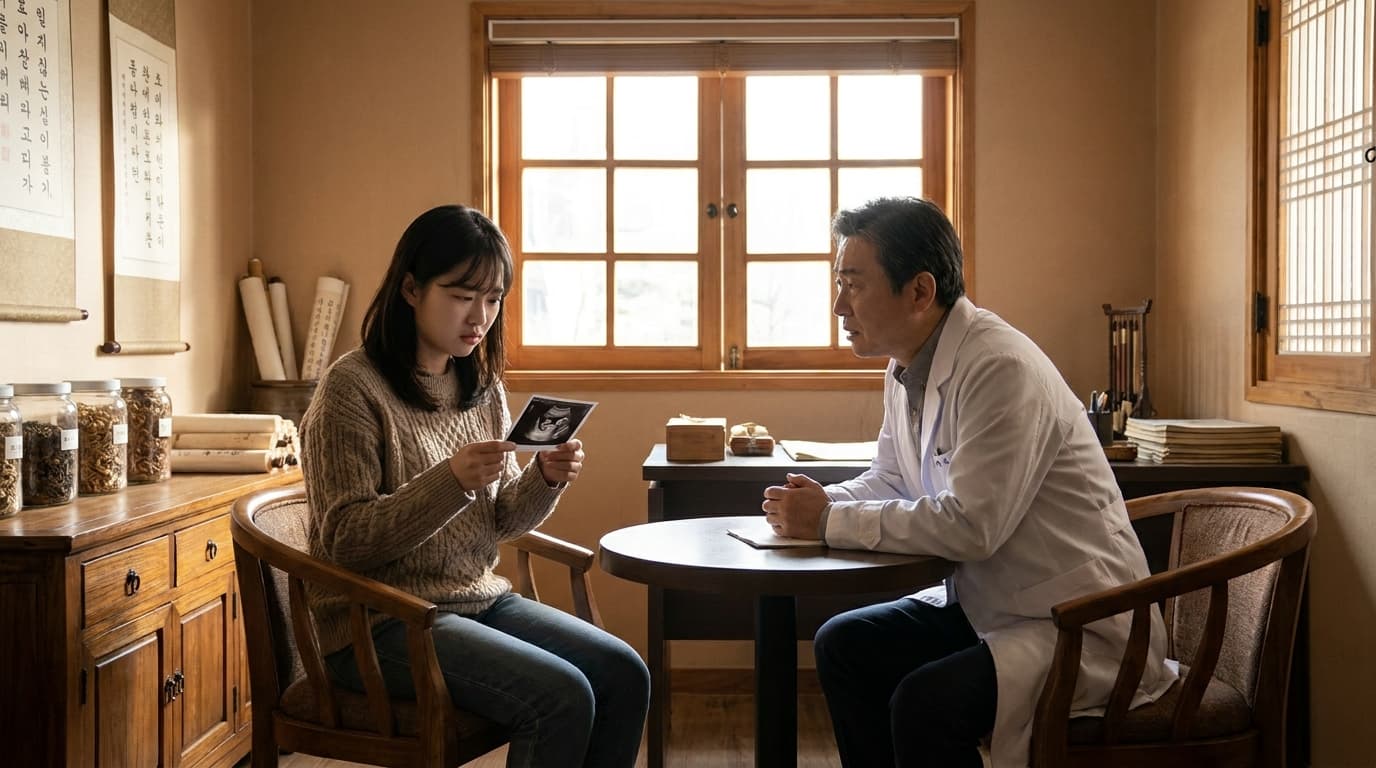
Hello, this is Dalimchae Korean Medicine Clinic.
Do Ovarian Cysts Always Require Surgery? Songdo Ovarian Cyst Clinic Guide
You might have been surprised by an unexpected 'ovarian cyst' diagnosis during a gynecological checkup or due to lower abdominal pain occurring every menstrual cycle. Many questions likely crossed your mind: "Why did this cyst appear?", "Do I really need surgery?", "Will it get bigger if left alone?" Especially because of the name 'ovarian cyst', many patients worry immediately whether it is dangerous. Since ovaries are crucial reproductive organs for women, anxiety when a cyst forms is natural. However, not all ovarian cysts require immediate surgery; with accurate cause identification and proper management, positive outcomes can be expected.
💡 [Key Answer] 3 most common causes of ovarian cyst concerns: ① Hormone imbalance ② Autonomic nervous system disturbance ③ Pelvic and uterine blood circulation stagnation Dalimchae Korean Medicine Clinic helps naturally resolve and prevent recurrence of ovarian cysts by fundamentally restoring ovarian function through constitutional treatment.
What Kinds of Ovarian Cysts Are There and Why Do They Form?
Ovarian cysts are largely divided into functional and non-functional cysts. Functional cysts are fluid-filled sacs associated with ovulation, such as follicular or corpus luteum cysts, which mostly disappear naturally over time. On the other hand, non-functional cysts occur independently of ovulation and include endometriomas, dermoid cysts, serous or mucinous cysts, which do not disappear naturally and may require continuous management or surgery.
In Oriental medicine, the cause of ovarian cysts is not viewed simply as a local problem. Major causes include '濕痰' (phlegm-dampness) due to poor whole-body fluid metabolism, '瘀血' (blood stasis) from stagnant blood circulation in the uterus and pelvis, and hormone imbalance caused by chronic stress and autonomic nervous system disturbance. Since ovaries perform delicate hormone regulation and ovulation, systemic imbalances can affect normal ovarian function, generating or promoting cyst growth. Recently, ovarian cysts are increasing even among young women and adolescents without pregnancy or childbirth experience, and are easy to overlook due to a lack of noticeable symptoms.
Do All Ovarian Cysts Require Surgery?
Receiving an ovarian cyst diagnosis can naturally bring burden and fear regarding surgery. However, not all ovarian cysts require immediate surgery. According to NHS Scotland 2023 guidelines, most ovarian cysts in premenopausal women are benign, and simple ovarian cysts under 5cm tend to resolve naturally over 2-3 menstrual cycles. Simple cysts between 5-7cm are recommended to be managed by observing size changes through ultrasound examinations every 3-6 months. However, surgical treatment may be considered if they exceed 7cm, cause severe pain, or present malignant risks.
Since ovaries are vital organs responsible for hormone secretion and ovulation, surgery must be decided carefully. Especially for unmarried women, potential ovarian function decline and fertility issues must be considered, so non-surgical approaches using Oriental medicine treatment to induce natural resolution or size reduction can be tried first before surgery. Moreover, since ovarian cysts frequently recur after surgery, repeated surgeries can occur without resolving root causes. Ovarian cysts can show recurrence rates reaching 25-50% even after surgery.
How Does Oriental Medicine Treatment Help with Ovarian Cysts?
Oriental medicine treatment for ovarian cysts goes beyond simply removing the cyst, focusing on improving the environment around the ovaries, normalizing ovarian function, helping natural resolution, and preventing recurrence.
A 2025 study, 'Clinical Study of Korean Medicine Treatment with Boheo-tang-gagambang for Ovarian Cyst', reported cases where 3 patients diagnosed with ovarian cysts via imaging received Oriental medicine treatment. These patients were treated combining personalized herbal medicine (based on Boheo-tang-gagambang), acupuncture, and other auxiliary therapies. As a result, follow-up ultrasound showed complete disappearance of ovarian cysts in all patients, and accompanying symptoms like lower abdominal pain, urinary discomfort, and frequency significantly improved. No side effects were reported. Researchers concluded that such integrative Oriental medicine treatment can be a safe and potentially effective therapeutic alternative for non-neoplastic ovarian cysts.
Furthermore, a case report published in the Journal of Oriental Obstetrics and Gynecology in 2003 showed that a patient with 5cm and 3cm bilateral ovarian cysts experienced reduction to 2cm after 9 weeks of herbal medicine treatment, and complete disappearance after another 10 weeks of treatment following recurrence. These studies suggest that Oriental medicine treatment can reduce and resolve cyst size and positively influence recurrence management.
Dalimchae Korean Medicine Clinic applies the principle of 'constitutional treatment' based on these findings to find the root cause of ovarian cysts. Constitutional treatment focuses on creating an environment where the body itself prevents ovarian cysts from recurring, rather than temporarily suppressing symptoms. It promotes blood circulation in the ovaries and pelvic cavity, removes waste products such as phlegm-dampness and blood stasis, and reduces inflammatory responses. It also restores autonomic nervous system balance to ensure smooth hormone secretion, thereby strengthening ovarian function itself.
Can Ovarian Cysts Prevention Be Managed?
Ovarian cysts often cause worry about recurrence once formed. Functional cysts are related to menstrual cycles, meaning new cysts can continuously form. To prevent recurrence, it is crucial to resolve root causes and maintain a healthy ovarian environment.
Dalimchae Korean Medicine Clinic's constitutional treatment removes phlegm-dampness and blood stasis and smoothes qi and blood circulation in the lower abdomen including ovaries and uterus. This helps ovaries maintain healthy functions and autonomously regulate hormone balance. Through precise checkups and consistent Oriental medicine care, ovarian cyst recurrence can be effectively reduced.
Ovarian Cyst Self-Checklist
If 3 or more of the following apply, you may be at risk or currently in need of management:
- Menstrual cycle has become irregular or menstrual flow changed.
- Menstrual pain is more severe than usual or painkiller dependence increased.
- Lower abdomen feels heavy or uncomfortable frequently.
- Frequent abdominal bloating or stuffiness even without overeating.
- Frequent urination or discomfort during bowel movements.
- Pain during sexual intercourse.
- Unexplained weight gain or severe edema.
- Suffering from chronic fatigue and stress.
- 3+ matches: Ovarian cyst risk or hormone imbalance suspected -> Consult professional examination and Oriental medicine management.
- 5+ matches: Active diagnosis and treatment needed -> Visit Dalimchae Korean Medicine Clinic for expert consultation.
FAQ
Q. Do ovarian cysts sometimes disappear naturally? A. Yes, functional ovarian cysts (follicular cysts, corpus luteum cysts) are related to ovulation and mostly shrink or disappear naturally over 1-3 menstrual cycles. However, non-functional cysts require management.
Q. Can I start Oriental medicine treatment right after an ovarian cyst diagnosis? A. For functional cysts, concurrent Oriental medicine treatment while observing over a period can help natural resolution and prevent recurrence. Even for non-functional cysts, if small or mild, pre-surgical Oriental medicine treatment can help suppress progression and relieve accompanying symptoms.
Q. Are ovarian cysts related to infertility? A. Yes, ovarian cysts can hinder normal ovulation and cause infertility. Integrative Oriental medicine treatment helps restore ovarian function and overcome infertility.
Q. Where is a good place for ovarian cyst Oriental medicine treatment in Songdo? A. Songdo Dalimchae Korean Medicine Clinic specializes in treating the root causes of ovarian cysts through constitutional treatment, normalizing ovarian function, and preventing recurrence.
Ovarian cysts are not problems solved by enduring. Bring your current symptoms to Songdo Dalimchae Korean Medicine Clinic.