
Hello. This is Dalimchae Korean Medicine Clinic.
Body Aches After Menopause, Why Do You Hurt? Causes and Solutions
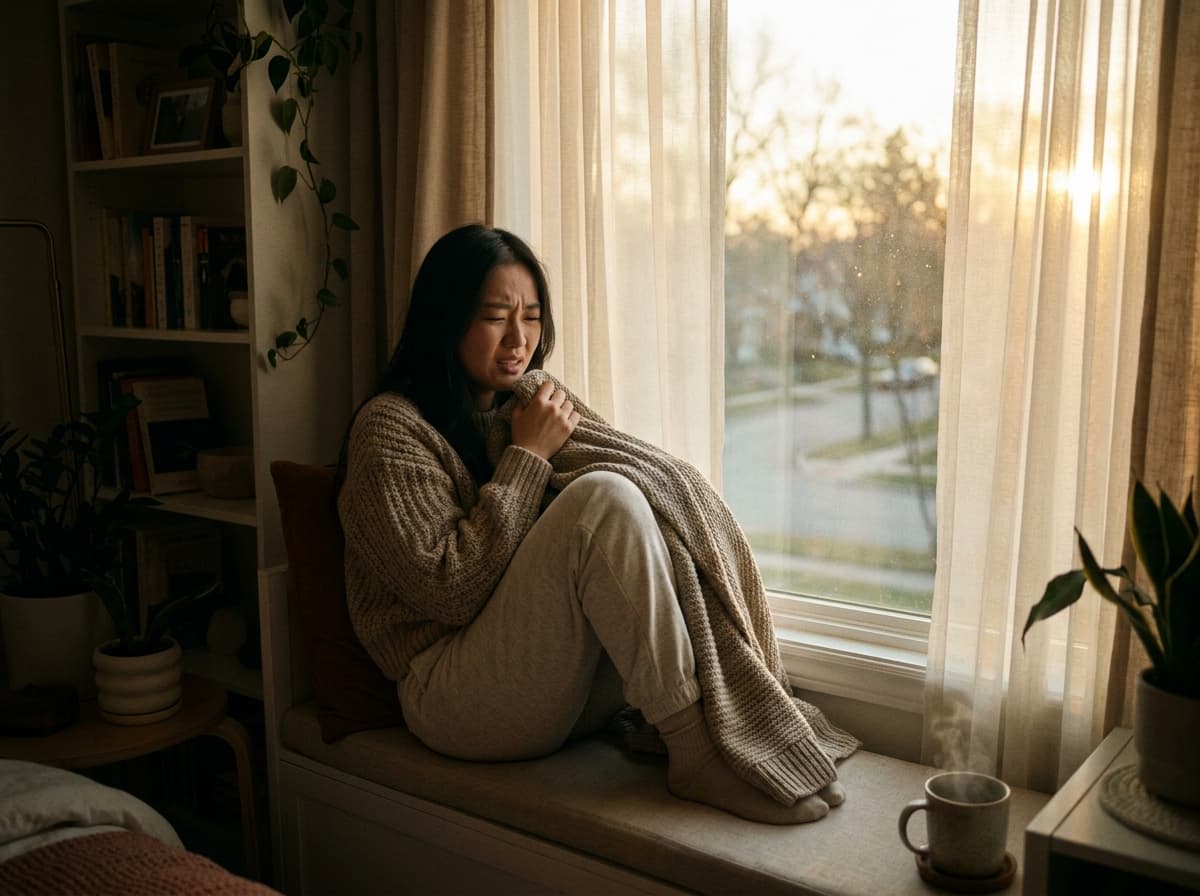
One day, suddenly, your whole body starts to ache in a way you've never felt before. When you wake up, your finger joints are stiff, and you feel a sharp pain in your knees or shoulder joints. Are you feeling a vague anxiety along with the thought, 'Is it because of menopause?' or 'Is it because I'm getting older?' and wondering how long this pain will last? Many people visit Dalimchae Korean Medicine Clinic complaining that their whole body hurts. This is not just a simple process of aging, but could be an important signal from your body.
💡 [Key Answer] The 3 most common causes of "body aches after menopause": ① Hormonal imbalance such as estrogen / ② Changes in pain threshold due to autonomic nervous system disruption / ③ Decreased circulation of qi and blood and accelerated aging of joints and muscles Dalimchae Korean Medicine Clinic helps the body regain its fundamental balance through constitutional improvement to relieve pain and prevent recurrence.
Why Does the Whole Body Ache and Hurt After Menopause?
The symptom of 'body aches' is one of the most common menopausal symptoms appearing in women after menopause. It is mainly pointed out as being caused by a rapid decrease in female hormones such as estrogen, because estrogen plays an important role in maintaining bone health, protecting joint cartilage, and regulating inflammation. When estrogen levels decrease, bone density weakens, increasing the risk of osteoporosis, the damage to joint cartilage accelerates, and systemic inflammatory responses can be easily induced.
In addition to this, menopause has a significant impact on the autonomic nervous system, sometimes lowering the pain threshold. The autonomic nervous system regulates all involuntary functions of our body, and if this balance is broken, you feel pain more strongly even with small stimuli. Also, an overall decrease in the circulation of qi and blood and a decrease in physical activity lower the flexibility of muscles and joints and act as complex factors that aggravate pain.
Menopausal Pain, Could I Also Have It? Self-Diagnosis Checklist
Check how many of the following questions apply to you.
- When I wake up in the morning, small joints such as fingers and toes are stiff and uncomfortable.
- I feel a sharp or throbbing pain even in large joints such as knees, shoulders, and waist.
- Systemic muscles frequently tighten and ache for no particular reason.
- I feel fatigue easily, and it is difficult to get a good night's sleep because of the pain.
- I am accompanied by other menopausal symptoms such as facial flushing, sweating, insomnia, and mood swings.
- The pain tends to move around from place to place rather than staying in one area.
- Existing arthritis or muscle pain has worsened after menopause.
Judgment Criteria:
- 3 or more items apply: Suspect menopausal-related pain, and it is recommended to review Korean medical treatment for checking autonomic balance and overall health status.
- 5 or more items apply: Since there is a high possibility that pain is affecting daily life, it is recommended to visit Dalimchae Korean Medicine Clinic Incheon Branch, a clinic for menopausal issues in Incheon, for accurate cause diagnosis and active combined herbal treatment.
Why Does it Keep Hurting Even When Western Medical Tests Say It's Okay?
Many menopausal women visit hospitals complaining of body aches, but often receive a diagnosis that there is no particular abnormality through precision tests. This is because western medical tests mainly diagnose based on structural problems or serious inflammatory findings. However, in Korean medicine, pain is not viewed simply as a local problem, but is interpreted as a state where the overall harmony of the body is broken, such as stagnation of systemic qi and blood circulation, lack of essence, and autonomic nervous system imbalance.
Particularly after menopause, as the 'Jeonggi (精氣)' called Shinsu (腎水) becomes insufficient in the female body, it is easy to enter a state of 'Eumheo (陰虛)' where the essence in the body dries up. This makes tissues or mucous membranes stiff and interferes with blood circulation, which can induce or aggravate musculoskeletal pain. Also, qi and blood circulation disorders such as 'Ganul (肝鬱)' or 'Simganhwawang (心肝火旺)' caused by stress, overwork, etc., are also seen as major causes of pain. Because these complex imbalances do not appear clearly through modern medical tests, patients are likely to feel frustrated.
How is Dalimchae Korean Medicine Clinic's Constitutional Improvement Treatment for Menopausal Pain Different?
Dalimchae Korean Medicine Clinic Incheon Branch does not view the cause of menopausal pain simply as a decrease in female hormones. We approach complex problems such as qi and blood circulation stagnation appearing in the female body after menopause, lack of essence, and autonomic nervous system imbalance from the perspective of constitutional improvement. We aim not just to turn off symptoms temporarily, but to fundamentally regain the body's balance and create a healthy body state where symptoms are not turned on again.
Dalimchae Korean Medicine Clinic's constitutional improvement treatment closely diagnoses each patient's constitution and current body state to prescribe customized herbal medicine. This herbal medicine helps supplement insufficient essence, smooth the circulation of qi and blood, and regain the balance of autonomic nerves to relieve pain and increase the body's recovery power. In addition, we combine various Korean medical therapies such as pharmacopuncture, acupuncture treatment, moxibustion, and cupping to reduce inflammation, improve circulation in the painful area, and even promote psychological stability. Especially, since menopausal pain is often accompanied by other menopausal symptoms such as insomnia, mood swings, and dizziness, we focus on improving all these symptoms integratedly.
Actually, there are research results that herbal medicine treatment is effective in improving pain after menopause. In a systematic review and meta-analysis study by the research team of Dr. Hwang Man-ki published in the [Journal of Clinical Densitometry] in 2026, as a result of analyzing 13 randomized controlled trials (RCTs) targeting 1,269 osteoporosis patients after menopause, it was reported that bone mineral density (BMD) of the lumbar spine and femoral neck was statistically significantly improved in the group that combined the herbal prescription 'Iseontang (二仙湯)' with standard treatment compared to the control group, and the pain indicator (VAS) also decreased. The researchers concluded that this result suggests that the combined treatment of Iseontang shows the possibility of showing a certain effect on improving bone density and relieving pain in osteoporosis patients after menopause. Based on these data, Dalimchae Korean Medicine Clinic identifies the fundamental causes of musculoskeletal pain appearing after menopause and helps improve constitution and relieve symptoms through individual customized herbal prescriptions and various Korean medical therapies.
In another study, it was shown that Korean red ginseng has a positive effect on improving joint pain in women after menopause. In a study published in [Yonsei Medical Journal] in 2021, as a result of a double-blind, randomized controlled clinical trial conducted by dividing 52 postmenopausal hand osteoarthritis patients into a Korean red ginseng intake group and a placebo group for 12 weeks, it was confirmed that pain scores during rest, daily activities, work and sports activities, and DASH (Disabilities of Arm, Shoulder and Hand) scores were statistically significantly improved (p < 0.05) in the red ginseng intake group compared to the placebo group. The researchers explained that red ginseng showed effects in not only improving pain but also reducing oxidative stress. As such, the efficacy of traditional herbal medicine is being proven scientifically, and Dalimchae Korean Medicine Clinic provides optimal Korean medical treatment suitable for each individual's constitution and symptoms based on these studies to help solve menopausal pain fundamentally.
FAQ Section
Q. How long does menopausal pain last? A. The duration of menopausal pain varies greatly from person to person, but it can last from as short as several months to as long as more than 5 years. Through active treatment and management, the duration of symptoms can be shortened and suffering can be reduced.
Q. My whole body aches and hurts. Can it be treated with herbal medicine as well? A. Yes, herbal medicine can help systemic pain relief by improving hormonal imbalance, decreased circulation of qi and blood, and lack of essence, which are the fundamental causes of menopausal pain. Especially, herbal prescriptions suitable for the constitution are effective in preventing recurrence of pain by regaining the body's balance.
Q. Is there any food I should be especially careful about for pain after menopause? A. To relieve menopausal pain, it is good to reduce the intake of processed foods, sugar, and red meat that can induce inflammation. Instead, it is helpful to consume plenty of foods rich in calcium and vitamin D, which are good for bone health, and foods with anti-inflammatory effects such as omega-3 fatty acids, vegetables, and fruits.
Q. If menopausal symptoms are severe, does depression also come? A. Yes, during menopause, psychological symptoms such as depression, anxiety, and irritation are likely to be accompanied due to hormonal changes and physical discomfort. Physical pain where the whole body aches and hurts is a factor that further aggravates these mental symptoms, so it is important to treat physical and mental symptoms integratedly.
Body aches after menopause are not problems that can be solved by enduring. You no longer have to ignore the signals your body has been sending for a long time. If you approach it in the right direction, your body reacts faster than you think. Bring the symptoms you are experiencing as they are. Dalimchae Korean Medicine Clinic will find the cause together.
Where life blooms. Herbal medicine is, as expected, Dalimchae Korean Medicine Clinic. Check symptoms similar to mine through the AI consultation on the Dalimchae Korean Medicine Clinic website first!
This article is health information compiled by the Dalimchae medical team based on questions frequently received in the consultation room. Medical Supervision | Female/Pregnancy Treatment Standard Dalimchae Korean Medicine Clinic Incheon Branch Oriental Doctor Min Ji-hong (Menopause Column)
#MenopausalPain #PostmenopausalPain #BodyAches #ConstitutionalImprovement #IncheonClinic #IncheonMenopauseClinic #HerbalTreatment #MenopausalSymptoms