
Hello, this is Dalimchae Korean Medicine Clinic.
Are You Tired But Can't Sleep Real Insomnia Signals of Your Overworking Brain
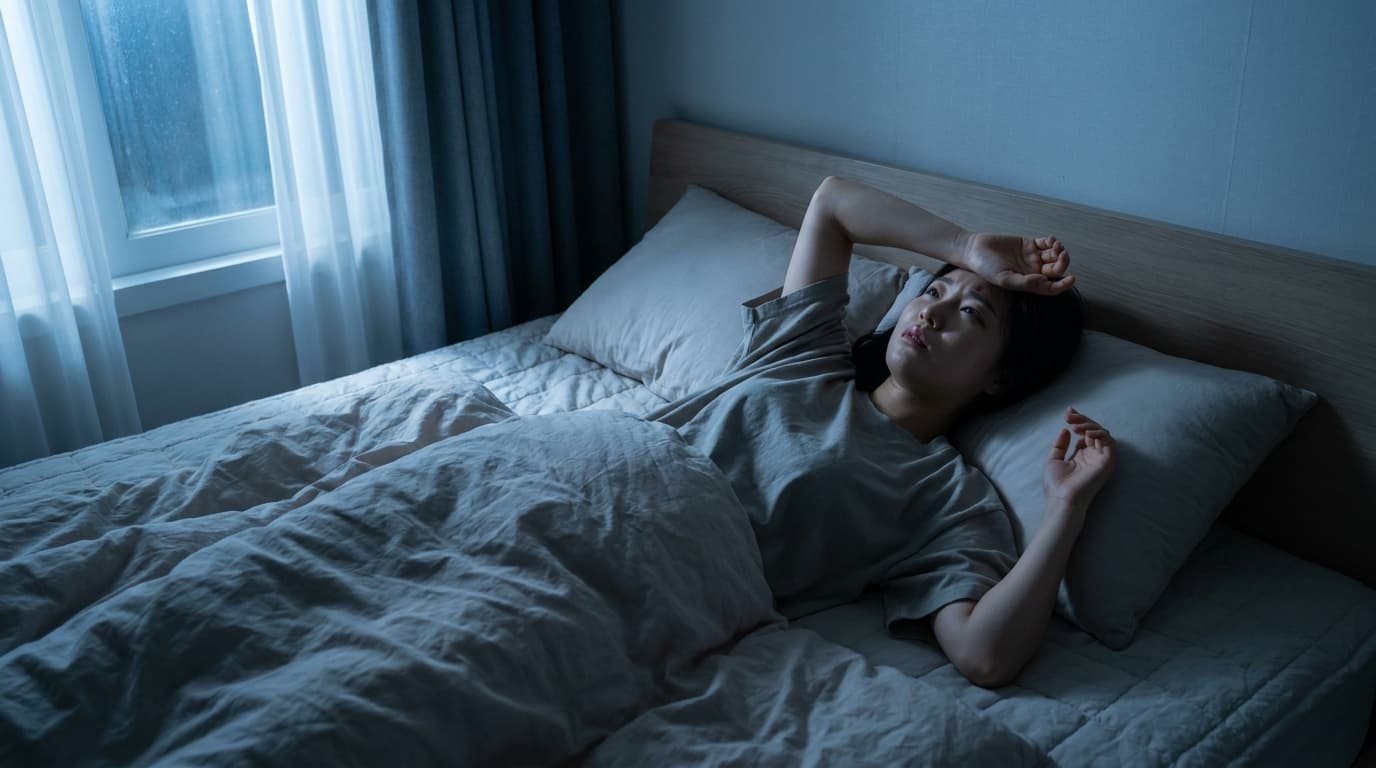
Have you ever experienced being exhausted from work late at night, but when you lie in bed, your mind stays wide awake? Even though you are exhausted and cannot sleep, closing your eyes brings a cascade of thoughts and a pounding heart, giving the sensation that your brain is still active. If you feel this way, your body may be sending an important signal. Known as being "tired but wired," this phenomenon indicates a deep imbalance beyond mere fatigue.
💡 [Key Answer] 3 most common causes of being tired but restless: ① Autonomic hyperactivity / ② Sleep hormone imbalance / ③ Excessive stress and brain tension Dalimchae Korean Medicine Clinic treats the root cause through autonomic stability treatment so your brain can comfortably relax and enter deep sleep.
Why Can't You Sleep When Tired? Why Can't Your Body Rest?
The state where the body is exhausted but the brain remains awake ("tired but wired") is a common type of modern insomnia. Despite daytime sleep pressure, the brain fails to relax at night and maintains an aroused state. This can happen when evening cortisol levels do not drop sufficiently or exposure to bright light like smartphones hinders melatonin production. In particular, stress and anxiety keep the brain tense, creating a vicious cycle where worries like "what if I can't sleep tonight" actually worsen arousal.
In Korean medicine, this is explained as "Yin deficiency with internal heat" or "Heart and gallbladder timidity." In other words, body fluids diminish, causing heat to rise and the heart to become unstable, preventing sleep. This hyperactivates the sympathetic nervous system, increasing body temperature and pulse rate while keeping the mind wide awake.
Long-term insomnia can be accompanied by palpitations, dizziness, and indigestion, which are closely linked to autonomic imbalance. The autonomic nervous system regulates vital activities without conscious control and manages activity and rest via sympathetic and parasympathetic balance. However, repeated stress, overwork, and sleep deprivation break this balance, causing autonomic dysfunction which further deepens insomnia.
A 2021 multi-center clinical study by Dr. Jun-Hwan Lee's team at the Korea Institute of Oriental Medicine, published in Nature and Science of Sleep, scientifically proved the efficacy of Korean medicine for insomnia. In 150 patients with insomnia for over 3 months, 10 sessions of acupuncture over 4 weeks nearly halved insomnia severity (ISI), with effects lasting 8 weeks post-treatment. Sleep efficiency improvement was 1.9 times higher in the acupuncture group (8.2%p) than the sham group (4.3%p), with significant improvements in anxiety (HADS-A) and depression (HADS-D). Based on such data, Dalimchae Korean Medicine Clinic focuses on restoring autonomic balance so the brain can rest and recover naturally.
A 2022 meta-analysis by Prof. Sung-Woo Yoon's team at Kyung Hee University Oriental Medical Hospital evaluated herbal medicine for cancer patients' insomnia. Analyzing 14 studies, herbal medicine showed significant improvements in Pittsburgh Sleep Quality Index (PSQI) compared to sleeping pills. Prescriptions centered on Semen Ziziphi Spinosae (Sanjoin) act on GABA receptors to provide sedative effects. Dalimchae Korean Medicine Clinic Incheon Branch provides personalized Korean medicine treatments based on these latest research findings to help patients overcome insomnia.
Dalimchae Korean Medicine Clinic's 'Autonomic Stability' Treatment
Dalimchae Korean Medicine Clinic identifies the root cause of insomnia in autonomic imbalance. When autonomic balance collapses, the brain acts like an overheated engine, maintaining constant arousal. Our autonomic stability treatment aims to calm excessive neural heat and create a restorative environment through herbal medicine, acupuncture, pharmacopuncture, and moxibustion, calming sympathetic hyperactivity and strengthening parasympathetic function to restore natural sleep rhythms.
Insomnia Self-Checklist
Check how many of apply to you:
- Hard to fall asleep for 30+ minutes in bed.
- Wake up often and struggle to fall back asleep.
- Wake up too early in the morning.
- Total sleep time under 6 hours.
- Unrefreshed and tired upon waking.
- Excessive daytime drowsiness affecting daily life.
- Easily irritable, anxious, or depressed.
- Frequent heart palpitations or chest tightness.
- Indigestion and abdominal discomfort.
- Cold hands and feet or heat sensations in the body.
Criteria:
- 3 or fewer: Early insomnia suspected. Consider lifestyle improvements and consultation.
- 4 to 7: Moderate insomnia. Autonomic imbalance likely; professional treatment recommended.
- 8 or more: Severe insomnia. Immediate consultation with Dr. Min Jihong for active complex treatment is advised.
Medical Supervision | Department of Neurology & Autonomic System, Incheon Branch of Dalimchae Korean Medicine Clinic, Korean Medicine Doctor Min Jihong