
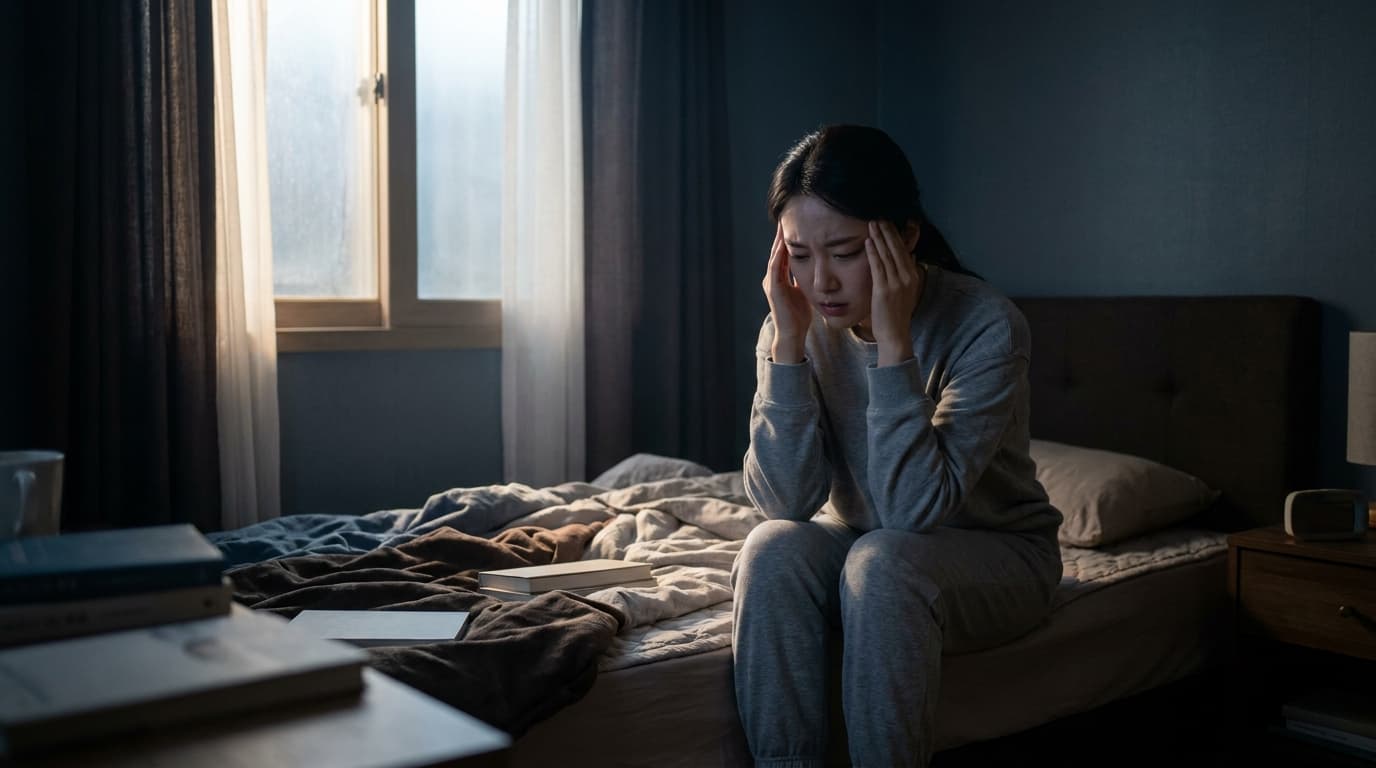
Are You Having a Migraine or Tension Headache? A Songdo Clinic Treating Headaches from the Root
When your head suddenly throbs or aches, you often wonder, "Is this a migraine or a tension headache caused by stress?" Headaches are extremely common, but their causes and patterns vary greatly from person to person. Simply enduring them with painkillers severely degrades quality of life, and without knowing the exact type of headache, proper management is difficult. Especially when people feel frustrated by being told "no abnormalities found in tests" and chronic conditions develop.
💡 Key Takeaways Top 3 most common causes of headaches: ① Autonomic imbalance ② Chronic stress and fatigue ③ Brain blood flow and muscle tension problems Dalimchae Korean Medicine Clinic cuts off the vicious cycle of head pain through fundamental treatment via autonomic stabilization.
What Kind of Headache Do I Have? Key Differences Between Migraines and Tension Headaches
Headaches are largely divided into primary and secondary headaches. Secondary headaches are caused by other conditions like brain tumors or cerebral hemorrhage, while primary headaches occur without a specific underlying disease. Migraines and tension headaches are representative primary headaches that many people confuse. Distinguishing between them is the starting point for accurate treatment.
Migraines typically occur on one side of the head with a throbbing or pulsating pain. They are accompanied by sensitivity to light and sound, nausea, or vomiting. Physical activity tends to worsen the pain, significantly disrupting daily life. On the other hand, tension headaches present as a dull, pressing pain as if a tight band is wrapped around the entire head, mostly caused by muscle tension in the back of the neck and shoulders due to stress, fatigue, lack of sleep, or poor posture. Severe vomiting or visual symptoms like migraines are rarely accompanied.
"No Abnormalities in Tests" Headaches: Why Does Korean Medicine Focus on Autonomic Imbalance?
Many people suffer from chronic headaches even when modern medical tests find no special abnormalities. Dalimchae Korean Medicine Clinic finds the root cause of these headaches in "autonomic imbalance." The autonomic nervous system regulates all bodily functions essential for survival, such as heart rate, respiration, digestion, and blood pressure. When the balance of the autonomic nervous system collapses due to stress, overwork, or lack of sleep, the sympathetic nervous system becomes excessively hyperactive, placing the body in a constant state of tension.
This hyperactivation of the sympathetic nervous system destabilizes cerebral blood flow and lowers the pain threshold, making it easy to feel headaches even from minor stimuli. It is also linked to brainstem dysfunction, affecting migraine-specific light and sound sensitivities or prodromal symptoms. Tension headaches also stem mainly from muscle tension and decreased blood circulation caused by autonomic imbalance. Therefore, to fundamentally resolve headaches, it is important to restore autonomic balance so the brain can rest and recover comfortably. This is why Dalimchae Korean Medicine Clinic emphasizes autonomic stabilization as a Songdo headache clinic.
Latest Korean Medicine Research on Headaches: The Effect of Autonomic Improvement on Pain Relief
According to a 2017 clinical study by Seung-hee Lee, Ji-hyun Park, and Young-seok Kim published in the Journal of Korean Medicine Psychosomatics, applying herbal medicine treatment for 8 weeks to 30 headache patients significantly reduced headache frequency and intensity. In particular, pre- and post-treatment Heart Rate Variability (HRV) tests showed an improvement in the LF/HF ratio (an autonomic balance index), which had a significant correlation with headache symptom improvement (p<0.05). The researchers concluded that herbal medicine treatment improves autonomic regulatory ability, suppressing headache generation mechanisms and effectively relieving pain.
Furthermore, a 2018 literature review by Yong-jun Kim, Sung-jin Oh, and Min-kyung Park published in the Journal of Korean Medicine Psychosomatics confirmed through various clinical studies that acupuncture treatment significantly reduces the frequency, intensity, and duration of pain in both tension headaches and migraines. In particular, acupuncture relieves headaches through mechanisms such as neurotransmitter regulation, blood circulation improvement, and muscle relaxation, and is evaluated as a safe treatment with few side effects.
Based on these research data, the Songdo branch of Dalimchae Korean Medicine Clinic focuses on resolving the root cause of headaches through herbal medicine treatment centered on autonomic stabilization, going beyond merely suppressing pain. When autonomic balance is restored, the brain escapes from an overheated state, recovers its own resilience, and normalizes pain thresholds to break the vicious cycle of headaches.
Extinguishing the Warning Light of an Overheated Brain with Autonomic Stabilization Treatment
Dalimchae Korean Medicine Clinic's autonomic stabilization treatment is like cooling down an overheated engine and resetting an unstable circuit breaker switch. The brain and autonomic nervous system are closely connected; when autonomic balance collapses, the brain cannot rest and becomes excessively activated. This leads not only to headaches but also to dizziness, insomnia, and chronic fatigue. At Dalimchae Korean Medicine Clinic, a Songdo autonomic nervous system clinic, we calm hyperactive sympathetic nerves and strengthen parasympathetic functions through complex traditional Korean medicine treatments such as herbal medicine, acupuncture, moxibustion, and pharmacopuncture. Lowering the heat of the nervous system and creating an environment where the brain can rest — in Korean medicine, this is called Suseung-hwagang — is our goal. Through this process, the brain recovers its own resilience and sensitivity to pain decreases, achieving fundamental improvement in headaches.
What Kind of Headache Do I Have? Self-Diagnosis Checklist
Check the items below to gauge your headache type.
A. Suspected Migraine Symptoms
- Throbbing and pulsating pain on one side of the head.
- Nausea or feeling like vomiting.
- Headache worsens with bright lights or loud noises.
- Headache worsens with routine physical activities (like climbing stairs).
- Flashing lights or zigzag patterns visible in vision before a headache.
B. Suspected Tension Headache Symptoms
- Tight, pressing pain around the entire head like a band.
- Stiff and tense back of the neck and shoulders.
- Headaches worsen when stressed or tired.
- Related to lack of sleep or poor posture.
- Daily life is uncomfortable due to headaches, but resting by lying down helps.
Diagnosis Criteria & Recommendations:
- 3 or more A items met -> High possibility of migraines -> Consider complex Korean medicine treatment
- 3 or more B items met -> High possibility of tension headaches -> Consider lifestyle improvements and Korean medicine treatment
- If both symptoms appear complexly without focusing on one side -> Complex headache -> Immediate visit recommended for accurate diagnosis and customized treatment
Q&A: Answers to Your Questions About Headaches at Dalimchae Korean Medicine Clinic
Q. How long do I need to treat headaches to get better? A. Treatment duration varies depending on the severity, chronic degree, and constitution of the individual. Initial headaches can usually improve within a relatively short period, but chronic headaches may require 2 to 3 months or more of consistent treatment.
Q. Can migraines and tension headaches be treated together if they occur simultaneously? A. Yes, migraines and tension headaches often appear together, and both are frequently associated with autonomic imbalance. Dalimchae Korean Medicine Clinic's autonomic stabilization treatment can simultaneously improve the root cause regardless of headache type.
Q. Can I really see results with Korean medicine treatment without headache pills? A. Dalimchae Korean Medicine Clinic's Korean medicine treatment does not temporarily suppress pain like headache pills; rather, it restores the balance of the brain and autonomic nervous system to develop the body's own ability to control and recover from pain. Many patients are reducing or stopping headache pill intake and recovering their quality of life.
Q. I am looking for a clinic that excels in headache treatment in Songdo. What is Dalimchae Korean Medicine Clinic's strength? A. Dalimchae Korean Medicine Clinic views the root cause of headaches as autonomic imbalance, providing objective diagnoses such as Heart Rate Variability (HRV) tests and personalized integrated Korean medicine treatments including customized herbal medicine, acupuncture, pharmacopuncture, and moxibustion to prevent recurrence and achieve fundamental improvement.
Headaches are not problems solved by enduring them. You no longer need to ignore the signals your body has been sending for a long time. When approached in the right direction, the body responds faster than you think. Bring the symptoms you are experiencing right now as they are. Dalimchae Korean Medicine Clinic will find the cause together with you.
A place where life blossoms. Herbal medicine is, of course, Dalimchae Korean Medicine Clinic. Check symptoms similar to yours first through the AI consultation on the Dalimchae Korean Medicine Clinic website!
This article is health information compiled by Dalimchae medical staff based on questions frequently received in the clinic room. Medical Supervision | Brain & Autonomic Nervous System Treatment Standards, Dalimchae Korean Medicine Clinic Songdo Branch, Korean Medicine Doctor Oh Hyunmin (Headache Column)