
Are You Confused Between Migraine and Tension Headache? Finding the True Cause of Headaches and Overcoming Them
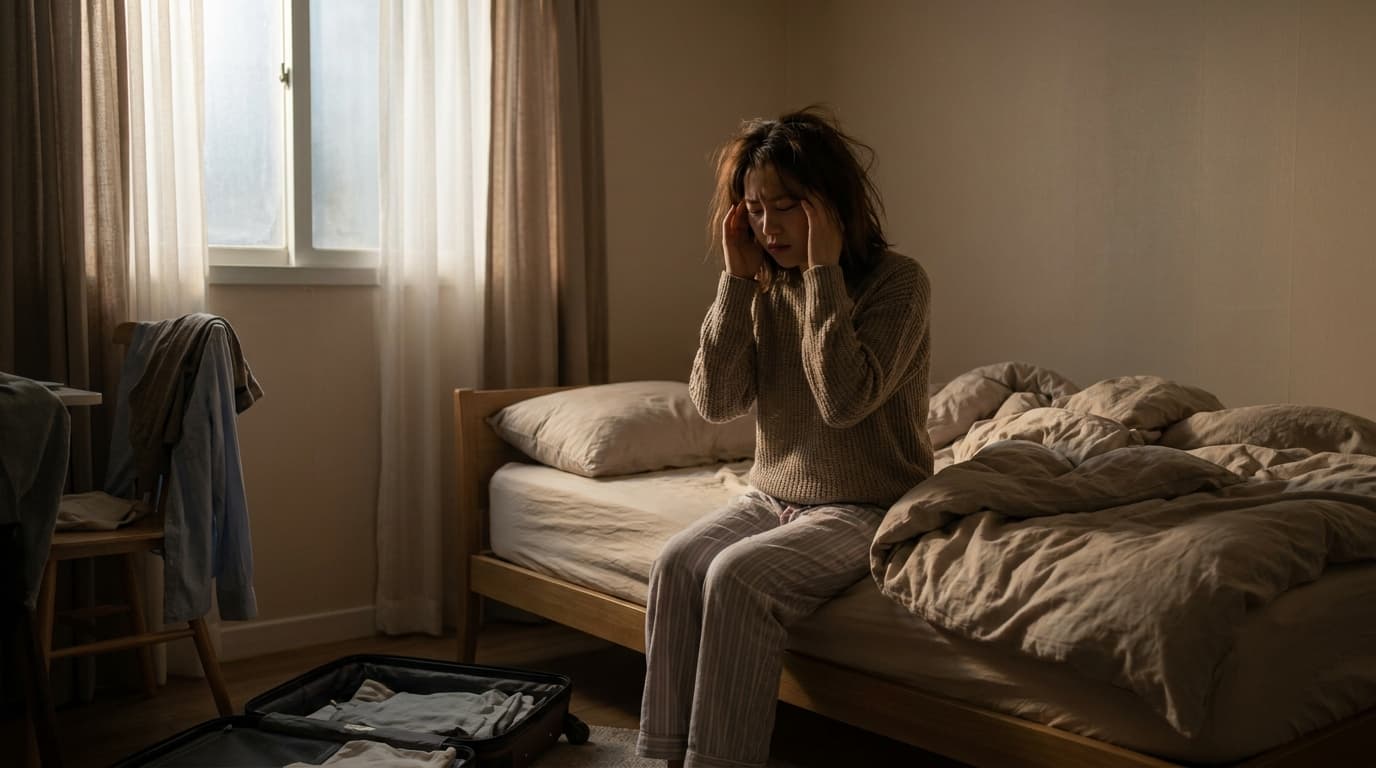
"My head feels like it's splitting," "Pain is pressing from the back of my neck to my head." Headaches are something everyone experiences at least once in their lives. However, there are pains that cannot be fully explained by simply saying "my head hurts." Sometimes it throbs, and other times it feels like a heart is pounding in the head. In particular, many people visit us asking, "Are you confused between migraine and tension headache?" With headache patterns so distinct, could you be worsening chronic headaches with wrong approaches? Finding the true cause of your headache and addressing it correctly is crucial.
💡 [Key Takeaways] Top 3 causes when confused between migraine and tension headache: ① Autonomic Imbalance / ② Neck and Shoulder Muscle Tension / ③ Cerebral Blood Flow Circulation Issues Dalimchae Korean Medicine Clinic resolves the root cause of headaches and builds a healthy, recurrence-free body through autonomic stabilization.
How Do Migraines and Tension Headaches Differ?
Headaches are broadly classified into primary and secondary headaches. Secondary headaches are caused by specific diseases such as brain tumors or encephalitis, while primary headaches occur without a specific underlying disease. The migraines and tension headaches we commonly experience mostly fall under primary headaches. These two types show clear differences in symptoms and triggers.
Migraines are characterized by throbbing, pulsatile pain usually on one side of the head. Pain intensity ranges from moderate to severe, often accompanied by sensitivity to light and sound, nausea, and vomiting. Pain tends to worsen with routine physical activity, often requiring patients to stop and rest when an attack begins. More common in women, triggers can include stress, certain foods, sleep deprivation, and hormonal changes.
Tension headaches often present as a dull, constant, bilateral pain, feeling like a tight band around the head or a pressing sensation. Pain intensity is mild to moderate, and severe nausea or photophobia/phonophobia like migraines is rare. Causes mainly include stress, fatigue, sleep deprivation, and tension in the neck and shoulder muscles due to poor posture. Pain tends to worsen in the afternoon and may ease on weekends, often not worsened by routine activities.
Why Do My Headaches Keep Recurring? - The Warning Light of the 'Autonomic Nervous System'
Many people visit our Incheon headache clinic saying pain killers only work temporarily and the headache returns shortly after. Why do my headaches recur every time? The reason lies in the imbalance of the autonomic nervous system.
The autonomic nervous system in our body acts like a car's accelerator and brake, with the sympathetic and parasympathetic nerves balancing to regulate vital functions such as heart rate, blood pressure, digestion, and sleep. When the balance of the autonomic nervous system is disrupted due to stress, overwork, or irregular lifestyles, the sympathetic nervous system in particular can become excessively hyperactive. When the sympathetic nervous system is excited, brain nerves overheat and cerebral blood flow surges, causing blood vessels to repeatedly constrict and dilate, inducing pain.
Such autonomic imbalance not only causes headaches but also accompanies various systemic symptoms such as dizziness, insomnia, anxiety, indigestion, and chronic fatigue, significantly lowering the quality of life. Often diagnosed as "neurogenic" when western medical tests show no special abnormality, this may be due to overlooking subtle functional abnormalities in the autonomic nervous system. Dalimchae Korean Medicine Clinic Incheon Branch focuses on correcting these autonomic abnormalities to solve the root cause of headaches.
How Does Korean Medicine Treat Headaches? - Centering on Autonomic Stabilization
Dalimchae Korean Medicine Clinic's headache treatment centers on 'autonomic stabilization.' The brain and autonomic nervous system are closely connected, and when autonomic balance collapses, the brain cannot rest and falls into an overload state. This causes various brain function problems such as sleep disorders, dizziness, and decreased concentration.
In Korean medicine, the circulation of Qi and blood and the harmony of internal organs are considered important. In particular, the state of 'Suseung-hwagang' (water rises, fire descends), where clear energy is sufficiently supplied to the head and turbid energy communicates well downwards, is considered healthy. The phenomenon where 'heat' settles in the brain and heart due to stress and overwork (upper heating sensation), while the lower abdomen and hands/feet become cold (lower cold sensation), represents typical autonomic imbalance. Lowering excessive heat in the nervous system and creating an environment where the brain can comfortably rest is Dalimchae Korean Medicine Clinic's autonomic stabilization treatment. Through this, brain overload is reduced and the body's self-recovery power is fostered.
Headaches: No Longer Time to Endure: Effectiveness of Korean Medicine Treatment Confirmed by Actual Research
There is hopeful news for patients suffering from headaches. Korean medicine treatment has been confirmed through various studies to be effective in reducing the frequency and intensity of headaches and improving quality of life.
According to data released by the Association of Korean Medicine in 2016, a large-scale clinical study analysis by the Cochrane Collaboration confirmed that acupuncture is one of the most effective treatments for preventing migraine attacks. Based on data from 4,985 patients included in 22 clinical studies, this analysis suggests that acupuncture has a positive effect on migraine prevention.
Furthermore, in the "[Dr. Park Sang-eun's Korean Medicine Story] Tension Headaches Treated with Pharmacopuncture and Herbal Medicine" column reported in Kookje Shinmun in May 2025, a recent clinical study showed that tension headache patients who received acupuncture for 4 weeks experienced a statistically significant decrease in neck and shoulder muscle tension and pain. Herbal medicine administration also confirmed effects such as pain and frequency reduction and decreased analgesic use, showing that Korean medicine treatment can be an effective alternative for tension headache management.
Based on these data, Dalimchae Korean Medicine Clinic Incheon Branch helps patients regain autonomic balance and escape from headaches through personalized Korean medicine treatments such as acupuncture, pharmacopuncture, and herbal medicine tailored to individual symptoms and constitutions.
Could It Be Me Too? Headache Self-Diagnosis Checklist
Check how many of the following items apply to you:
- ( ) I feel a tight, pressing pain around my head like a band.
- ( ) One side of my head throbs as if my heart is beating.
- ( ) I become unusually sensitive to light or sound, and feel nauseous or like vomiting.
- ( ) Headaches get worse when I am stressed or tired.
- ( ) The back of my neck and shoulders are always stiff and sore.
- ( ) I don't feel refreshed even after sleeping enough and feel chronic fatigue.
- ( ) My heart frequently races or feels stuffy, accompanied by dizziness.
- ( ) Even when taking painkillers, it only works temporarily, effects don't last and it recurs frequently.
[Diagnosis Criteria & Recommendation]
- 3 or more items apply: Autonomic imbalance-induced headache is suspected. We recommend considering the herbal combination treatment at Dalimchae Korean Medicine Clinic, an Incheon autonomic clinic.
- 5 or more items apply: Immediate diagnosis and treatment are needed. Leaving headaches untreated can lead to chronic conditions or other neurological problems, so visit us right now to start accurate diagnosis and customized treatment.
Q. Can migraines and tension headaches be treated together if they occur simultaneously? A. Yes, both types of headaches often appear together, which is closely related to autonomic imbalance. At Dalimchae Korean Medicine Clinic, we simultaneously manage and improve both migraines and tension headaches through treatment that balances the root cause of headaches: the autonomic nervous system.
Q. How long does headache treatment take? A. Treatment duration can vary depending on the chronicity of headaches, causes, and patient constitution. Usually, symptom improvement can be expected within weeks in the initial stage, while chronic or frequent recurrences may require consistent treatment for several months. Dalimchae Korean Medicine Clinic Incheon Branch establishes personalized treatment plans.
Q. Can headaches heal naturally without painkillers? A. Temporary headaches may improve with rest or lifestyle improvements, but chronic and recurring headaches are difficult to heal naturally without solving the root cause. Rather than relying solely on painkillers, we help maintain a comfortable state without medication through Korean medicine treatments that restore autonomic balance and enhance the body's self-healing power.
Headaches are not problems to be endured. You no longer need to ignore the signals your body has been sending for a long time. When approached in the right direction, the body responds faster than you think. Bring the symptoms you are experiencing as they are. Dalimchae Korean Medicine Clinic will find the cause together.
Where life blooms. Herbal medicine is Dalimchae Korean Medicine Clinic. Check symptoms similar to yours first through Dalimchae Korean Medicine Clinic website AI consultation!
This health information was organized by Dalimchae medical staff based on questions frequently received in the treatment room. Medical Supervision | Brain & Autonomic Nervous System Treatment Standards, Min Jihong, Korean Medicine Doctor, Dalimchae Korean Medicine Clinic Incheon Branch (Headache Column)