
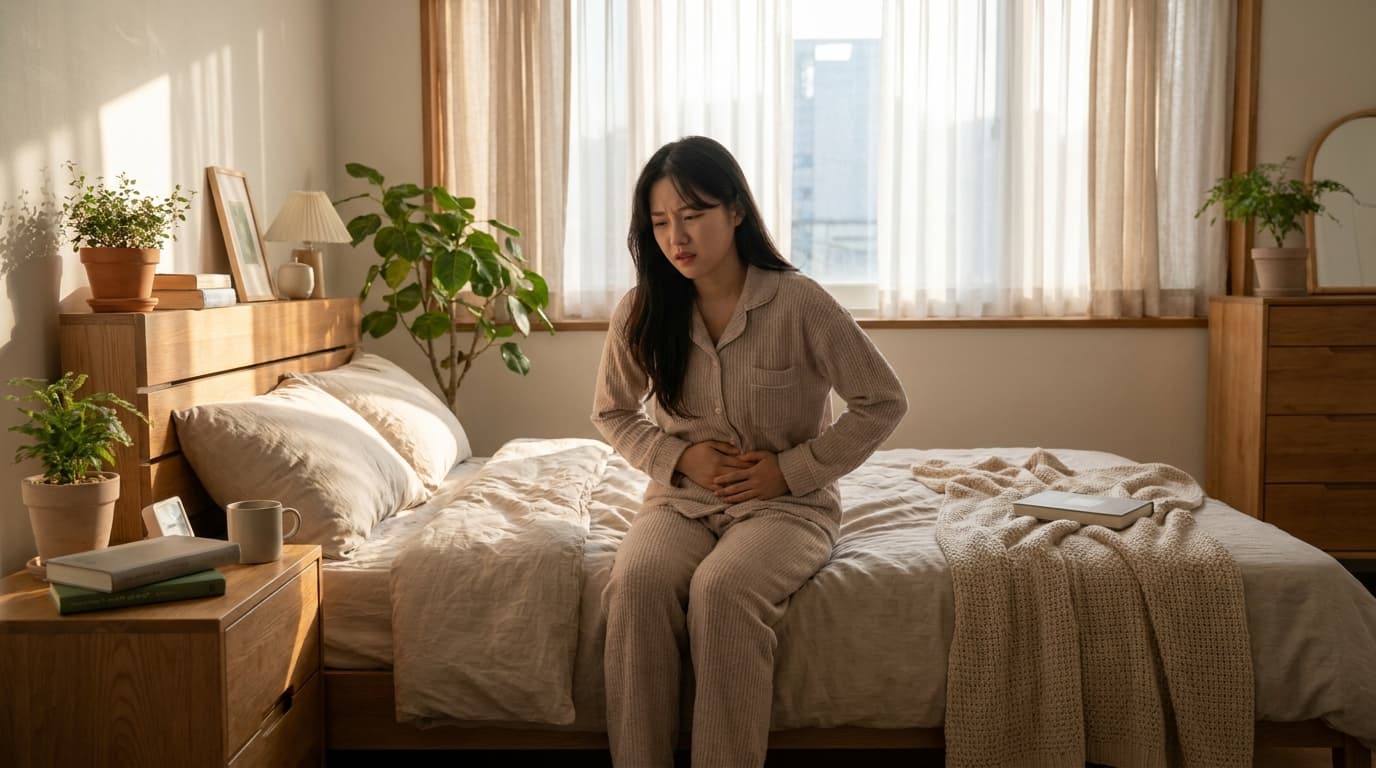
Why did postpartum menstrual cramps suddenly worsen An SOS signal from a tired body
Hello, this is Dalimchae Oriental Medicine Clinic. # Why did postpartum menstrual cramps suddenly worsen? An SOS signal from a tired body After giving birth, the joy of becoming a mother is soon followed by unfamiliar discomforts for many. In particular, sudden and severe postpartum menstrual cramps are a common issue. Some wonder, "I never had menstrual cramps before, why now?" or "It became even worse after my second child," while enduring significant distress. Often, people suffer silently assuming it is just part of the uterine recovery process, which ultimately impacts daily life and childcare. It is crucial not to ignore the SOS signal sent by your exhausted body, but rather to understand the root cause and address it wisely. 💡 **Key Answer** 3 most common causes of **postpartum menstrual cramps**: ① Imbalance in uterine recovery / ② Hormonal changes and blood stasis (Eohyeol) / ③ Autonomic nervous system dysfunction Dalimchae Oriental Medicine Clinic restores the balance of your weakened body through **constitutional improvement** to fundamentally resolve the root cause of pain. ## What is the real reason postpartum menstrual cramps suddenly worsen? Childbirth brings profound changes to a woman's body. Behind the miraculous process of a baby's birth lies a massive overhaul required for the uterus, pelvis, and entire body. If the recovery process is not smooth or if the body fails to adapt properly to hormonal changes, menstrual cramps can intensify. In particular, residual blood stasis (Eohyeol) in the uterus from childbirth or the disruption of autonomic balance due to parenting stress and sleep deprivation are major causes. The interaction of these complex factors leads to menstrual cramps that were not present before or pain that is more severe than previously experienced. ## Postpartum menstrual cramps: An SOS signal of body recovery, not just simple pain Postpartum menstrual cramps should be understood not merely as lower abdominal pain, but as a signal that the balance of the entire body has been broken. Especially if the pain intensity is high or cannot be controlled well with painkillers, a more delicate approach is required. Such pain may be due to inflammatory responses and excessive secretion of prostaglandins occurring as the uterus returns to its original state. Furthermore, after childbirth, a woman's body is prone to a state of 'blood stasis' where Qi and blood are deficient and blood circulation to the uterus is impaired. This makes menstrual blood expulsion difficult and induces excessive contraction of uterine muscles, worsening the pain. Indeed, a significant number of women experience postpartum menstrual cramps, which impact daily life. According to a study published in PLOS Global Public Health in 2026, 24% of 277 postpartum women still experienced moderate to severe menstrual cramps 24 months later. The study emphasized that cramps and abdominal pain (46% and 34%, respectively) were the primary symptoms, which can disrupt daily activities. These results suggest that postpartum menstrual cramps are a common yet easily overlooked problem. ## Postpartum menstrual cramps from an Oriental medicine perspective: Breaking the chain of pain through 'constitutional improvement' At Dalimchae Oriental Medicine Clinic Songdo, postpartum menstrual cramps are not viewed merely as isolated pain. They are approached as a signal sent by a body weakened by childbirth and as an issue of overall physical balance. In particular, blood stasis, Qi-blood deficiency, and autonomic nervous system imbalance are considered to act complexly to cause pain. A multi-center prospective observational study in Korea published in Integrative Medicine Research in 2026 evaluated the efficacy and safety of herbal medicine treatment in 135 patients with dysmenorrhea. Notably, in the group of 82 patients receiving herbal medicine monotherapy, pain intensity (Numerical Rating Scale), pain duration, and analgesic use significantly decreased. This study suggests that personalized herbal medicine prescriptions are effective in alleviating dysmenorrhea symptoms. Additionally, a domestic study published in BMC Complementary Medicine and Therapies in 2025 analyzed the results of applying herbal medicine treatment to 39,574 dysmenorrhea patients using health insurance claim data. The analysis confirmed that symptom severity significantly decreased after herbal medicine intake (β = –0.072, p \< 0.001), and the adverse event rate was 0.58%, mostly consisting of mild gastrointestinal symptoms, thus proving safety. The researchers concluded that these results show herbal medicine can be an effective and safe alternative for dysmenorrhea management. Based on these data, Dalimchae Oriental Medicine Clinic Songdo focuses on improving Qi and blood circulation in the weakened uterus and entire body after childbirth, removing blood stasis, and normalizing uterine function. Simultaneously, we conduct **constitutional improvement** treatments that restore autonomic balance, lower sensitivity to pain, and foster the body's self-regulatory strength. The goal is not to temporarily turn off symptoms, but to create a body where they do not turn back on. ## Body recovery speed check: 'Postpartum menstrual cramps' self-checklist How many of the following items apply to you? * Menstrual cramps suddenly started or became worse after childbirth. * The frequency of taking painkillers due to menstrual cramps has increased. * Along with lower abdominal pain, you experience back pain, headaches, fatigue, or dizziness. * Menstrual volume is irregular or blood clots frequently appear. * You feel a dull ache or discomfort in your lower abdomen even outside of your period. * You experience chronic fatigue due to parenting stress or lack of sleep. * You feel that your body has generally become cold. **[Judgment Criteria]** * **3 or more items apply:** Oriental medicine causes of postpartum menstrual cramps (blood stasis, Qi-blood deficiency, autonomic imbalance) are suspected. We recommend visiting a Songdo dysmenorrhea clinic for professional diagnosis. * **5 or more items apply:** This is a stage requiring active treatment and management. Consider the comprehensive Oriental medicine treatment at Dalimchae Oriental Medicine Clinic Songdo to recover your exhausted body. ## Q&A on Oriental medicine treatment for postpartum menstrual cramps **Q. Can postpartum menstrual cramps heal naturally?** A. Some mild menstrual cramps may improve naturally as the body fully recovers after childbirth. However, in many cases, body changes from childbirth persist, causing pain to become chronic or severe. Active treatment is especially necessary if there is blood stasis or uterine recovery imbalance. **Q. How long does herbal medicine treatment take?** A. The treatment duration varies depending on individual constitution, symptom severity, and pain causes. Typically, meaningful symptom improvement can be expected through 2 to 3 months of herbal medicine treatment, considering the remarkable changes and recovery process of the uterus. Consistent treatment prevents recurrence and helps restore overall health. **Q. Do past miscarriage experiences affect postpartum menstrual cramps?** A. Yes, miscarriage experiences can also affect the uterine environment and menstrual function. If proper postpartum care is not provided after a miscarriage, residual blood stasis or delayed uterine recovery can worsen subsequent menstrual cramps. In such cases, Oriental medicine treatments that warm the uterus and remove blood stasis aid recovery. **Q. I am looking for a Songdo dysmenorrhea clinic. What treatments does Dalimchae Oriental Medicine Clinic offer?** A. At Dalimchae Oriental Medicine Clinic Songdo, personalized herbal prescriptions remove intra-uterine blood stasis, replenish Qi and blood, and strengthen uterine function. In addition, acupuncture and moxibustion are combined to promote pelvic blood circulation, relieve pain, and restore overall autonomic balance to achieve a healthy physical state. Postpartum menstrual cramps are not problems solved by endurance. You no longer need to ignore the body signals you have sent for a long time. When approached in the right direction, the body responds faster than you think. Bring your current symptoms just as they are. Dalimchae Oriental Medicine Clinic will find the cause together with you. A place where life blossoms. Herbal medicine is Dalimchae Oriental Medicine Clinic. Check your similar symptoms first through the AI consultation on the Dalimchae Oriental Medicine Clinic website! This article is based on questions frequently received in the clinic, compiled together by the Dalimchae medical team as health information. Medical Review | Women & Pregnancy Care Standards, Oh Hyun-min, Oriental Medical Doctor at Dalimchae Oriental Medicine Clinic Songdo (Menstrual Cramps Column) #PostpartumCramps #PostpartumPain #MenstrualCramps #UterineRecovery #BloodStasis #ConstitutionalImprovement #SongdoOrientalClinic #HerbalTreatment