
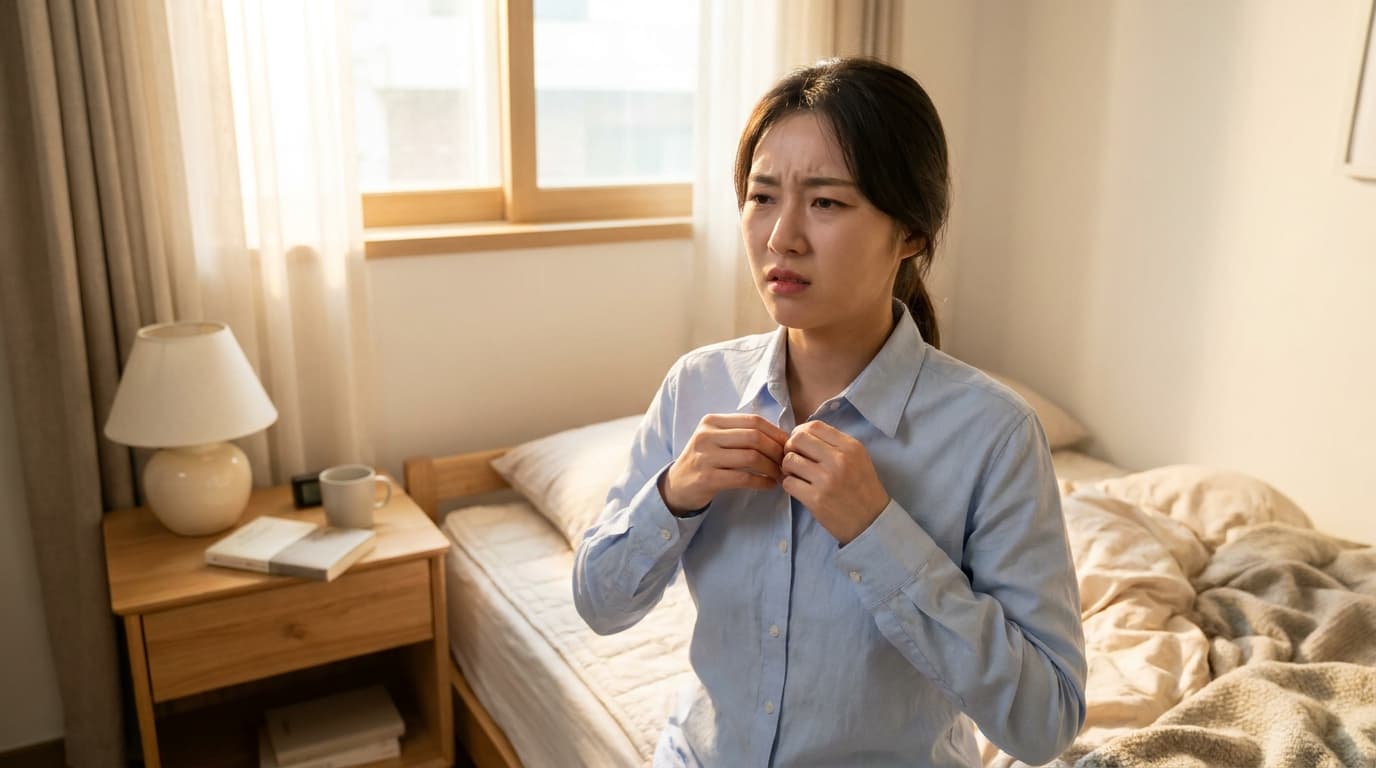
When Buttoning Your Shirt Your Fingers Are Stiff and Wont Move Could It Be an Early Sign of Parkinsons Disease The Answer Lies in the Autonomic Nervous System
안녕하세요. 달임채한의원입니다. # When Buttoning Your Shirt Your Fingers Are Stiff and Wont Move Could It Be an Early Sign of Parkinsons Disease The Answer Lies in the Autonomic Nervous System Did you one day suddenly notice your fingers stiff and refusing to move when trying to button your shirt in the morning? Experiences where delicate hand movements like writing or using chopsticks are not like they used to be, and finger movements increasingly become uncomfortable, not only cause great discomfort in daily life but also bring worries whether they might be early signs of serious illnesses like Parkinson's disease. Often, even after getting examinations, you only hear "normal" and your frustration grows. 💡 **[Core Answer]** The 3 most common causes of the symptom **"fingers are stiff and wont move when buttoning"**: ① Brain nervous system function decline due to autonomic imbalance / ② Chronic rigidity of muscles and tendons / ③ Early sign of Parkinson's disease or drug-induced parkinsonism. Dalimchae Korean Medicine Clinic resolves the root cause of finger stiffness by calming the overheated brain nervous system and restoring whole-body balance through **autonomic nervous system stabilization**. ## Why Do Fingers Stiffen When Buttoning, Is It Simply Due to Age? Many people suddenly experience stiff fingers and dulled movements one day. In many cases, it is dismissed as a natural phenomenon of aging or regarded simply as a blood circulation problem and left unattended. However, such finger stiffness and rigidity have complex causes that cannot be blamed solely on age. One of the most common causes is **autonomic nervous system imbalance** in our bodies. When the balance of autonomic nerves collapses due to stress, lack of sleep, or overwork, sympathetic nerves are excessively activated, keeping our bodies in a constant state of tension. This tension can stiffen muscles and tendons and affect the brain's motor control functions, leading to discomfort in finger movements. Furthermore, minute functional abnormalities in motor control centers such as the **basal ganglia** or **cerebellum** in the brain can also be causes of finger stiffness. Such changes appear minimally at first, but as they progress gradually, delicate movements of the hand become difficult, or tremors (진전) or rigidity (경직) accompany when performing specific actions. Especially if fingers are stiff upon waking in the morning making it hard to make a fist, or if fingers do not obey when performing specific actions, you should keep in mind the possibility that it is not a simple muscle problem. ## Why Does the Autonomic Nervous System Affect Finger Movements? The autonomic nervous system is a network responsible for essential life-maintenance functions regardless of our will, such as heartbeat, respiration, digestion, and body temperature regulation. It consists of sympathetic nerves responsible for tension and activity, and parasympathetic nerves responsible for relaxation and recovery. When these two nerves are in balance, the body maintains an optimal state. However, chronic stress or irregular lifestyle habits disrupt the balance of autonomic nerves, hyper-activating sympathetic nerves and making the brain unable to rest like an 'overheated engine'. This autonomic imbalance does not just affect psychological anxiety or indigestion. It also affects the functions of the brain nervous system including the brainstem, degrading fine motor control abilities. Delicate finger movements are achieved through the sophisticated commands of the brain and coordination of muscles, tendons, and joints. When brain nervous system function declines due to autonomic imbalance, problems occur in this coordination process, causing fingers to stiffen. In addition, excessive sympathetic activation induces tension in whole-body muscles and inhibits blood circulation, lowering the flexibility of finger joints and causing pain. ## How to Distinguish Early Parkinson's Symptoms from Finger Stiffness? When finger stiffness and rigidity persist, many people worry about Parkinson's disease. Parkinson's disease is a degenerative brain disease occurring when dopamine nerve cells in the brain are lost, and major motor symptoms include tremor, slow movement (bradykinesia), muscle rigidity, and postural instability. Finger stiffness can appear as one of the muscle rigidity symptoms of Parkinson's disease. However, having finger stiffness does not mean everyone has Parkinson's disease. Finger stiffness appearing in Parkinson's disease generally shows the following characteristics: * Resting tremor: Tremor of hands or feet is prominent when resting quietly. * Bradykinesia: Actions slow down and the range of movement decreases. Difficulties are especially experienced in delicate motions like buttoning and writing. * Rigidity: Muscles of limbs or trunk stiffen rigidly, making movements unnatural. Patients express that their bodies feel heavy and hard to move. * Postural instability: Balance is hard to maintain, leading to easy falls or walking difficulties. If these symptoms appear complexly, it is important to receive accurate diagnosis and treatment considering the possibility of Parkinson's disease. Dalimchae Korean Medicine Clinic Incheon Branch views not only finger stiffness but also non-motor symptoms of Parkinson's disease (depression, insomnia, constipation, cognitive decline, etc.) as connected to the autonomic nervous system and approaches them from a comprehensive perspective. In fact, the utilization of Korean medical treatment among Parkinson's patients is increasing. According to research based on Health Insurance Review and Assessment Service data, the utilization rate of Korean medical treatment by Parkinson's patients in Korea increased by about 65% from 6.4% in 2010 to 10.6% in 2019. Acupuncture treatment was utilized the most, and it was analyzed to be effective in improving not only motor symptoms but also non-motor symptoms such as fatigue, constipation, and pain. These research results suggest that Korean medical treatment can be an important complementary alternative in managing Parkinson's disease. In another study, it was scientifically proven that Korean medical acupuncture treatment helps alleviate Parkinson's symptoms. In September 2024, a joint research team led by Professor Park Hee-jun of Kyung Hee University College of Korean Medicine and Dr. Nam Min-ho of the Brain Science Research Institute at the Korea Institute of Science and Technology (KIST) announced through Maekyung Health that they identified a new neural circuit mechanism of acupuncture treatment in a Parkinson's disease model. The research team explained that acupuncture stimulation activates MCH neurons extending to the hippocampus, a brain region related to memory, which enhances synaptic plasticity and restores memory. Such research is significant in that acupuncture treatment presented a new therapeutic target capable of simultaneously modulating not only motor symptoms of Parkinson's disease but also non-motor symptoms such as memory decline. ## How Dalimchae Korean Medicine Clinics Autonomic Stabilization Treatment Relaxes Stiff Fingers Dalimchae Korean Medicine Clinic Incheon Branch takes **autonomic stabilization** as its core treatment principle to approach the root causes of Parkinson's-like symptoms such as stiff fingers. When the balance of autonomic nerves collapses, the brain cannot rest and overheats, sending various abnormal signals throughout the body. At this time, Dalimchae Korean Medicine Clinic focuses on lowering excessive heat in the nervous system and creating an environment where the brain can rest. In Korean medicine, this is called 'Suseunghwagang (水昇火降)', emphasizing the circulation balance of keeping the head cool and the lower body warm. Specific treatments proceed in the following directions: 1. Normalization of Brain Nervous System Function: Stabilizes the brain nervous system overloaded by autonomic imbalance, restores neurotransmitter balance, and improves overall motor control functions including finger movements. This goes beyond simply suppressing symptoms, helping the brain find balance on its own and function healthily. 2. Muscle and Blood Circulation Improvement: Relaxes hardened muscles and tendons, induces smooth blood circulation down to fingertips, and increases finger flexibility. Herbal prescriptions help circulation of Qi and blood and alleviate inflammation, while acupuncture and pharmacopuncture treatments release tension in rigid areas and promote nerve activity. 3. Whole-Body Condition Recovery: Early Parkinson's symptoms or autonomic imbalance often accompany fatigue, insomnia, indigestion, and depression along with finger stiffness. Dalimchae Korean Medicine Clinic focuses on improving these systemic symptoms together to regain body and mind balance and enhance quality of life. Such autonomic stabilization treatment can be expected to improve not only surface finger stiffness symptoms but also various hidden discomforts by solving deep-rooted problems of the brain and nervous system. For those visiting Incheon Parkinson's Korean Medicine Clinic who complain of non-motor symptoms not resolved by Western treatment alone or discomforts from drug side effects, Korean medical treatment can be an effective alternative. ### Is My Finger Stiffness Due to Autonomic Imbalance? Self-Checklist Count how many of the following items apply to you: * Fingers are stiff upon waking in the morning, making it hard to make a fist. * Delicate hand motions like buttoning, writing, and using chopsticks are not like before. * Hands or specific body parts tremble minutely when resting quietly. * Movements are overall slow and the body feels heavy. * Fatigue is severe and you do not feel refreshed even after resting. * Sleep quality is poor, such as having trouble falling asleep or waking up frequently. * Indigestion, constipation, and chronic bowel trouble exist. * Dizziness or headaches are felt frequently. * Feelings of anxiety or depression visit frequently without special reason. * Symptoms tend to worsen further when stressed. Judgment Criteria: * 2~3 items apply: Autonomic imbalance early stage suspected. Can be sufficiently improved through stress management and lifestyle improvement. Consider Incheon autonomic Korean medicine consultation. * 4~6 items apply: Autonomic imbalance mid stage suspected. Body recovery power is in a declined state, so it is important to prevent progression to bigger problems through active Korean medical diagnosis and treatment. * 7 or more items apply: Autonomic imbalance advanced or brain nervous system abnormality possibility. Immediate hospital visit and precise examination recommended to figure out exact cause and start Dalimchae Korean Medicine Clinic's autonomic stabilization treatment. ## Frequently Asked Questions (FAQ) Q. Can finger stiffness symptoms heal naturally? A. Mild symptoms due to temporary fatigue or stress can naturally improve with sufficient rest and stress management. However, if symptoms persist for 3 months or worsen, they may be autonomic imbalance or other neurological problems, requiring expert diagnosis and treatment. Q. Can finger stiffness appear even if it is not Parkinson's disease? A. Yes, even if it is not Parkinson's disease, finger stiffness or tremor can appear due to various causes such as autonomic imbalance, muscle rigidity, drug-induced parkinsonism from certain medications, or essential tremor. Accurate diagnosis by professional medical institutions like Dalimchae Korean Medicine Clinic Incheon Branch is important. Q. What treatments will I receive at Dalimchae Korean Medicine Clinic? A. Dalimchae Korean Medicine Clinic combines various Korean medical treatments such as herbal medicine, acupuncture, pharmacopuncture, moxibustion, and cupping tailored to individual constitutions and symptoms. In particular, customized treatments focused on regaining autonomic balance and stabilizing brain nervous system function are performed. Q. How long does Korean medical treatment take? A. Treatment duration varies depending on the patient's symptom severity, cause, and individual recovery power. Usually, meaningful improvement can be expected through 3 to 6 months of steady treatment and lifestyle management, and chronic cases may require longer treatment periods. Finger stiffness when buttoning is not a problem solved by enduring. You no longer need to turn a blind eye to body signals sent for a long time. When approached in the right direction, the body responds faster than you think. Bring the symptoms you are experiencing as they are. Dalimchae Korean Medicine Clinic will find the cause together. Where life blooms. Herbal medicine is naturally Dalimchae Korean Medicine Clinic. Check similar symptoms to yours first through Dalimchae Korean Medicine Clinic website AI consultation! Medical Supervision | Brain & Autonomic Nervous System Treatment Standard, Dalimchae Korean Medicine Clinic Incheon Branch, Korean Medicine Doctor Yang Yoo-chan (Parkinson's Disease Column)