
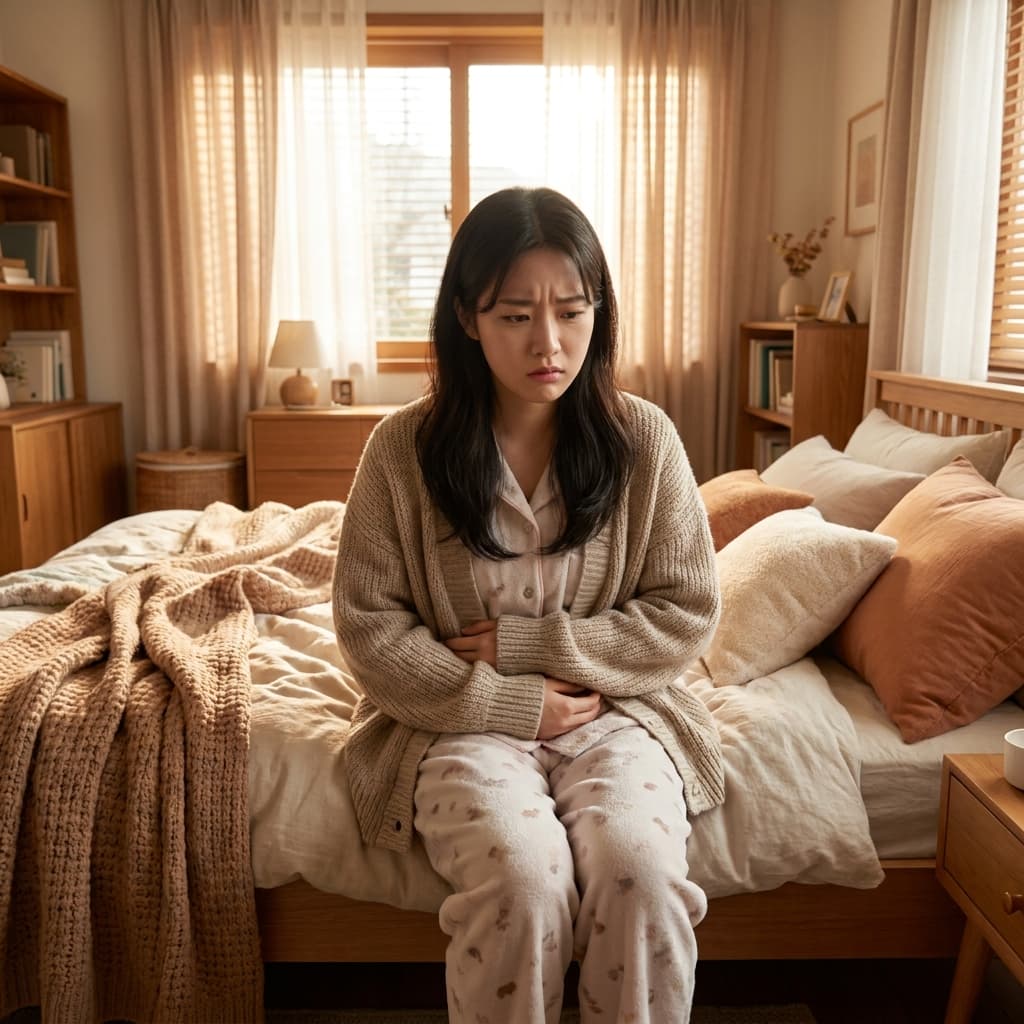
How to Distinguish Between Implantation Bleeding and Early Miscarriage Rest Assured Now
Hello, this is Dalimchae Korean Medicine Clinic. # How to Distinguish Between Implantation Bleeding and Early Miscarriage? Rest Assured Now. In early pregnancy, when unexpected bleeding occurs after your missed period, many expectant mothers are overcome with anxiety. Worrying about whether it could be implantation bleeding or a sign of an early miscarriage directly relates to the health of your unborn child, making it an extremely stressful experience. Especially for those who have eagerly awaited pregnancy, even a small drop of blood can feel heart-wrenching. However, bleeding in early pregnancy is more common than you might think, and its causes and courses vary. Calming your anxious mind and responding wisely with accurate information is of utmost importance. 💡 **[Core Answer]** **How to distinguish between implantation bleeding and early miscarriage?** Top 3 most common causes: ① **Endometrial implantation process:** Minor bleeding as the fertilized burrowing into the endometrium. ② **Hormonal changes:** Rapid hormonal fluctuations in early pregnancy. ③ **Unstable uterine environment:** Stress, autonomic imbalance, or underlying uterine conditions. Dalimchae Korean Medicine Clinic fosters a healthy uterine environment through constitutional care to enhance pregnancy maintenance and securely protect your vulnerable early pregnancy. ## Early Pregnancy Bleeding: How Do Implantation Bleeding and Miscarriage Signs Differ? Bleeding in early pregnancy is largely divided into implantation bleeding and signs of miscarriage. However, clearly distinguishing between the two by appearance alone is very difficult. Implantation bleeding does not occur in all pregnant women; it is known to be experienced by only about 10-30%. It refers to minor bleeding that occurs when the fertilized egg burrows into the endometrium. Generally, implantation bleeding occurs around the time of the expected menstrual period and lasts briefly for 1 to 3 days. The amount of bleeding is extremely small, leaving a slight pink or brown discharge on underwear, often appearing brownish or pinkish rather than bright red blood. On the other hand, bleeding due to miscarriage tends to be heavier, with bright red blood and sometimes accompanied by abdominal cramps or tissue fragments. However, because bleeding patterns vary, it is difficult to judge solely by the amount and color. The most accurate method is to check using a pregnancy test or hospital examination. ## What is the Impact of an Unstable Uterine Environment on Early Pregnancy Bleeding? While early pregnancy bleeding can be a simple physiological part of the implantation process, it can also signal an unstable uterine environment. Stress, irregular lifestyle habits, lowered immunity, and autonomic imbalance can negatively affect the stable implantation and growth of the fetus and uterus. In particular, endometrial health and hormonal balance are essential for maintaining pregnancy. When the autonomic nervous system is unstable, it affects various bodily functions, including blood supply to the uterus, weakening the implantation environment and increasing the risk of bleeding. Furthermore, a history of past miscarriages or infertility makes functional uterine issues even more likely to lead to bleeding. Songdo Infertility Korean Medicine Clinic focuses on carefully examining and improving this uterine environment. ## How Can Oriental Medicine Treatment Help with Early Pregnancy Bleeding and Recurrent Miscarriage? In traditional Korean medicine, early pregnancy bleeding is viewed as "Tai Lou" (fetal leakage) or "Tai Dong Bu An" (restless fetus), focusing on strengthening the uterus and stabilizing the fetus. In particular, for recurrent miscarriages, constitutional care to improve the uterine environment is crucially applied. A 2020 systematic review and meta-analysis published in PubMed and PMC reported that combining Shoutai Pill, a traditional herbal prescription, with Western medicine significantly reduced the incidence of early pregnancy loss in women experiencing unexplained recurrent miscarriage compared to Western medicine alone. Analyzing 916 patients across 12 studies, the herbal combination group showed a 42% lower incidence of early pregnancy loss (Relative Risk: 0.42; 95% CI: 0.34-0.52; p \< 0.01), with no serious side effects reported. The researchers concluded that combined herbal treatment can help prevent early pregnancy loss, while noting methodological limitations and the need for further standardized studies. Furthermore, a 2025 multicenter observational study published in PMC involving 96 women with unexplained infertility who received Korean medicine treatments (acupuncture, moxibustion, herbal medicine, etc.) showed a clinical pregnancy rate of 20.8%, pregnancy maintenance rate of 70.0% (maintenance rate over 12 weeks among pregnant women), and live birth rate of 13.5%. No serious side effects or congenital anomalies were reported in this study either. These research findings suggest that Korean medicine treatment can play a positive role in reducing the risk of early pregnancy bleeding and maintaining a healthy pregnancy. Dalimchae Korean Medicine Clinic Songdo Branch provides personalized herbal medicine treatments based on these data, precisely diagnosing individual constitution and uterine health status. We focus on relieving autonomic imbalance caused by external factors such as stress, improving uterine blood circulation, and boosting immunity to create an optimal uterine environment where the fetus can stably implant and grow. ## Prepare for a Healthy Pregnancy with Dalimchae Korean Medicine Clinic's 'Constitutional Care' At Dalimchae Korean Medicine Clinic, we apply the principles of 'constitutional care' treatment to alleviate the anxiety of early pregnancy bleeding and miscarriage. Constitutional care aims not merely to temporarily suppress symptoms, but to fundamentally transform the body's environment healthily so that symptoms do not recur. In particular, since pregnancy and childbirth bring major changes to a woman's body, constitutional care strengthening uterine and ovarian function and balancing overall physical harmony is vital. Our body's immunity and hormonal balance are directly linked to uterine health. Constitutional care herbal treatment reinforces individual weak points, reduces uterine inflammation, and promotes blood circulation to strengthen the endometrium. This lays a solid foundation for the fertilized egg to implant stably and the fetus to grow healthily. It also helps the body adapt well to pregnancy-related changes, corrects autonomic disturbances caused by stress, and supports emotional stability. This process serves as a reliable stepping stone extending from preventing Songdo miscarriages to healthy childbirth. ## Early Pregnancy Bleeding: Implantation Bleeding vs. Miscarriage Sign Checklist Through the following items, you can gauge whether the bleeding you are currently experiencing is closer to implantation bleeding or a sign of miscarriage. However, this is only a self-diagnosis; precise diagnosis must always be received from a medical institution. **[Implantation Bleeding vs. Miscarriage Sign Checklist]** 1. Timing of bleeding: Did it occur just before or a few days around your expected period? (Suspected implantation bleeding) 2. Duration of bleeding: Did it last briefly for about 1 to 3 days? (Suspected implantation bleeding) 3. Color of bleeding: Was it a pale pink, brown, or reddish discharge? (Suspected implantation bleeding) 4. Amount of bleeding: Was it a small amount staining your underwear? (Suspected implantation bleeding) 5. Accompanying symptoms: Were there no special abdominal or lower back pains? (Suspected implantation bleeding) 6. Change in bleeding pattern: Did it start small and gradually increase in amount or turn bright red? (Suspected miscarriage sign) 7. Pain: Was it accompanied by abdominal or lower back pain worse than menstrual cramps? (Suspected miscarriage sign) 8. Placental tissue discharge: Was clotted tissue discharged along with bleeding? (Suspected miscarriage sign) 9. Pregnancy confirmation: Did you test positive on a pregnancy test? (Both possibilities) * 3 or more of items 1-5 checked: Highly likely to be implantation bleeding. However, do not let your guard down; monitor progress, reconfirm with a pregnancy test if necessary, or consider visiting a medical institution. * 1 or more of items 6-8 checked or bleeding persists/increases: May be a sign of early miscarriage. Immediate medical visit and specialist consultation are recommended. * Item 9 checked with high anxiety: Visit Dalimchae Korean Medicine Clinic Songdo Branch for accurate diagnosis and fetal protection consultation. ## FAQ: Frequently Asked Questions About Early Pregnancy Bleeding **Q. Do all pregnant women experience early pregnancy bleeding?** A. No. Implantation bleeding, a type of early pregnancy bleeding, is known to be experienced by only about 10-30% of pregnant women. Most healthy implantations occur without any bleeding. **Q. Is brown spotting in early pregnancy always a sign of miscarriage?** A. Not necessarily. Brown blood can be implantation bleeding, or it could be the discharge of older blood. If the amount of bleeding is small and there is no abdominal pain, you can monitor the progress, but consulting a medical professional is recommended if you are anxious. **Q. Is it difficult to visually distinguish between implantation bleeding and miscarriage bleeding at home?** A. Yes, because the patterns and colors of bleeding vary greatly between individuals, precise visual distinction is very difficult. The most accurate method is to check pregnancy status and fetal condition through an OB/GYN examination. **Q. Is it safe to combine Korean medicine treatment when experiencing early pregnancy bleeding?** A. Dalimchae Korean Medicine Clinic's treatments are carefully prescribed to be safely applied even during pregnancy. In particular, herbal medicine for miscarriage prevention consists mainly of herbs safe for the fetus and is conducted under precise medical diagnosis, so you can rest assured. Early pregnancy bleeding is not a problem that can be resolved by simply enduring. To healthily nurture a life you have waited for long, you must not ignore even the smallest signals your body sends. Approaching in the right direction and fostering your body's fundamental strength will prompt your body to respond faster than you think and maintain a stable pregnancy state. Bring your current bleeding and anxiety just as they are. Dalimchae Korean Medicine Clinic Songdo Branch will help you find the cause together and open the path to a healthy pregnancy. Where life blossoms. Herbal medicine is Dalimchae Korean Medicine Clinic. Check your similar symptoms first through Dalimchae Korean Medicine Clinic website AI consultation! Medical Supervision | Women's & Pregnancy Care Standard: Dr. Hyunmin Oh, Dalimchae Korean Medicine Clinic Songdo Branch (Recurrent Miscarriage Column)