
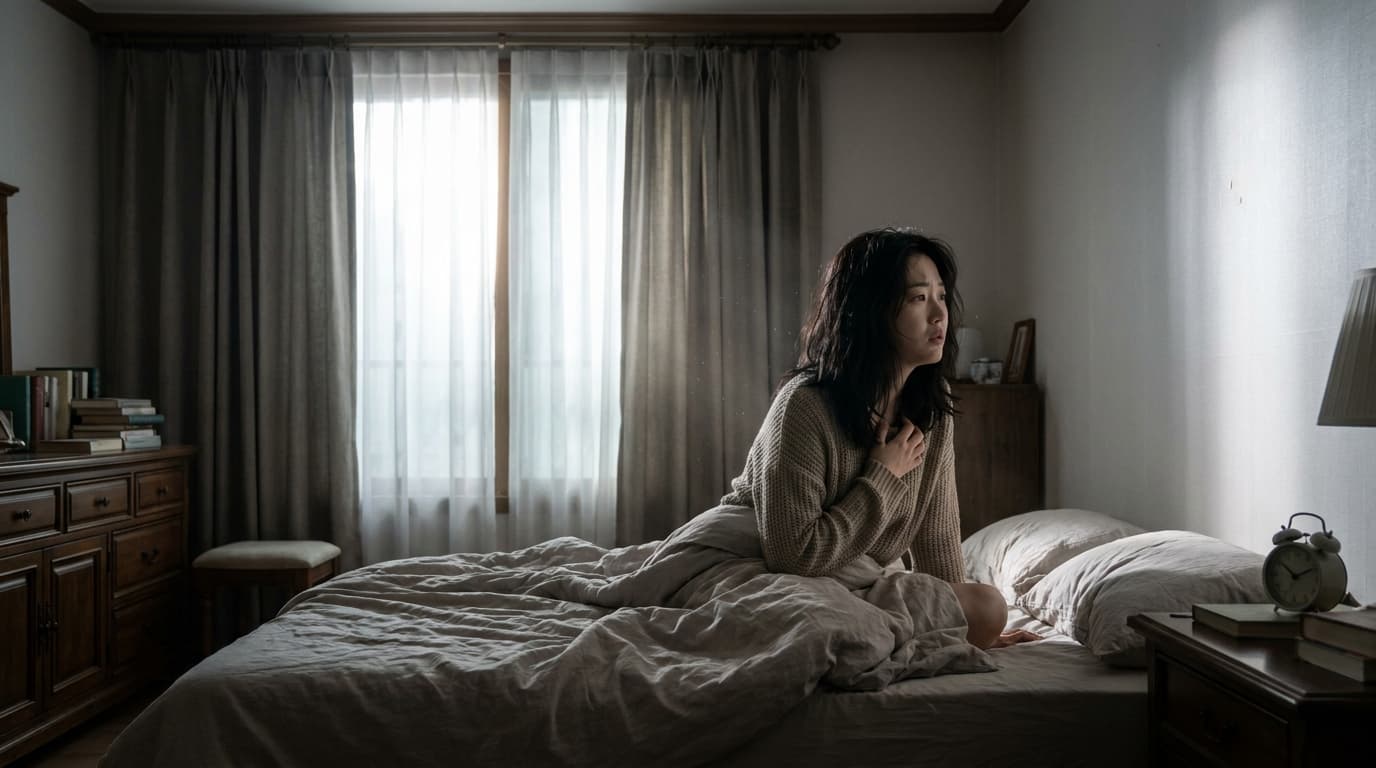
Heart Palpitations and Anxiety Are They Real Heart Disease
Hello, this is Dalimchae Korean Medicine Clinic. # Heart Palpitations and Anxiety Are They Real Heart Disease? Suddenly feeling your heart drop, your chest tightening, and even finding it hard to breathe, accompanied by extreme anxiety that all these symptoms might signify a serious illness. If you are currently suffering from these symptoms, even after visiting internal medicine and hearing "everything is normal," you may feel deeply frustrated. "Why is my body clearly hurting, yet the hospital says there is no problem?" This question is a reality faced by many, and dismissing it as mere nerves is too much suffering. 💡 **[Key Answer]** Top 3 most common causes of **"Heart Palpitations and Anxiety"**: ① Autonomic Imbalance / ② Chronic Stress and Overwork / ③ Anxiety and Panic Disorders Dalimchae Korean Medicine Clinic helps turn off the warning lights of an oversensitive body through **Autonomic Stabilization**, guiding it to regain balance on its own. ## What should be checked first when experiencing heart palpitations and anxiety? When your heart pounds, your chest feels tight, and anxiety overwhelms you, the first thought is likely "Could there be a problem with my heart?" Indeed, these symptoms mimic cardiovascular diseases such as angina and arrhythmia, leading many to internal medicine clinics. However, in most cases, precise diagnostic tests like ECGs and echocardiograms reveal no organic abnormalities. Why then does the body continue to send "warning lights"? The core lies in the **autonomic nervous system**. The heart beats autonomously without our conscious control, and its movement is entirely governed by the autonomic nerves. When the balance between sympathetic and parasympathetic nerves breaks due to stress, overwork, or lack of sleep, **palpitations**—irregular or excessive heart pounding—can occur. This can also manifest as somatic symptoms of psychological issues like anxiety or panic disorders. Sometimes symptoms are worse during rest rather than activity, especially at night before sleep. ## Why do I still feel anxious even though test results are 'normal'? Receiving a normal heart test result brings temporary relief, but the persistent discomfort and anxiety remain unresolved, leading to deeper frustration. This is likely due to **autonomic dysregulation** in our body. The autonomic nervous system regulates all unconscious functions of our body—heartbeat, respiration, digestion, temperature control, and sleep. When this balance breaks, the brain constantly sends danger signals, and the body enters a state of excessive arousal. When the sympathetic nervous system is hyperactive, heart rate accelerates, blood pressure rises, breathing quickens, and sweating occurs. The parasympathetic nervous system governs relaxation and recovery; when its function declines, the body cannot rest adequately, leading to persistent anxiety and restlessness. As this state becomes chronic, our brain reacts sensitively to minor stimuli, causing emotional changes like anxiety, worry, and depression alongside somatic symptoms such as palpitations, indigestion, headaches, dizziness, and sleep disorders. ## How does Korean medicine approach anxiety disorders? In Korean medicine, heart palpitations and anxiety are viewed under the categories of **Gyeonghyee (惊悸)** and **Jeongchung (怔忡)**, treated from a holistic mind-body perspective. Gyeonghyee is temporary palpitation and anxiety triggered by external stimuli, while Jeongchung refers to persistent, recurrent palpitations and anxiety without a clear trigger. This is closely linked not just to the heart, but to the functions of viscera and bowels, especially the Heart (心), Liver (肝), Kidney (腎), and Gallbladder (膽). Dalimchae Korean Medicine Clinic interprets "normal test result" anxiety and palpitations as warning signals originating from autonomic imbalance, focusing on restoring the root cause. This is akin to cooling an overheated engine and shutting off the main breaker to stabilize the entire system. The goal goes beyond suppressing anxiety symptoms temporarily; it aims to foster the patient's own resilience and autonomic harmony to prevent recurrence. ### Efficacy of Korean Medicine Treatment for Anxiety and Autonomic Imbalance The efficacy of Korean medicine treatments for anxiety disorders and accompanying symptoms has been confirmed through various clinical studies. A study published in *Healthcare (Basel)* in July 2024 reported on 67 anxiety disorder patients who received a complex Korean medicine treatment including acupuncture, herbal psychotherapy, Chuna manipulation, aromatherapy, and herbal medicine for at least 4 weeks. Results showed significant decreases in anxiety indices (STAI X-1, STAI X-2, BAI; p \< 0.0001), depression indices (BDI-II; p \< 0.0001), anger indices (AKI-K-I, AKI-K-O; p \< 0.05), and significantly improved quality of life (EQ-5D, EQ-VAS; p \< 0.0001). Another case study published in *Medical Acupuncture* in February 2024 evaluated generalized anxiety disorder patients who completed 4 weeks of bi-weekly acupuncture. Results showed significant decreases in GAD-7 and BPQ-SF scores, and Heart-Rate Variability (HRV) measured Heart Rate Consistency (HRC) significantly increased after acupuncture. Researchers explained that acupuncture can effectively reduce sympathetic stress and anxiety symptoms by activating the vagus nerve. ## Dalimchae Korean Medicine Clinic's Autonomic Stabilization Treatment Principle Dalimchae Korean Medicine Clinic adopts **autonomic stabilization** as its core treatment principle for anxiety disorders and palpitations. Brain and autonomic nerves are intertwined like tangled threads; problems in one easily transfer to the other. Chronic stress and anxiety excite the brain excessively, breaking autonomic balance and manifesting as bodily symptoms. We help break this vicious cycle and restore natural functions. In Korean medicine, lowering excessive neural heat and creating a comfortable resting environment for the brain is paramount. This calms hyperactive sympathetic nerves and activates parasympathetic function, guiding the body to regain balance naturally through customized complex treatments including herbal medicine, acupuncture, moxibustion, cupping, and herbal psychotherapy. ## Are You Also Experiencing Anxiety from Autonomic Imbalance? (Symptom Checklist) * Sudden heart palpitations or feeling like your heart is dropping. * Chest tightness and difficulty breathing without special reason. * Constant anxiety, restlessness, and easily startled by small things. * Difficulty falling asleep, frequent waking, unrefreshing sleep. * Poor digestion, abdominal discomfort, worsening with stress. * Frequent dizziness or unclear head feeling. * Body weakness, constant fatigue, chronic tiredness. * Frequent neck/shoulder stiffness and tension. * Severe mood swings, easily angered or saddened. * Cold hands/feet, or conversely, internal heat and excessive sweating. **[Criteria]** * **3+ items:** Suspected autonomic imbalance stage. Pay attention to body signals and improve lifestyle habits. * **5+ items:** Clear anxiety symptoms due to autonomic imbalance. Professional diagnosis and Korean medicine complex treatment are strongly recommended. * **7+ items:** Immediate management needed. Seek expert help to start fundamental treatment at Dalimchae Korean Medicine Clinic Incheon branch. --- **Q. I have trouble sleeping due to heart palpitations; will sleep problems be treated together?** A. Yes, palpitations and sleep problems often appear together due to autonomic imbalance. Autonomic stabilization treatment calms hyperactive sympathetic nerves and restores parasympathetic sleep-inducing functions, improving both palpitations and insomnia. **Q. Heart tests show no disease, but I still have severe anxiety for daily life. What should I do?** A. Persistent anxiety despite no organic heart problem is often due to autonomic hypersensitivity or anxiety disorders. Dalimchae Korean Medicine Clinic provides customized herbal treatment restoring autonomic balance and controlling anxiety. **Q. How long does anxiety disorder treatment take?** A. Treatment duration varies depending on symptom severity, chronicity, lifestyle, and bodily response. Typically, consistent treatment over weeks to months aims for gradual symptom improvement. **Q. Is Korean medicine treatment safe when taken alongside Western medicine?** A. Yes, concurrent treatment is often possible and beneficial. Please inform medical staff of any Western medications being taken so we can establish the safest and most effective treatment plan. --- Heart palpitations and anxiety cannot be solved by endurance alone. You no longer need to ignore the body's signals sent over a long time. Bring your symptoms as they are; Dalimchae Korean Medicine Clinic will find the cause together. Where life blooms. Herbal medicine is Dalimchae Korean Medicine Clinic. Check symptoms similar to your own through the AI consultation on the Dalimchae Korean Medicine Clinic website! Medical Supervision | Neurology & Autonomic System Treatment Standard, Dalimchae Korean Medicine Clinic Incheon Branch, Korean Medicine Doctor Yang Yu-chan (Anxiety Disorder Column)