
Hello. This is Dalimchae Korean Medicine Clinic.
Why Can't I Sleep? Night Tossing and Turning: Could It Be "This"?
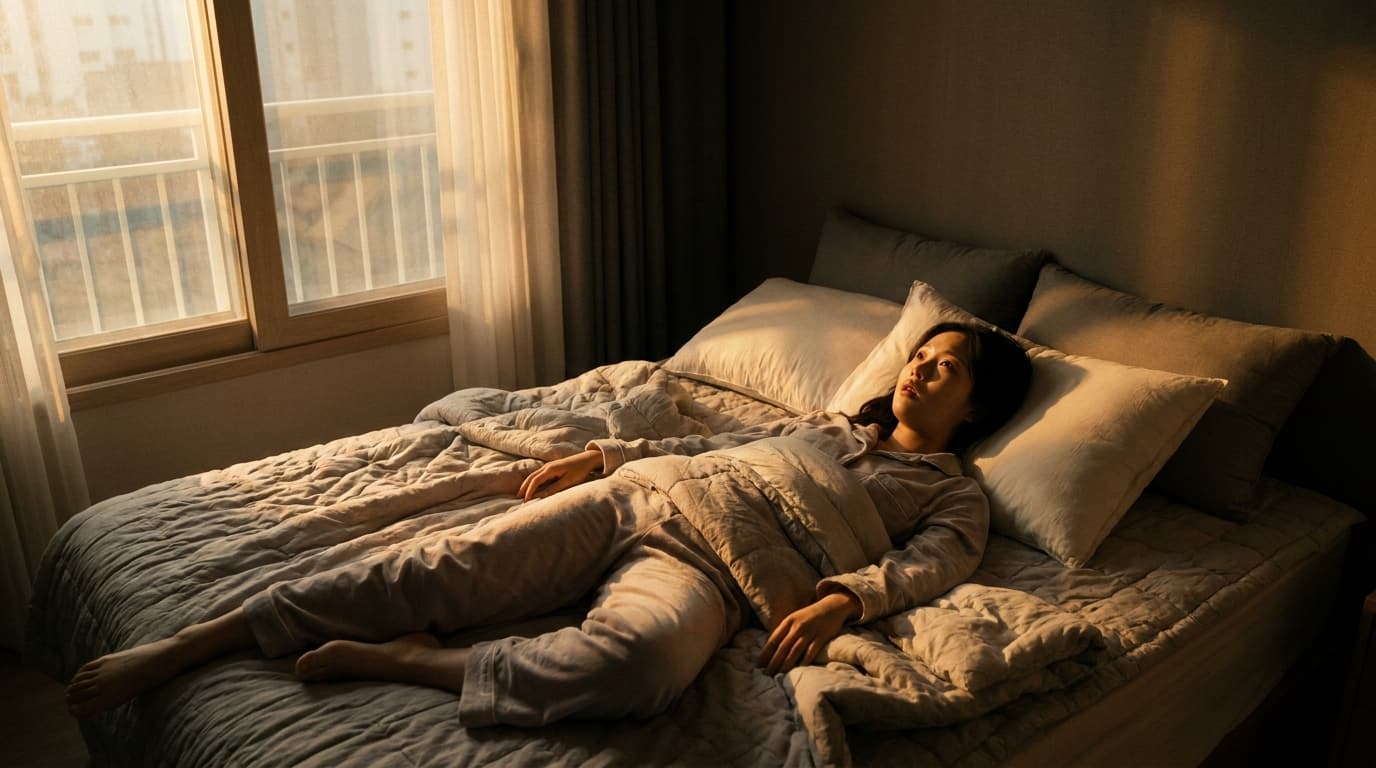
Have you ever laid down in a warm bed after a long day, only to find your eyes wide open and your head filled with thoughts? "I can't sleep when I lie down" is the most common concern patients share at Dalimchae. If it takes more than 30 minutes to fall asleep, or if you wake up frequently or too early for more than 3 months (3+ times a week), it might be insomnia.
💡 [Key Answer] 3 Most Common Causes of "I can't sleep when I lie down": ① Excessive Stress and Anxiety: Day-time worries keep the brain awake at night. ② Irregular Lifestyle: Inconsistent sleep times or smartphone use disrupts rhythm. ③ Autonomic Imbalance: The body stays in "alert mode" instead of calming down. Dalimchae Clinic creates an environment where the body can sleep naturally through autonomic stabilization.
Why does my head get busy when I lie down?
"Sleep onset disorder" is deeply linked to psychological factors like stress and anxiety. Stress activates the autonomic nervous system, keeping the brain awake as if it's daytime. This "hyperarousal" leads to increased heart rate and muscle tension, hindering sleep. This creates a cycle of sleep anxiety. Caffeine, alcohol, and blue light also disrupt the cycle.
Chronic insomnia is a warning light for your body.
Lack of sleep isn't just about fatigue. It increases risks of cardiovascular disease, metabolic disorders, cognitive decline, and depression. Incheon Dalimchae patients often report headaches or indigestion alongside insomnia, as sleep is crucial for brain recovery and immunity.
How Korean Medicine treats insomnia: Scientific Evidence.
We view insomnia as an imbalance of internal organs and circulation. Recent studies confirm the effectiveness of herbal treatments. A 2019 study in 「Integrative Medicine Research」 showed a 4.0 point decrease in the Insomnia Severity Index (ISI) after 4 weeks of herbal tea (p<0.05). A 2021 meta-analysis in 「Frontiers in Pharmacology」 also showed that herbal medicine (like Sanjoin) significantly improved sleep quality (PSQI) compared to placebos or sleeping pills.
Autonomic Stabilization: Letting the brain rest.
We focus on balancing the sympathetic and parasympathetic nerves. Our treatment cools the "overheated engine" of the brain, a process known as 'Su-seung-hwa-gang'. We use acupuncture and customized herbal medicine (like Gamiguibi-tang) to restore balance and allow sleep without dependency on pills.
Insomnia Self-Checklist
- Takes 30+ minutes to fall asleep.
- Uses smartphone/TV before sleep.
- Wakes up frequently or too early.
- Wakes up tired.
- Worry/stress prevents sleep.
- Irritability or focus issues.
3+ items: Suspect autonomic imbalance. 5+ items: Chronic insomnia; professional consultation recommended.
Dalimchae Incheon Treatment Process
- Diagnosis: Deep consultation, HRV (Heart Rate Variability) test, and constitutional diagnosis.
- Custom Plan: 1:1 tailored strategy for autonomic balance.
- Complex Treatment: Herbal medicine (Sanjoin, etc.), acupuncture, moxibustion, and lifestyle coaching.
FAQ
Q. Do I need sleeping pills? A. Pills can help temporarily but don't solve the root cause. We aim for natural sleep by fixing the autonomic imbalance.
Q. How long does treatment take? A. Usually 3+ months for significant change, depending on the individual.
Q. Does stress cause insomnia? A. Yes, it keeps the sympathetic nervous system overactive.
Q. Can depression be treated together? A. Yes, sleep and mood are deeply linked; our stabilization treatment helps both.
Life blooms here. Herbal medicine is Dalimchae. Check your symptoms via our AI consultation!
Medical Supervision | Min Jihong, Director of Dalimchae Incheon Branch.