
Hello. This is Dalimchae Korean Medicine Clinic.
When You Cannot Sleep and Your Heart Palpitates After Miscarriage Do Not Ignore the Signals of Body and Mind
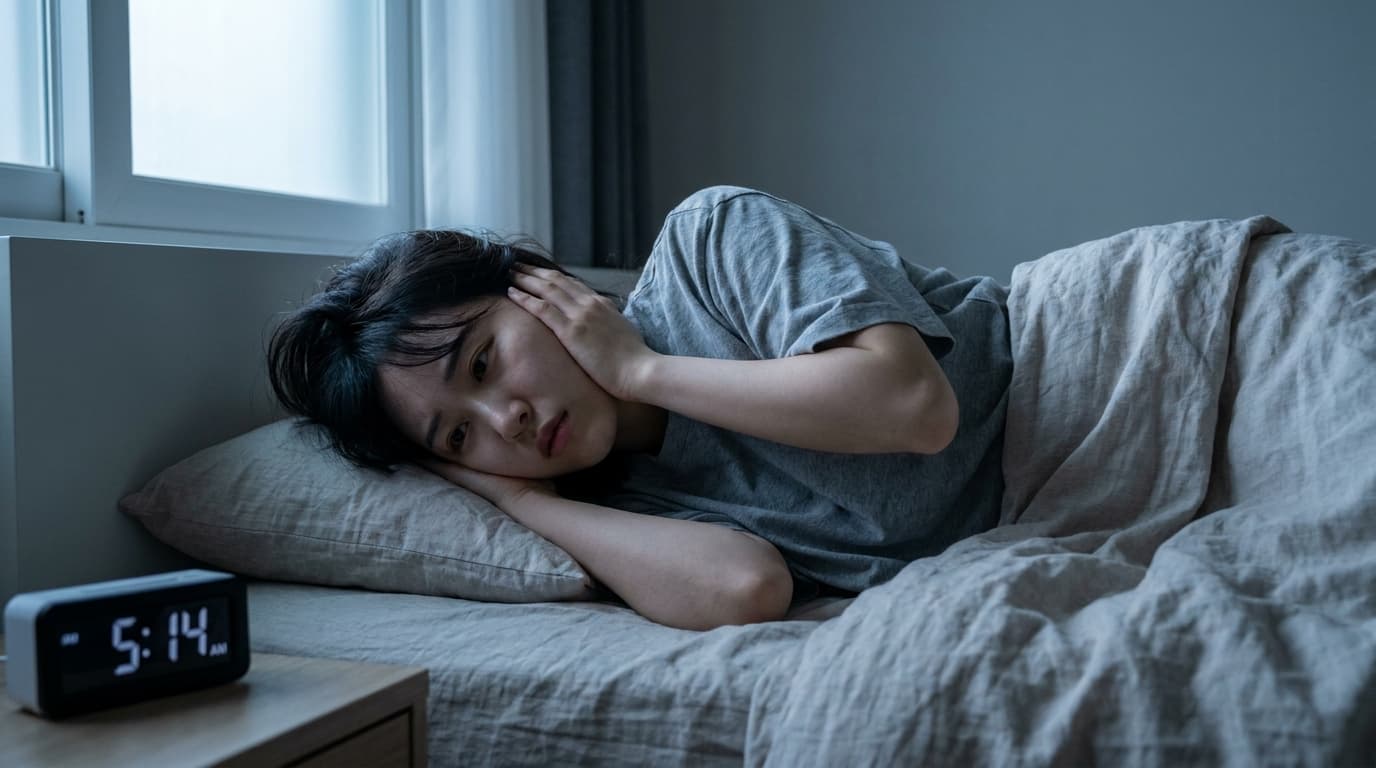
The experience of a precious baby being lost in an instant brings indescribable grief and pain. Like "I cannot sleep at night and my heart palpitates after a miscarriage," insomnia and heart palpitations visiting after a miscarriage go beyond simple physical symptoms, and may be the result of a complex combination of deep sorrow and anxiety. The experience of not being able to sleep every night and suddenly having one's heart race is a powerful warning sound sent by the body and a signal that help is needed.
💡 [Core Answer] Top 3 most common causes of "insomnia and heart palpitations after miscarriage": ① Psychological shock and anxiety: The trauma of miscarriage hyperactivates the brain and autonomic nervous system. ② Rapid hormonal changes: The decrease in pregnancy maintenance hormones disrupts body balance. ③ Qi and blood consumption and weakness: Energy consumption equivalent to childbirth delays overall recovery. Dalimchae Korean Medicine Clinic provides integrated treatment to help restore body and mind by recovering the balance of the collapsed autonomic nervous system and replenishing Qi and blood.
Q. Why Can't I Sleep and Why Does My Heart Palpitate After Miscarriage?
Miscarriage has a profound effect on a woman's body and mind. Even if it is not visible on the outside, complex changes occur internally, resulting in sleepless nights and a palpitating heart. One of the biggest causes is psychological trauma. The sudden sense of loss, guilt, and anxiety about the future due to miscarriage stimulates the hypothalamic-pituitary-adrenal (HPA) axis of the brain, hyperactivating the sympathetic nervous system. Because of this, the body is always in a state of tension, which can lead to insomnia and increased heart rate.
In addition, as hormone levels that rapidly increased to maintain pregnancy drop within a short time after miscarriage, the body experiences great confusion. These rapid hormonal changes cause an imbalance in the autonomic nervous system, which easily appears as symptoms such as sleep pattern disturbance, amplified anxiety, and heart palpitations (palpitations). According to a study on sleep disorders in Korean pregnant women and mothers published in the Journal of Psychosomatic Obstetrics & Gynaecology in 2012, a survey of 689 women showed that the proportion experiencing clinically significant insomnia reached 50.5%, which further increases as pregnancy progresses and after childbirth (p=0.001). This suggests that similar or even more severe sleep disorders can appear after miscarriage.
In Korean medicine, miscarriage is called "half-birth" (半産), emphasizing a recovery process as important as childbirth. Miscarriage greatly damages the body's Qi and blood, causing a decline in the function of the five organs and six viscera, which can lead to general weakness, indigestion, and symptoms of sleepless nights and anxious heart racing. In particular, if the functions of the heart (心) and liver (肝) become unstable due to stress and Qi and blood consumption, the brain cannot rest and emotional control becomes difficult, deepening insomnia and heart palpitations.
Q. Miscarriage Aftereffects, How Is It Viewed in Korean Medicine?
In Korean medicine, various physical and psychological difficulties after miscarriage are comprehensively diagnosed and treated under the category of "miscarriage aftereffects" or "sansupung" (sanpum). After a miscarriage, blood stasis (瘀血) is likely to occur just like after childbirth. Blood stasis is waste products that were not discharged in time, which hinder blood circulation, delay uterine recovery, and cause pain, numbness, and mood disorders throughout the body. In addition, if Qi and blood consumed during the miscarriage process are not sufficiently replenished, the body falls into a general weak state.
This Qi and blood deficiency leads to decreased immunity, chronic fatigue, and especially instability of the autonomic nervous system, inducing symptoms such as anxiety, restlessness, depression, insomnia, heart palpitations, and cold sweats. In modern medical examinations, special abnormalities are often not found, so people are told they are "normal," but the patient clearly feels discomfort and suffering. Korean medicine focuses on diagnosing these subtle internal bodily imbalances, treating them from the root, and helping true recovery of body and mind.
Q. How Does Korean Medicine Treatment Help Body and Mind Recovery After Miscarriage?
Korean medicine provides integrated treatment to resolve the complex difficulties experienced by body and mind after miscarriage. The core is to restore the balance of the collapsed autonomic nervous system, replenish damaged Qi and blood, and foster the body's own power to recover.
A systematic review published in the MDPI journal in 2023 analyzed the effect of herbal medicine treatment on sansupung (postnatal wind/aftereffects) that can occur after childbirth and miscarriage. Analyzing 9 randomized controlled trials (RCTs) involving a total of 652 patients, the herbal medicine treatment group showed a statistically significantly higher improvement in overall effectiveness compared to the western medicine treatment group (n=369, RR 1.19, 95% CI 1.10 to 1.29, p < 0.0001). In particular, when herbal medicine and Chuna manipulation were combined, it was more effective in improving symptoms, and researchers concluded that herbal medicine treatment can contribute to alleviating various symptoms such as sansupung-related pain, anxiety, and sleep disorders. These research results serve as the basis for Dalimchae Korean Medicine Clinic's autonomic stabilization treatment, which simultaneously manages mental symptoms such as anxiety and insomnia and physical aftereffects after miscarriage.
In addition, according to research results introduced by Inae Korean Medicine Clinic in 2026, as a result of conducting Korean medicine treatment for 3 months before pregnancy targeting patients with a history of 2 or more miscarriages, 85% successfully achieved pregnancy and childbirth. This is based on research from the Journal of Oriental Gynecology (2000) and the Journal of Korean Oriental Gynecology (2010), showing that Korean medicine treatment contributes to restoring the uterine environment after miscarriage and stabilizing unstable psychological states to successfully maintain the next pregnancy. In particular, another paper published by a Korean medicine hospital in the past reported that 71% of patients with no prior childbirth experience and 85% of patients with childbirth experience among 171 habitual abortion patients well maintained pregnancy after Korean medicine treatment. These data support Dalimchae Korean Medicine Clinic's comprehensive approach to solving psychological trauma and physical imbalance caused by miscarriage and moving toward healthy pregnancy, going beyond simple symptom relief.
For those looking for an Incheon post-miscarriage Korean medicine clinic, Dalimchae Korean Medicine Clinic prescribes customized herbal medicine to remove blood stasis caused by miscarriage, regenerate damaged endometrium, and replenish depleted Qi and blood. In addition, through acupuncture and moxibustion treatments that help calm the mind and body, we focus on restoring autonomic balance and alleviating insomnia and heart palpitations. This herbal medicine treatment helps a woman's body prepare for the next pregnancy healthily while also playing an important role in healing emotional wounds caused by miscarriage.
Q. What Is the Specific Principle of Dalimchae Clinic's Autonomic Stabilization Treatment?
Dalimchae Korean Medicine Clinic Incheon Branch views the core causes of anxiety, insomnia, and heart palpitations appearing after miscarriage as an imbalance in the autonomic nervous system, and focuses on stabilizing it. Our body's autonomic nervous system consists of sympathetic and parasympathetic nerves, and the extreme stress and physical changes of a miscarriage excessively activate the sympathetic nervous system. It is like a state where an engine continues to overheat and cannot rest.
Autonomic stabilization treatment aims to calm excessive nervous system excitement and create an environment where the brain can comfortably rest. In Korean medicine, this is explained as adjusting the functions of the heart and kidneys and smoothing Qi and blood circulation to match the body's Yin and Yang balance. For example, when heat rises in the heart due to stress (心火亢盛) and the kidneys become weak (腎陰虛), causing insomnia and heart palpitations, lowering the heat of the nervous system and creating an environment where the brain can rest — in Korean medicine, this is called Water Up Fire Down (水昇火降) — is important.
Dalimchae Korean Medicine Clinic's autonomic stabilization treatment includes the following approaches:
- Customized Herbal Medicine: Depending on the patient's constitution and symptoms, herbal medicine that calms sympathetic nerves and activates parasympathetic nerves is prescribed. This helps cool excessive heat in the heart, calm anxiety, and induce deep sleep.
- Acupuncture Treatment: Alleviates insomnia and heart palpitations by inserting needles into specific meridians that regulate autonomic balance and relax body tension.
- Lifestyle Guidance: Promotes overall autonomic nervous system health by guiding sufficient rest, regular meals, and stress management methods. This integrated treatment manages physical and mental aftereffects commonly appearing after miscarriage and ultimately helps body and mind regain peace. Many people looking for a Guwol Korean medicine clinic are regaining vitality through autonomic stabilization treatment.
Q. Why Miscarriage Aftereffects Should Not Be Taken Lightly?
Ignoring or neglecting miscarriage symptoms can lead to more severe aftereffects. If one hastily returns to daily life in a state of insufficient body recovery or fails to properly care for psychological wounds, it is highly likely to develop into chronic diseases.
The biggest concern is the risk of leading to infertility or habitual miscarriage. If the endometrium damaged during the miscarriage process does not recover properly or blood stasis remains so that blood circulation is not smooth, it becomes difficult to implant during the next pregnancy or the probability of miscarrying again increases. In addition, hormone imbalance and autonomic nervous system problems caused by miscarriage can induce various women's diseases such as menstrual cycle abnormalities, aggravated menstrual pain, and pelvic pain.
From a psychological perspective as well, if proper care is not provided after a miscarriage, it can deepen into chronic anxiety, depression, or panic disorder. If symptoms of not sleeping at night and heart palpitations persist, the quality of life drops significantly and causes great disruption to daily life. In particular, anxiety and depression after miscarriage can further worsen autonomic nervous system functions and create a vicious cycle that hinders physical recovery. It is important to receive professional help for post-miscarriage body care and mental recovery at Dalimchae Korean Medicine Clinic Incheon Branch.
[Miscarriage Aftereffects Checklist]
Check if any of the following items apply to you.
- □ Having trouble falling asleep at night or waking up frequently at dawn?
- □ When lying down to sleep, does your chest feel stuffy and your heart beat fast?
- □ Do feelings of anxiety or restlessness suddenly overwhelm you?
- □ Do you frequently feel sad or depressed for no special reason?
- □ Do your whole body feel cold or aching and do you feel joint pain?
- □ Is digestion poor and your stomach bloated?
- □ Is sweating increased, or conversely, does your body easily get cold?
- □ Does uterine bleeding continue or has your menstrual cycle become irregular?
- □ Has your memory and concentration decreased, and do you feel easily fatigued?
Judgment Criteria:
- 3 or more items apply: Autonomic-type miscarriage aftereffects suspected. Consider Dalimchae Korean Medicine Clinic's complex Korean medicine treatment.
- 5 or more items apply: Immediate professional help is needed. It is recommended to visit the nearby Dalimchae Korean Medicine Clinic Incheon Branch to start accurate diagnosis and treatment.
FAQ Section
Q. When is it best to take herbal medicine after a miscarriage? A. Herbal medicine after a miscarriage is best taken immediately after the miscarriage for blood stasis discharge and uterine recovery. Since there are differences depending on individual body status and miscarriage type, it is important to receive a prescription after accurate diagnosis at Dalimchae Korean Medicine Clinic.
Q. Can insomnia and heart palpitations after miscarriage be treated with Korean medicine? A. Yes, they can be sufficiently treated. Korean medicine views insomnia and heart palpitations occurring after miscarriage as autonomic nervous system imbalance and Qi and blood damage, and effectively improves symptoms through customized herbal medicine, acupuncture, and moxibustion treatments that regulate them.
Q. How long should post-miscarriage body care take? A. Post-miscarriage body care is important to recover with a sufficient period of at least 3 months or more. Especially if you are planning the next pregnancy, you must give your body and uterus time to fully recover to prepare for a healthy pregnancy.
Q. Depression and anxiety are severe after miscarriage, does Korean medicine treatment help with psychological parts? A. Yes, Korean medicine treatment can greatly help alleviate depression and anxiety after miscarriage. Herbal medicine and acupuncture treatments stabilize the brain and autonomic nervous system to induce emotional stability and have a positive effect on overcoming psychological trauma.
Miscarriage is not a problem solved by enduring. You do not have to ignore the bodily signals you have been sending for a long time anymore. If you approach in the right direction, the body responds faster than you think. Bring the symptoms you are currently experiencing as they are. At Dalimchae Korean Medicine Clinic, we will find the causes together.
Where life blooms. For herbal medicine, it's Dalimchae Korean Medicine Clinic. Check your symptoms similar to mine through the AI consultation on the Dalimchae Clinic website first!
This article is health information compiled by Dalimchae medical staff based on questions frequently received in the treatment room. Medical Supervision | Women and Pregnancy Treatment Standards Dalimchae Korean Medicine Clinic Incheon Branch Korean Medicine Doctor Min Jihong (Miscarriage Recovery Column) #miscarriageaftereffects #miscarriagebodycare #miscarriageinsomnia #heartpalpitations #autonomicnervoussystem #incheonmiscarriageclinic #dalimchaeclinic #koreanmedicinetreatment #infertilityprevention #postnatalwind