
안녕하세요. 달임채한의원입니다.
When Menstrual Cramps Cause Severe Lower Back Pain, Is It Because of the Uterus?
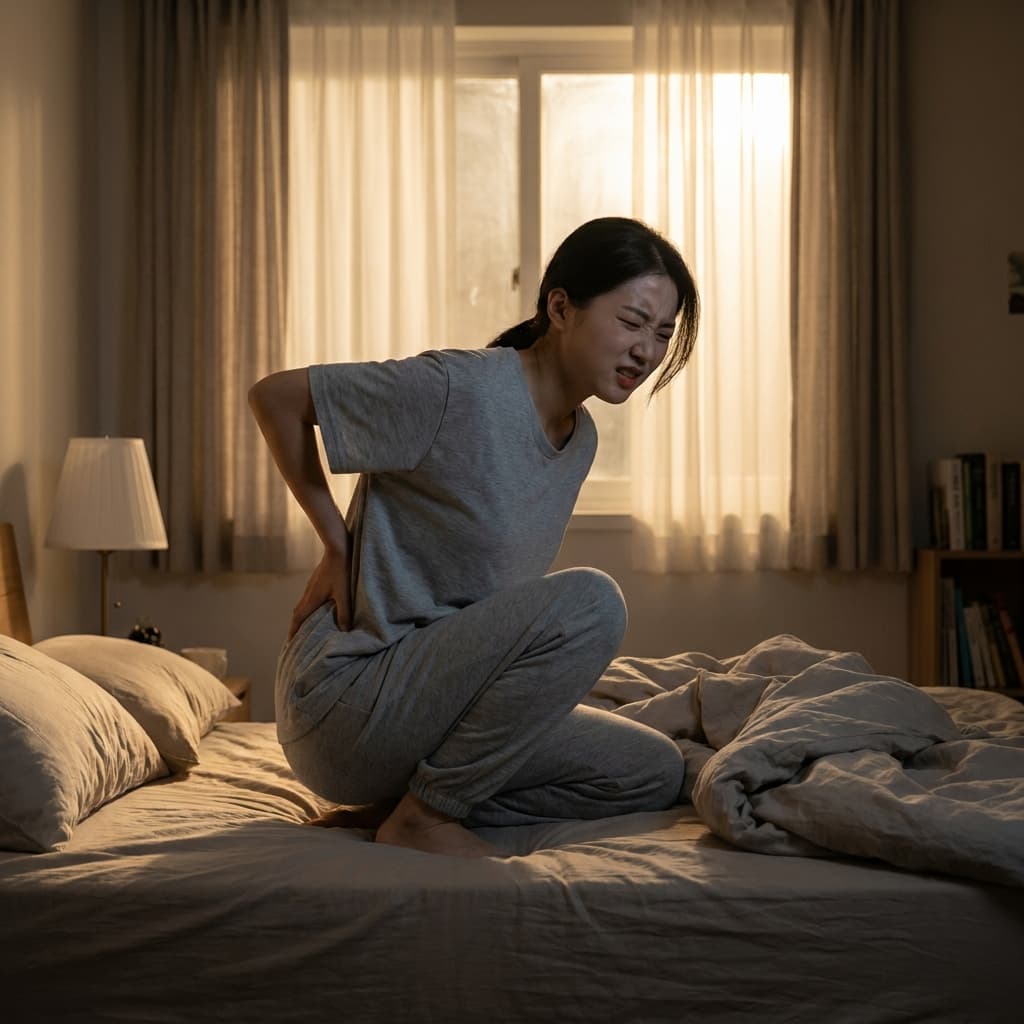
During that time of the month, many people experience such severe lower back pain that daily life becomes difficult and sleep is disrupted. While some endure it thinking "menstrual cramps are just normally bad" or "it will get better as I get older," the signals sent by the body are often too strong to simply dismiss as "just a bit of pain." In particular, back pain is one of the common symptoms accompanied by dysmenorrhea, causing suffering for many women. Could this pain be a signal that something is wrong inside the body rather than just a normal menstrual cramp? Dalimchae Oriental Clinic explains the real causes and wise coping methods for lower back pain during menstruation.
💡 [Key Answer] The 3 most common causes of severe lower back pain during menstruation: ① Uterine and surrounding tissue contraction and inflammation / ② Pelvic blood circulation disorder / ③ Autonomic nervous system imbalance Dalimchae Oriental Clinic helps resolve the root cause of pain and restores body balance through constitutional improvement.
Is lower back pain during menstruation common? Why does it hurt?
Yes, lower back pain during menstruation is one of the very common symptoms experienced by women suffering from dysmenorrhea. Many people complain of a heavy lower back along with lower abdominal pain, or even severe tearing pain. So why does the lower back hurt so much during menstruation?
The main cause is closely related to uterine contraction. During menstruation, the uterus secretes a substance called prostaglandin to shed its lining and contracts strongly. At this time, prostaglandin is a substance that induces pain, affecting not only the uterus but also surrounding muscles, which can lead to lower back pain. In addition, because the uterus is located inside the pelvis, contraction of the uterus and the resulting inflammatory response of surrounding tissues can radiate to the back, especially the lumbar region, causing pain.
The second cause is pelvic blood circulation disorder. If blood circulation around the pelvis is not smooth due to stress, overwork, or poor posture, waste products accumulate and inflammatory responses can intensify. This congestion state worsens during menstruation and acts as a factor exacerbating lower back pain.
Finally, imbalance of the autonomic nervous system can also affect lower back pain. During menstruation, hormonal changes make the autonomic nervous system sensitive. When the autonomic nerves become unstable, sensitivity to pain increases, muscle tension tightens, and lower back pain is felt more severely. This appears not only as lower abdominal pain but also as general body aches and fatigue.
How does Oriental medicine view lower back pain due to dysmenorrhea?
In Oriental medicine, lower back pain accompanied by menstrual cramps is not viewed simply as a uterine problem. It is interpreted as originating from an imbalance in the circulation of Qi and Blood (氣血) and organ functions throughout our body. In particular, 'Blood Stasis (瘀血)' and 'Cold-Dampness (寒濕)' are considered important causes. Blood stasis refers to bad blood that is stagnated and not discharged in time, which hinders blood circulation in the uterus and pelvis and induces pain. Cold-Dampness is a state where cold and damp energy is stagnant, causing the uterus and lower abdomen, which should be warm, to become cold and intensifying pain.
From this perspective, Dalimchae Oriental Clinic does not merely suppress symptoms, but restores the fundamental balance of the body to remove blood stasis and cold-dampness, smoothing Qi and Blood circulation to treat menstrual cramps including lower back pain. This is the core of constitutional improvement treatment, creating a body that does not turn the symptoms back on.
How effective is Oriental medicine treatment for menstrual lower back pain? (Actual research data)
Oriental medicine treatments have consistently published research showing significant effects in improving dysmenorrhea. In particular, the effects on chronic and recurrent menstrual cramps are notable.
A systematic review and meta-analysis published in the Evid Based Complement Alternat Med journal in 2020 analyzed the effects of moxibustion treatment on primary dysmenorrhea. Synthesizing various randomized controlled trials (RCTs), the study confirmed that moxibustion treatment significantly reduced pain intensity in patients with primary dysmenorrhea, reduced analgesic use, and improved quality of life. The researchers concluded that moxibustion treatment can be a safe and effective complementary therapy for pain control in dysmenorrhea. These results support the principle of Oriental medicine treatment that relieves blood stasis and aids circulation through warm energy, leading to actual pain reduction.
Furthermore, a systematic review and meta-analysis by domestic researchers published in the Journal of Oriental Neuropsychiatry in 2022 comprehensively reviewed the effects of various Oriental medicine treatments (acupuncture, moxibustion, herbal medicine, etc.) for primary dysmenorrhea. This study reported that Oriental medicine treatments for patients suffering from dysmenorrhea showed statistically significant effects in improving pain and related symptoms. In particular, Oriental medicine treatments were found to have a positive effect on alleviating systemic symptoms such as back pain and headaches as well as abdominal pain. These research results suggest that constitutional improvement pursued at Dalimchae Oriental Clinic can be effective in improving lower back pain due to dysmenorrhea.
Based on these research data, Dalimchae Oriental Clinic applies complex Oriental medicine treatments such as herbal medicine, acupuncture, moxibustion, and cupping tailored to each patient's constitution and symptoms to break the vicious cycle of pain and help them regain a healthy body. In particular, as many women visiting Songdo clinics struggle with menstrual lower back pain, we focus on improving quality of life through individualized customized treatments.
Could menstrual lower back pain apply to me too? (Self-Diagnosis Checklist)
If you correspond to 3 or more of the following items, we recommend suspecting lower back pain due to dysmenorrhea and consulting with Dalimchae Oriental Clinic. If 5 or more, you need to consider active treatment.
- Your lower back feels heavy or breaks before/after menstruation or throughout the menstrual period.
- Even when taking painkillers, lower back pain does not completely subside or returns quickly.
- Your lower abdomen and hands/feet are cold, and warming the lower abdomen temporarily relieves pain.
- Menstrual blood color is dark red with many clots, and menstrual cycles are often irregular.
- You have high stress, feel frequent fatigue, and your shoulders or neck easily tense.
- Gastrointestinal symptoms such as indigestion, diarrhea, or constipation accompany menstruation.
- Symptoms such as headaches, dizziness, and nausea frequently accompany lower back pain.
[Criteria]
- 3+ items: Suspected menstrual lower back pain → Review Oriental diagnosis and treatment.
- 5+ items: High possibility of severe dysmenorrhea → Immediate clinic visit and detailed diagnosis recommended.
Q&A: Frequently Asked Questions about Menstrual Lower Back Pain
Q. How long does menstrual lower back pain last? A. Menstrual lower back pain usually starts 1-2 days before menstruation, lasts through the period, and gradually eases near the end. While individual differences are large, pain can persist throughout the period or last a few more days.
Q. Is severe dysmenorrhea related to infertility? A. Menstrual pain itself is not a direct cause of infertility, but severe menstrual pain can be a sign of uterine diseases such as endometriosis or uterine myomas that can cause infertility. Therefore, if you have severe dysmenorrhea, managing uterine health through accurate diagnosis and treatment is important.
Q. Can menstrual lower back pain heal naturally? A. Mild menstrual cramps can improve with temporary phenomena or lifestyle improvements, but severe, tearing lower back pain repeating every month is difficult to heal naturally. Rather, it can become chronic or linked to other diseases, so active treatment is needed to solve fundamental body problems.
Q. Is it okay to continue taking painkillers? A. Painkillers help temporarily relieve pain but do not solve the root cause. Relying on painkillers for a long time can cause side effects such as tolerance or gastrointestinal disorders, so it is desirable to establish a fundamental treatment plan by consulting an expert.
Menstrual pain is not a problem solved by enduring. You no longer need to ignore the signals your body has sent for a long time. Approaching in the right direction makes the body react faster than you think. Bring the symptoms you are experiencing as they are. Dalimchae Oriental Clinic will find the cause together.
Where life blossoms. Herbal medicine is Dalimchae Oriental Clinic. Check your symptoms first with Dalimchae Oriental Clinic's homepage AI consultation!
Medical Supervision | Women's & Pregnancy Care Standard, Dalimchae Oriental Clinic Incheon Branch, Oriental Medical Doctor Yang Yu-chan
#menstrualcramps #backpain #dysmenorrhea #constitutionalimprovement #incheonclinic #songdoclinic #infertility #uterinehealth Fertility & Postpartum - Fertility Preparation