
Hello. This is Dalimchae Korean Medicine Clinic.
Suddenly I Can't Breathe: The Terrifying Fear and Overloaded Brain
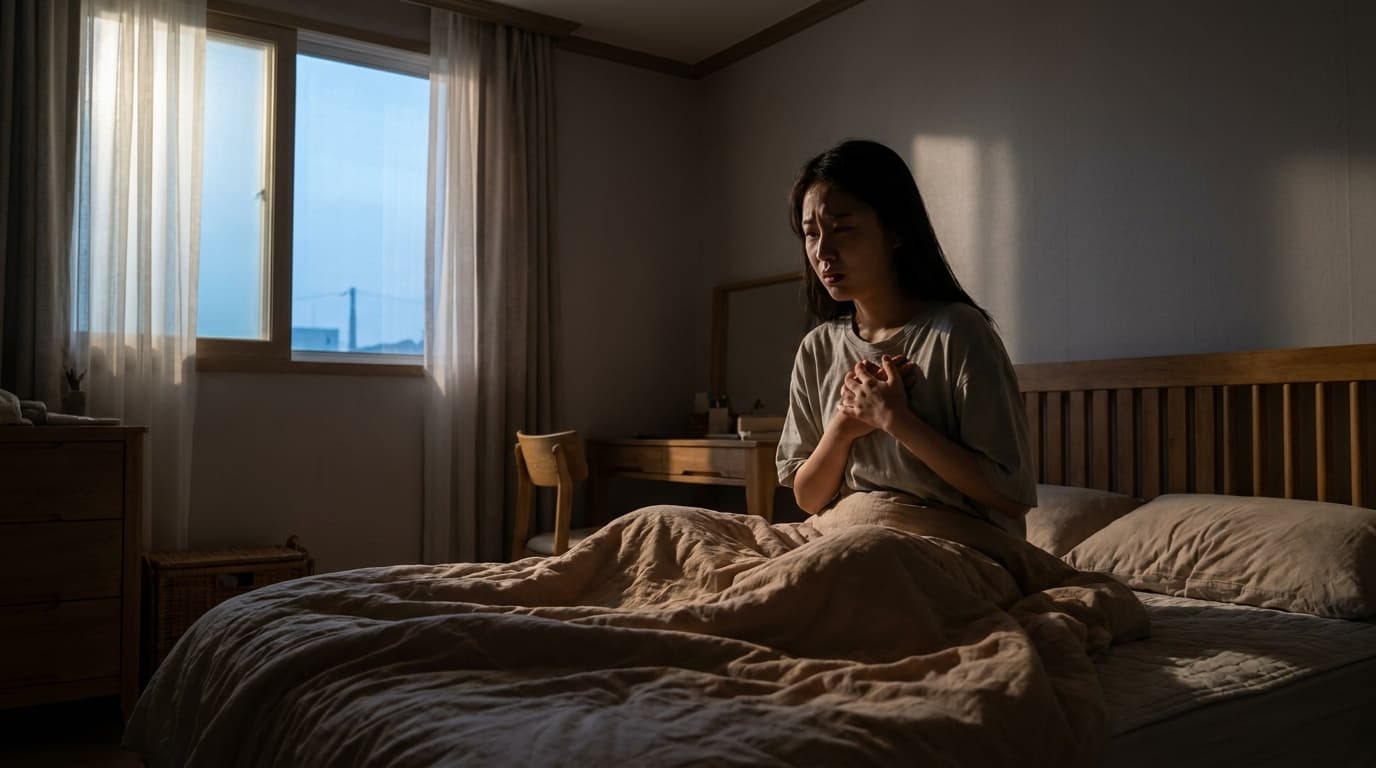
"Suddenly I can't breathe." This single phrase contains an indescribable extreme fear along with a feeling of dying anxiety. Walking down the street, during a meeting, or right as you try to go to sleep, you suddenly find your breath blocked and your heart pounding as if it's going to explode, leading you to the emergency room. However, after undergoing all sorts of tests at the hospital, many people return having only heard "there is nothing wrong," leaving them feeling frustrated. This sensation of suddenly choking can go beyond simple stress or overwork, serving as a danger signal sent by our body's important regulatory system, the autonomic nervous system. In particular, it appears as a core symptom of panic disorder and becomes a major culprit in drastically lowering the quality of life.
💡 [Key Answer] 3 most common causes of panic attacks where breathing suddenly stops: ① Excessive sympathetic nervous system hyperactivity due to extreme stress and anxiety ② Malfunctioning and hypersensitivity of the brain's fear circuits (especially the amygdala) ③ A vicious cycle of fear and anticipatory anxiety that occurs while interpreting physical sensations as threats Dalimchae Clinic fundamentally resolves sudden anxiety and fear by restoring the balance of the brain and body through autonomic stabilization treatment.
Why does the feeling of suddenly not being able to breathe accompany the terror of feeling like you're going to die?
The symptom of suddenly not being able to breathe, namely a panic attack, is not simply a respiratory issue. It is a phenomenon that occurs when our body's autonomic nervous system—predominantly the sympathetic nervous system responsible for the "fight or flight" response—becomes extremely hyperactive. When anxiety and stress accumulate over time, the sympathetic nervous system becomes overly activated, leading to physical reactions such as rapid heartbeat (palpitations), accelerated breathing, and elevated blood pressure. At this point, the brain mistakenly perceives these physical sensations as actual threats and generates an extreme terror that "I'm going to die." In particular, as fear circuits deep in the brain like the amygdala react hypersensitively, we reach an extreme panic state even in situations without actual life threats.
Many people consider panic disorder merely a "disease of the mind" or "stress-related condition," taking it lightly or trying to hide it. Of course, stress and psychological factors have a huge impact, but panic disorder is a condition where physical and neurological imbalances operate complexly beyond simple stress. In particular, as the regulatory capacity of the autonomic nervous system declines, the body becomes vulnerable to stress and reacts excessively to small stimuli.
In a study by Dr. Noh Young-bum's research team published in the Journal of the Society of Traditional Korean Medicine in 2012, titled "Analysis of Panic Disorder Patient Cases Treated with Yeonggamgyomul-tang and Consideration of its Mechanism of Action," the results of applying herbal medicine treatment to two panic disorder patients showing extreme anxiety states were reported. Notably, for a patient whose BAI (Beck Anxiety Inventory) score was 36 points, indicating an "extreme anxiety state," three months of herbal medicine treatment resulted in the amelioration of heart palpitations and anxiety symptoms within half a month of treatment, and the complete disappearance of attack symptoms within two months. The researchers concluded that this result occurred because herbal medicine treatment activated the fundamental function of correcting neurotransmitter functions in the central nervous system to help the autonomic nervous system self-regulate. This study serves as an important basis for Dalimchae Clinic's treatment philosophy of fundamentally resolving anxiety by restoring the balance of the autonomic nervous system.
Furthermore, a study by resident Koh Hye-jung and other researchers published in The Journal of Internal Korean Medicine in 2026, titled "Application of Mind Acupuncture and Korean Complex Psychiatric Therapy for a Panic Disorder Patient with Difficulty Accepting Treatment," reported a case applying mind acupuncture-centered Korean complex psychiatric therapy to a panic disorder patient. This patient, who showed strong resistance to psychiatric medication treatment, experienced a significant decrease in the Panic Disorder Severity Scale (PDSS) from 27 to 5 points, and no recurrence of panic attacks or anticipatory anxiety was observed up to 6 months after the end of treatment. The researchers analyzed that mind acupuncture contributed to emotion visualization, autonomic stabilization, and the recovery of self-acceptance and self-regulation sense, proving effective in breaking the vicious cycle of "physical sensation → fear → anticipatory anxiety" at the core of panic disorder. Dalimchae Clinic Songdo Branch seeks diverse treatment approaches to resolve autonomic imbalance and anxiety for patients based on these latest studies.
How does Dalimchae Clinic help escape from the suffering of 'suddenly not being able to breathe'?
Dalimchae Clinic does not view symptoms like sudden panic attacks where breathing stops as merely temporary phenomena. We identify the imbalance of the autonomic nervous system behind it as the core cause and focus on 'autonomic stabilization' treatment to correct it. When the balance of the autonomic nervous system collapses, the brain cannot rest and is always placed in a hypersensitive state. This is like an overheated engine, easily turning on warning lights of fear and anxiety even with small stimuli.
At Dalimchae Clinic Songdo Branch, the goal is to calm the neural system overheating of the body and create an environment where the brain can comfortably rest. In Korean medicine, this is called "Suseunghwagang (水昇火降)," emphasizing the body's energy regulation of lowering hot energy and raising cold energy. It aims to relieve the heat and tension concentrated in the head due to imbalance and smoothly promote circulation throughout the body by communicating the stagnant energy downward.
To achieve this, customized herbal medicine prescriptions tailored to individual constitutions and symptoms calm the hyperactive sympathetic nervous system and strengthen parasympathetic functions to restore autonomic balance. In addition, acupuncture treatment relaxes tense muscles, improves blood circulation in the brain, and stimulates specific acupuncture points involved in autonomic regulation to help alleviate anxiety along with physical relaxation. This is a change actually experienced by many people visiting the Songdo Autonomic Nervous System Clinic. Such integrated treatment has a positive effect on improving various autonomic nervous system symptoms accompanying panic attacks, such as palpitations, dizziness, indigestion, and sleep disorders.
Panic Disorder Self-Diagnosis Checklist
Check how many of the following questions apply to you.
- Suddenly my heart races wildly or my chest feels stuffy and it's hard to breathe.
- I am always anxious and nervous about when these attacks might happen again.
- I tend to avoid places or situations where an attack might occur (confined spaces, public transportation, etc.).
- I have felt extreme terror of dying or going crazy.
- My hands and feet numb or tremble, I feel dizzy, or I feel like I'm going to faint.
- I react sensitively to small changes in my body, leading to greater anxiety.
- I have poor digestion, chronic headaches, or stiff shoulders.
Judgment Criteria:
- 3 or more apply: Suspected panic symptoms due to autonomic imbalance. Consider Dalimchae Clinic's Korean complex treatment.
- 5 or more apply: High possibility of panic disorder requiring immediate professional help. It is recommended to visit a Songdo clinic for accurate diagnosis and treatment.
Q. How often do panic attacks occur? A. The frequency of panic attacks varies greatly from patient to patient. Some people experience them once or twice in their lifetime, while others experience them multiple times every day. They may appear intermittently at first, but their frequency can increase as stress or fatigue accumulates.
Q. Can panic disorder be treated with Korean medicine? A. Yes, panic disorder can be sufficiently improved with Korean medicine treatment. Various Korean treatments such as herbal medicine, acupuncture, moxibustion, and cupping are effective in restoring the balance of the autonomic nervous system and stabilizing the brain's anxiety circuits to reduce the frequency and intensity of panic symptoms.
Q. Can the symptom of suddenly not being able to breathe get better naturally? A. Some mild cases may improve naturally, but most panic attacks are likely to repeat or worsen without treatment. In particular, if anticipatory anxiety (fear of attacks happening again) accompanies it, it causes major constraints in daily life, so it is important to seek professional help.
Q. I have chest tightness along with palpitations, can they be treated together? A. Yes, chest tightness and palpitations are autonomic nervous system symptoms commonly accompanying panic disorder. Dalimchae Clinic addresses the root causes of these physical symptoms together through autonomic stabilization treatment, so they can be improved simultaneously.
The agony of suddenly not being able to breathe is not a problem solved by enduring. You no longer have to ignore the signals your body has been sending for a long time. If you approach in the right direction, your body responds faster than you think. Bring the symptoms you are experiencing just as they are. Dalimchae Clinic will find the cause together with you.
Where life blooms. For herbal medicine, it's Dalimchae Korean Medicine Clinic. Check symptoms similar to mine first through the AI consultation on the Dalimchae Clinic website!
This article is health information compiled by Dalimchae medical staff based on questions frequently received in the treatment room. Medical Supervision | Brain & Autonomic Nervous System Treatment Standards Dalimchae Clinic Songdo Branch Korean Medicine Doctor Oh Hyunmin (Panic Disorder Column)
#PanicDisorder #CantBreathe #AutonomicNervousSystem #SongdoPanicClinic #IncheonClinic #Hyperventilation #KoreanMedicineTreatment #AnxietyDisorder