
Hello. This is Dalimchae Korean Medicine Clinic.
Recurring Acne: The Real Reasons and Root Causes Why It Doesn't Go Away Even When Squeezed
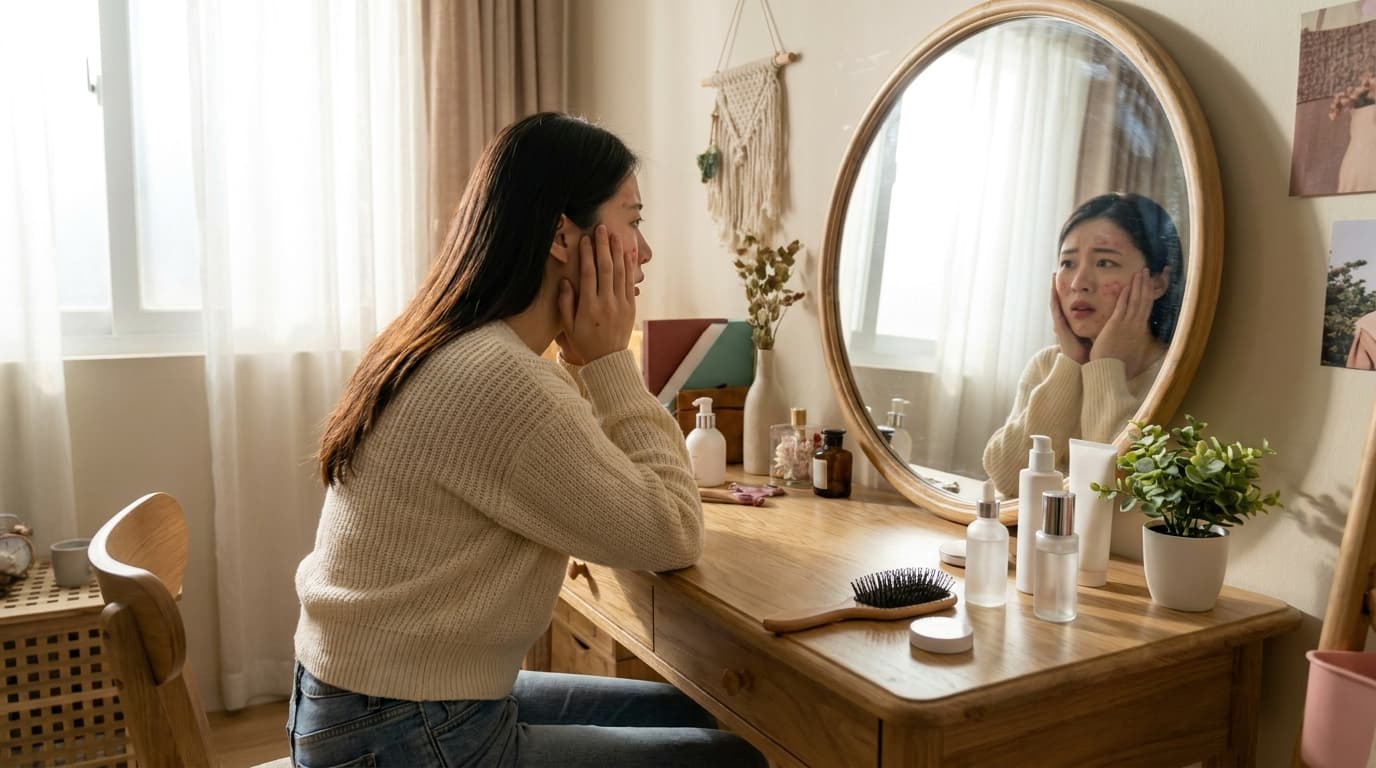
Every time you look in the mirror, have you ever sighed because of red acne breakouts? Even after working hard to manage and squeeze them, acne rears its head again in the exact same spot or a new one just days later, often leaving you feeling exhausted and frustrated. Especially in adulthood past puberty, recurring acne nots only causes stress but also affects social life and interpersonal relationships, making life difficult for many. This acne, too painful to be dismissed as a simple skin problem, why on earth does it persistently plague us?
💡 [Key Answer] Top 3 most common causes of recurring acne: ① Internal heat toxins and inflammatory reactions / ② Intestinal health imbalance and toxin accumulation / ③ Stress and hormonal imbalance Dalimchae Korean Medicine Clinic resolves the root cause of skin problems and restores healthy skin without recurrence through intestinal detox.
Why does acne keep forming no matter how much you squeeze it?
Acne that appears on the outside is often a warning light signaling an imbalance inside our body. While multiple factors act complexly—such as clogged pores, excessive sebum secretion, acne bacteria proliferation, and inflammatory reactions—adult acne in particular often stems from deep-rooted causes inside the body rather than simple skin surface issues.
In Korean medicine, skin problems are interpreted as dysfunctions of the five viscera and six bowels, heat (熱) and toxins (毒素) accumulated in the body, and Qi and blood circulation disorders. For example, if liver (肝) Qi becomes stagnant due to stress and overwork, or damp-heat (濕熱) accumulates in the spleen and stomach (脾胃) due to poor dietary habits, heat toxins occur in the body and are expressed through the skin, worsening acne. Unless these internal problems are resolved, no matter how much you treat and squeeze just the surface of the skin, acne will inevitably continue to repeat.
What does an internal problem, namely intestinal health, have to do with acne?
Just as the saying goes "The skin is a mirror of the gut," our body's intestinal health is very closely connected to skin conditions. This is called the 'Gut-Skin Axis,' and the gut and skin have a two-way communication system where they influence each other.
When the balance of intestinal microbes breaks down (intestinal bacterial imbalance) or 'Leaky Gut Syndrome' occurs where intestinal wall permeability increases, intestinal toxins and inflammation-inducing substances can spread throughout the body via the blood. When these inflammatory substances reach the skin, they manifest as various skin troubles such as acne, atopy, eczema, and seborrheic dermatitis. This is precisely why acne recurs no matter how good cosmetics you use. Dalimchae Clinic Incheon Branch views this intestinal health imbalance as an important cause of acne and approaches treatment accordingly.
How does Korean medicine diagnose and treat acne?
At Dalimchae Clinic, acne is not simply viewed as inflammation on the skin surface; the root cause is found by comprehensively considering the patient's constitution, lifestyle habits, and internal organ functional states. Through Korean medical diagnostic methods such as pulse diagnosis, abdominal diagnosis, and tongue diagnosis, we closely grasp the patient's physical condition and establish a customized treatment plan tailored to the individual.
The research team led by Professor Kim Gyu-seok of Kyung Hee University Korean Medicine Hospital, published in Health News in 2016, supports the acne-improving effect of Korean medicine treatment. The research team conducted a clinical study on 44 male patients aged 13 to 35 with stage 2-4 acne. The group (22 people) that took the herbal medicine 'Hyeonggyeyeongyotang (荊芥連翹湯)' for 4 weeks along with acupuncture treatment showed significant results with a 32.4% decrease in inflammatory acne and a 23.1% decrease in non-inflammatory acne. On the other hand, the control group (22 people) that received only acupuncture treatment without taking herbal medicine showed only a 15% decrease in inflammatory acne and no decrease in non-inflammatory acne. The researchers concluded that these results show that herbal medicine and acupuncture treatment are effective in improving pathological conditions of acne such as excessive sebum secretion and inflammatory reactions. Based on these research results, Dalimchae Clinic Incheon Branch conducts treatments that relieve internal heat toxins and inflammation causing acne and enhance skin regeneration.
In addition, in a 12-week randomized double-blind placebo-controlled study of the Kūlaris™ herbal supplement published in Clinical, Cosmetic and Investigational Dermatology in 2025 targeting 100 patients with mild to severe acne (18-40 years old), the Kūlaris™ intake group showed a statistically significant improvement (p<0.0001) compared to the placebo group, with inflammatory acne lesion count decreasing by 71.18% (from a baseline of 22.31 to 6.43) and non-inflammatory acne lesion count decreasing by 68% (from a baseline of 28.86 to 9.24). This suggests that herbal-based treatment acting from within is effective in improving acne.
Dalimchae Clinic's treatment focuses not merely on suppressing symptoms, but on correcting internal imbalances and nurturing the body's power to recover on its own. In particular, the intestinal detox treatment intensively applied at our clinic helps cut off the vicious cycle where toxins accumulated on the intestinal wall travel through the blood to create systemic inflammation. By strengthening intestinal function and excreting internal toxins through detoxification, it reduces skin inflammation and creates a clean skin environment. This is expected to improve not only acne but also various problems related to intestinal health such as atopy, reflux esophagitis, and irritable bowel syndrome.
Acne Self-Diagnosis Checklist
If you frequently experience the following symptoms, it is advisable to suspect internal body problems and consider active treatment.
- Even after washing your face, your skin is easily greasy and sebum secretion is active.
- Red, inflammation-accompanied pustular acne frequently breaks out.
- Even when acne is squeezed, it reappears in the same spot or spreads elsewhere.
- Digestive upset, constipation, diarrhea, and other intestinal problems frequently accompany it.
- Acne tends to worsen when stressed.
- Acne breaks out particularly heavily around the chin or mouth in accordance with the menstrual cycle.
- Feelings of heat are frequently felt in the face and it easily flushes.
- Even with consistent dermatological treatments, acne does not heal well and recurs.
Judgment Criteria:
- 3 or more items apply: High possibility of acne due to internal body imbalance.
- 5 or more items apply: Suggests serious skin and intestinal health problems, requiring active Korean medical diagnosis and treatment.
- 7 or more items apply: Strongly recommends seeking immediate expert help to start fundamental treatment. If you are looking for an Incheon acne clinic, consult at Dalimchae Clinic Incheon Branch.
FAQ
Q. How long do I need to treat acne to recover completely? A. The duration of acne treatment varies depending on individual constitution, symptom severity, causes, and lifestyle habits. Generally, with consistent treatment and lifestyle management for about 3 to 6 months, you can feel gradual improvement.
Q. Can adult acne also be treated with Korean medicine? A. Yes, since adult acne is often closely related to internal causes, Korean medicine treatment can be effective. Through herbal medicine, acupuncture, and pharmacopuncture, it helps correct internal imbalances and excrete toxins for fundamental improvement.
Q. Can acne heal naturally? A. Mild acne may improve naturally, but recurring acne or inflammatory acne can leave scars or become chronic if left unattended. Especially if internal body problems are the cause, it is difficult to resolve on your own, so getting help from a specialist is important.
Q. I have both acne and atopic dermatitis, can they be treated together? A. Yes, both acne and atopic dermatitis are skin diseases closely related to intestinal health and internal inflammation. Dalimchae Clinic's intestinal detox and constitution improvement treatment can have a positive impact on both symptoms by reducing overall skin inflammation and strengthening immunity.
Recurring acne is not a problem that can be solved by enduring. You no longer have to ignore the signals your body has been sending for a long time. If you approach in the right direction, the body responds faster than you think. Bring your symptoms as they are. At Dalimchae Clinic, we will find the causes together.
Where life blooms. For herbal medicine, it's Dalimchae Korean Medicine Clinic. Check your symptoms similar to mine through the AI consultation on the Dalimchae Clinic website first!
This article is health information compiled by Dalimchae medical staff based on questions frequently received in the treatment room. Medical Supervision | Skin Symptom Treatment Standards Dalimchae Clinic Incheon Branch Korean Medicine Doctor Yang Yuchan (Acne Column)