
Hello. This is Dalimchae Korean Medicine Clinic.
Postpartum Finger Joint Pain: Why Does It Happen and How Can You Find Comfort?
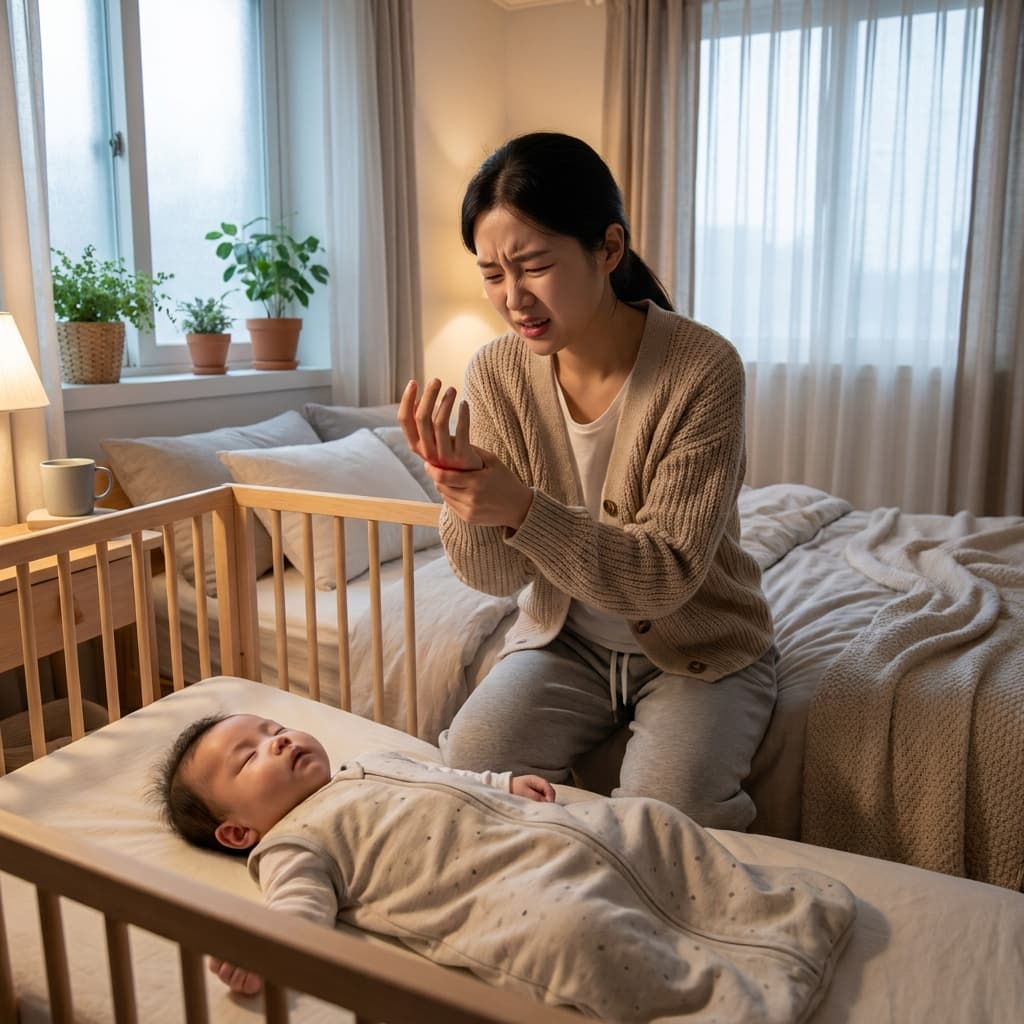
The birth of a new life is a wondrous experience that the whole world should celebrate, but the sudden physical changes after childbirth often leave many mothers feeling overwhelmed. In particular, it is not uncommon for mothers to suffer from "postpartum finger joint pain," leading to sleepless nights and making even holding their baby difficult. The helplessness of not being able to cradle your precious child is hard to understand unless you've experienced it yourself. It is too impactful on daily life and childcare to simply endure it, dismissal as mere 'postpartum wind' (Sanhupung).
💡 [Key Answer] 3 most common causes of postpartum finger joint pain: ① Relaxin Hormone Effect: Ligaments and joints are in a relaxed state due to the hormone secreted during childbirth. / ② Overuse of Wrist and Finger Joints: Inflammation caused by excessive childcare activities. / ③ Decreased Vitality and Immunity: Vulnerability of joints throughout the body after childbirth. Dalimchae Clinic breaks the cycle of pain by restoring the body's balance through a fundamental approach called constitutional improvement.
Why do fingers hurt after childbirth? Is it just because of hard work?
Many mothers think their wrist and finger pain is simply because they worked hard holding the baby. While overuse is a significant cause, complex physical changes are hidden behind it. One of the biggest causes is the 'Relaxin hormone'. During pregnancy and childbirth, this hormone relaxes the pelvis to help the baby pass through the birth canal. This relaxin also affects ligaments and joints throughout the body, keeping them loose and weakened for a while even after birth. In this state, repetitive childcare actions—especially holding the baby for breastfeeding or changing diapers—place excessive strain on wrist and finger joints, causing inflammation and pain. Additionally, exhaustion, lack of sleep, and psychological stress from childbirth lower overall immunity and recovery power, making joints vulnerable to even small stimuli.
Is Korean medicine effective for postpartum wrist and finger pain?
Postpartum joint pain is often difficult to find a specific cause for in Western medicine, or treatment options are limited for breastfeeding mothers who cannot easily take medication. Korean medicine has long been used for such pain, and recent research is proving its effectiveness.
A 2023 study published in the journal Medicine (Baltimore) systematically analyzed the effects of acupuncture on postpartum wrist pain. This meta-analysis concluded that acupuncture significantly reduced pain intensity and aided functional recovery. It suggested that it could be a safe treatment option for sensitive postpartum mothers due to its low risk of side effects.
Furthermore, a 2022 systematic review and meta-analysis published in the Journal of Korean Medicine evaluated the clinical effects of herbal medicine for postpartum wrist and finger pain. The study reported that herbal medicine groups showed statistically significant higher treatment effects compared to control groups. Specifically, various prescriptions like Gyeson-tang, Palmulsunchuk-tang, and Danggwibohyeol-tang were used, showing that these prescriptions contribute to pain relief by restoring the mother's vitality, removing stagnant blood (eohyeol), and promoting Qi and blood circulation.
These research results strongly support that Korean medicine can be an effective and safe alternative for postpartum joint pain, including finger joint pain. Dalimchae Clinic Incheon Branch focuses on fundamental recovery and constitutional improvement rather than simple pain suppression.
The answer to a comfortable, pain-free body is Dalimchae's constitutional improvement.
Postpartum wind and joint pain do not just stop at specific areas but can lead to overall loss of vitality and weakened immunity. 'Not just turning off the symptoms, but creating a body where they don't turn back on.' This is the core of constitutional improvement treatment at Dalimchae Clinic. We focus on correcting the collapsed balance of the body after childbirth to create a healthy state that is not shaken by environmental changes or the burden of childcare.
We supplement the decreased Qi and blood (氣血) after childbirth and remove stagnant blood (瘀血) to help smooth circulation. Through this, we calm inflammation and swelling around joints and strengthen weakened ligaments and muscles to solve the root cause of pain. We prescribe herbal medicine tailored to individual constitutions and symptoms, and combine various Korean medical therapies such as acupuncture, pharmacopuncture, moxibustion, and cupping to maximize treatment effects. This process positively affects not only finger joint pain but also back pain, pelvic pain, and even postpartum depression. Many searching for Incheon postpartum pain clinics are regaining health and continuing comfortable childcare through constitutional improvement at Dalimchae Clinic Incheon Branch.
Is it Postpartum Wind? Self-Diagnosis Checklist for Finger Joint Pain
If you fall under 3 or more of the following, it is advisable to suspect postpartum joint pain or postpartum wind and start diagnosis and treatment through consultation with a professional.
- Finger joints are swollen, stiff, and worse in the morning.
- Pain is felt in wrists and fingers when holding the baby or lifting objects.
- Pain worsens after repetitive hand use like cleaning bottles or changing diapers.
- Joints make a 'clicking' sound or feel sharp when moving.
- Hands and feet feel cold, and pain worsens in cold air.
- Body feels heavy and easily tired without reason after childbirth.
- Not feeling refreshed even after enough sleep, and feeling depressed or anxious.
- Sweating more than usual or having night sweats.
Judgment: 3+ items → Suspect postpartum joint pain/wind → Consider Dalimchae's combined treatment. 5+ items → Immediate visit and detailed diagnosis recommended.
Q. How long does postpartum finger joint pain last? A. It varies, but generally improves within 100 days post-birth. However, if neglected or if the constitution is weak, it can last months or years. It's important to start active treatment before pain worsens.
Q. Is herbal medicine possible while breastfeeding? A. Yes. Dalimchae Clinic Incheon Branch uses safe medicinal herbs that do not affect breast milk. We prioritize healthy recovery for both mother and baby.
Q. Can postpartum finger pain heal naturally? A. Mild pain can improve with rest and stretching. However, if pain persists or worsens, it's better to solve the root cause and prevent recurrence with professional help rather than just waiting.
Q. Can back or pelvic pain be treated together with finger pain? A. Yes. Various postpartum joint pains are often connected. Our constitutional improvement treatment aims for overall recovery, helping improve multiple discomforts simultaneously.
Postpartum finger joint pain is not a problem solved by just enduring it. You no longer have to ignore the signals your body has been sending for a long time. If you approach it in the right direction, your body will react faster than you think. Bring your symptoms as they are. Dalimchae Clinic will find the cause together.
Where life blooms. For herbal medicine, it's Dalimchae Korean Medicine Clinic. Check your symptoms first through the AI consultation on the Dalimchae website!
This is health information compiled by Dalimchae medical staff based on frequent questions in the treatment room. Medical Supervision | Dr. Min Jihong, Dalimchae Clinic Incheon Branch (Postpartum Care Column)