
Hello. This is Dalimchae Korean Medicine Clinic.
One-Sided Lower Abdominal Pain: Could it be an Ovarian Cyst? Restoring Health through Korean Medicine
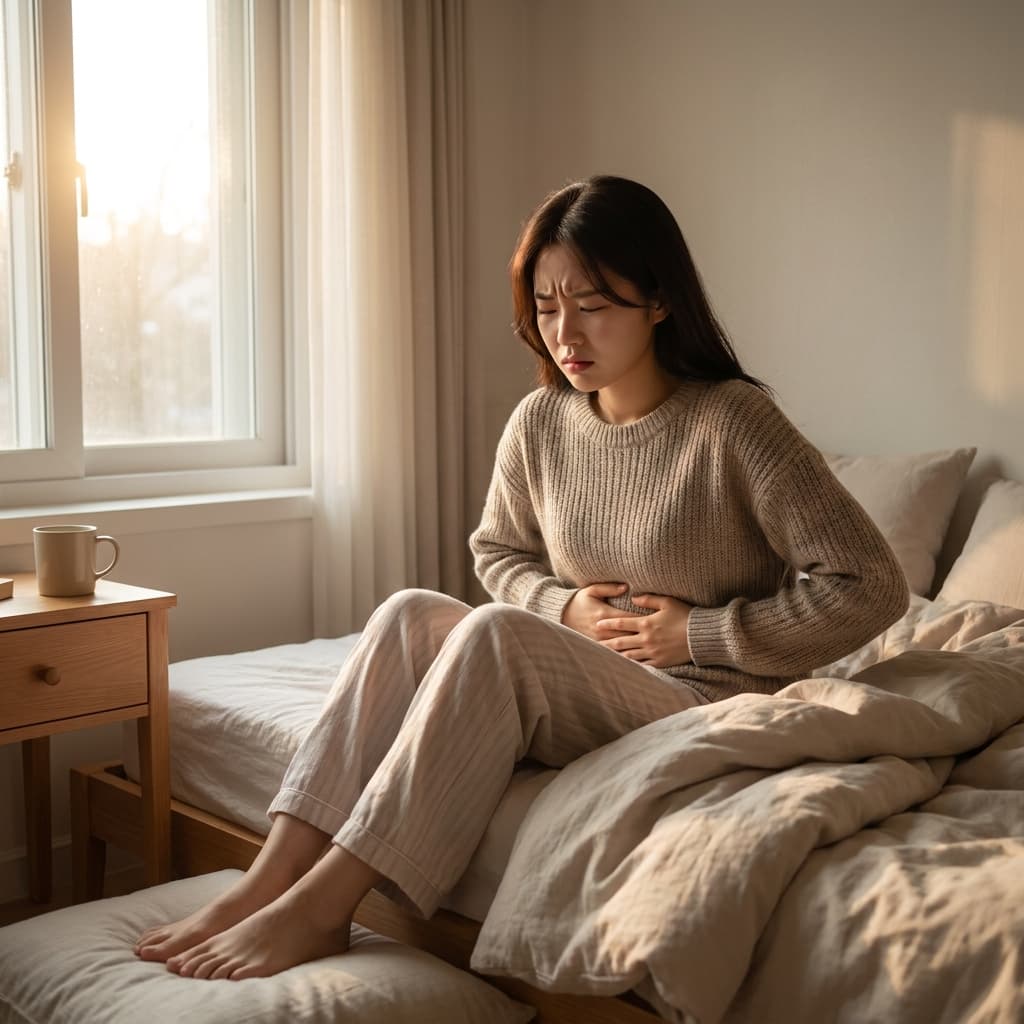
If you suddenly feel a stabbing pain on one side of your lower abdomen, it's natural to feel anxious. At first, you might dismiss it as simple indigestion, but if the pain recurs or worsens around your menstrual cycle, you start to worry if something is wrong with your body. For women of childbearing age, an 'ovarian cyst' can be suspected as the cause of this pain. Ovarian cysts are common female conditions, but if left untreated, they can lead to unexpected situations, making accurate diagnosis and proper treatment crucial.
💡 Key Answer The 3 most common causes of one-sided lower abdominal pain: ① Ovarian Cyst (Functional Cyst): Often occurs due to problems in the ovulation process. ② Torsion or Rupture of an Ovarian Cyst: Causes acute pain when the cyst twists or bursts. ③ Pelvic Inflammatory Disease: Inflammation in the tissues around the uterus and ovaries can cause pain. Dalimchae Korean Medicine Clinic helps the natural disappearance of cysts and prevents recurrence by restoring ovarian function and improving systemic circulation through constitutional improvement.
Lower abdominal pain can be a warning sign from the ovaries, not just a simple discomfort.
Many people visit the Songdo Ovarian Cyst Korean Medicine Clinic complaining of "stabbing pain on one side of the lower abdomen." This pain is one of the common symptoms of a water-filled cyst in the ovary, known as an ovarian cyst. Ovarian cysts are cystic tumors filled with fluid, most of which are benign and are often discovered by chance without specific symptoms. However, as the size of the cyst increases or depending on its location, it can compress surrounding organs, or in severe cases, cause extreme pain as the cyst twists or ruptures. These symptoms occur due to a combination of causes such as ovulation disorders, hormonal imbalances, and blood circulation problems, and in Korean medicine, this is seen as an accumulation of stagnant blood (瘀血) or damp-phlegm (濕痰).
Ovarian cysts, is there another way besides surgery with a high recurrence rate?
While modern medicine may recommend surgical treatment for ovarian cysts, surgery often has a recurrence rate of 25-50%, necessitating a focus on fundamental treatment. Especially for unmarried women planning for pregnancy, there are concerns that ovarian surgery might lead to a decrease in ovarian function. In this situation, the Songdo branch of Dalimchae Korean Medicine Clinic aims to treat the fundamental cause of ovarian cysts through non-surgical Korean medicine treatment without damaging the ovaries.
A research team from Daejeon University Daejeon Korean Medicine Hospital published a case report titled Clinical Study of Korean Medicine Treatment with Boheo-tang-gagambang for Ovarian Cyst: 3 Cases Report in a 2025 or 2026 journal. The study reported the results of applying integrated Korean medicine treatment, including a herbal prescription called Boheo-tang-gagambang and acupuncture, to three patients with ovarian cysts. As a result, follow-up ultrasounds showed that the ovarian cysts had completely disappeared in all patients, and accompanying symptoms such as lower abdominal pain, urinary discomfort, and frequency were also significantly improved. The researchers concluded that this integrated Korean medicine approach could be a safe and potentially effective treatment option for non-neoplastic ovarian cysts.
Furthermore, a case report published in the Journal of Korean Obstetrics and Gynecology in 2022 reported improvement in acute pelvic pain following an ovarian cyst rupture through Korean medicine treatment, including modified Cheongpochuk-eo-tang. Additionally, a 2017 study showed that oral administration of Korean Red Ginseng Extract (KRGE) for 14 days was effective in resolving ovarian cysts and normalizing ovarian weight in a polycystic ovary syndrome (PCOS) rat model. While this was an animal study, it suggests the potential of herbal medicine in improving ovarian function.
Based on this data, Dalimchae Korean Medicine Clinic views ovarian cysts not just as a simple 'lump' but as a result of imbalances in our bodies, focusing on fundamental constitutional improvement. By smoothing blood circulation around the uterus and ovaries and removing stagnant blood and damp-phlegm, we create an environment where cysts can naturally dissipate and not recur.
Ovarian Cyst Self-Checklist: Recognizing Your Body's Signals
If you are experiencing the following symptoms, it's advisable to suspect an ovarian cyst and seek help from a Songdo women's clinic.
- You feel a stabbing or heavy pain on one or both sides of the lower abdomen.
- Menstrual pain suddenly becomes severe or takes on a different pattern than usual.
- The menstrual cycle becomes irregular or there are changes in the amount of menstrual flow.
- You experience frequent urination or discomfort when urinating.
- You feel abdominal bloating or indigestion, and have a lot of gas.
- You feel tired for no particular reason and your body feels heavy.
- There is discomfort or pain during sexual intercourse.
Judgment Criteria:
- 3 or more apply: There is a possibility of an ovarian cyst or other female conditions. It is recommended to check the autonomic balance and overall uterine health and consider integrated Korean medicine treatment.
- 5 or more apply: It is important to visit immediately to establish an accurate diagnosis and treatment plan. If the pain becomes acutely severe, it may be an emergency, so you should visit a medical institution promptly.
Dalimchae's Constitutional Improvement: Not just turning off symptoms, but building a body that doesn't restart them.
Dalimchae Korean Medicine Clinic focuses on constitutional improvement to find the root cause of ovarian cysts. Beyond simply suppressing symptoms or removing the lump, our goal is to help the body regain its health and create an environment where ovarian cysts do not recur.
A woman's uterus and ovaries respond sensitively to stress, irregular lifestyle habits, poor diet, and cold environments. When these factors accumulate, circulation around the ovaries is hindered, and stagnant qi and blood can lead to problems like ovarian cysts. In Korean medicine, this is seen as an accumulation of stagnant blood (瘀血) and damp-phlegm (濕痰). Dalimchae restores ovarian function through herbal prescriptions that remove these elements and improve overall circulation.
Customized herbal medicine tailored to each individual's constitution and symptoms strengthens uterine and ovarian functions, regulates hormonal imbalances, and boosts immunity, enabling the body to absorb and discharge cysts on its own. Additionally, acupuncture, moxibustion, and pharmacopuncture treatment are combined to promote qi and blood circulation in the lower abdomen, alleviate pain, and help manage inflammation around the ovaries. This is a process of reorganizing the body's fundamental functions and cultivating the strength to overcome disease, rather than just turning off a symptom. Such treatment can also have a positive impact on those suffering from severe menstrual pain or infertility.
Q. How long does ovarian cyst treatment take? A. The treatment period for ovarian cysts can vary depending on the size and type of the cyst, the patient's constitution, and the severity of symptoms. Generally, consistent treatment for about 2 to 3 months can lead to positive changes, and it's important to monitor changes in the cyst through regular check-ups.
Q. Can ovarian cysts be treated with Korean medicine? A. Yes, ovarian cysts are conditions that can yield excellent results with Korean medicine treatment. Especially for functional or non-neoplastic cysts, it is effective in helping the cyst dissipate, preventing recurrence, and restoring overall uterine and ovarian health through herbal medicine, acupuncture, and moxibustion.
Q. Can an ovarian cyst heal naturally? A. In the case of functional ovarian cysts, they often dissipate naturally with the ovulation cycle. However, cysts that are large, cause severe pain, or persist without dissipating naturally require active treatment. Korean medicine treatment can contribute to the natural dissipation of cysts by increasing the body's natural healing power.
Q. I have both lower abdominal pain and menstrual pain. Can they be treated together? A. Yes, lower abdominal pain and menstrual pain are often symptoms deeply related to ovarian cysts. Dalimchae's constitutional improvement treatment corrects the internal imbalances that cause ovarian cysts, which also helps alleviate menstrual pain, allowing for integrated improvement of related symptoms.
You no longer have to ignore signals from your body like "stabbing pain on one side of the lower abdomen." It is time to warmly care for the warnings your body has been sending for a long time. If you approach it in the right direction, your body will respond faster than you think and return to a healthy state. Bring your symptoms exactly as they are. At the Songdo branch of Dalimchae Korean Medicine Clinic, we will find the cause together and help you regain your healthy daily life.
Where life blooms. For herbal medicine, it's Dalimchae Korean Medicine Clinic. Check your symptoms first through the AI consultation on the Dalimchae Korean Medicine Clinic website!
This article is health information compiled by the Dalimchae medical team based on questions often received in the consultation room. Medical Supervision | Women and Pregnancy Treatment Standards Dalimchae Korean Medicine Clinic Songdo Branch KMD Oh Hyunmin (Ovarian Cyst Column)