
Hello. This is Dalimchae Korean Medicine Clinic.
Do you take painkillers for menstrual pain every month? Do not delay it.
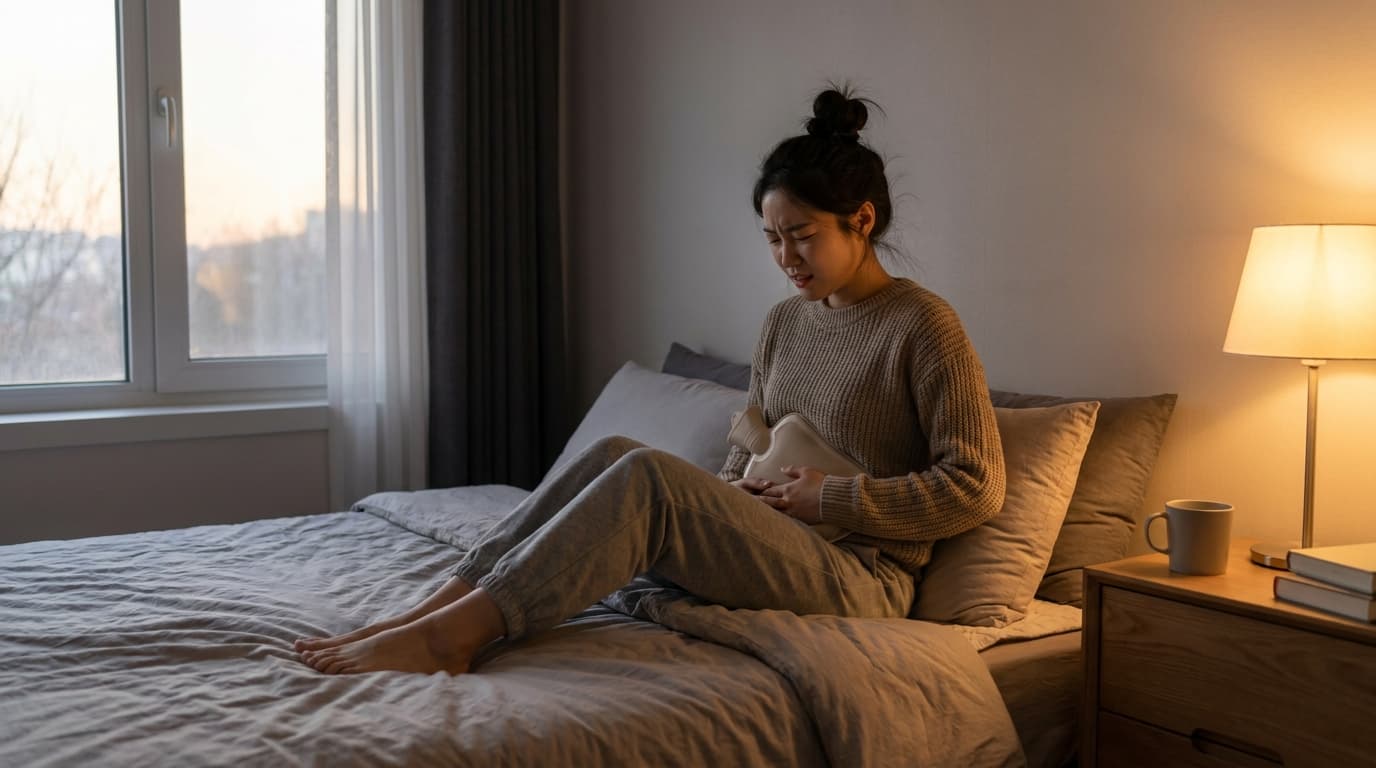
Every month, the arrival of menstrual pain is a familiar discomfort for many women. Have you ever thought, "It's painful this month too, but I'll be fine once I take painkillers," and just ignored the pain? Busy working women, in particular, often overlook menstrual pain as trivial or get through it by relying on painkillers. However, menstrual pain is not just simple pain; it can be an important signal from our body. Especially if the pain is severe enough that you have to take painkillers every month, you need to identify the cause and work toward fundamental improvement.
💡 [Key Answer] The 3 most common causes of "Do you take painkillers for menstrual pain every month?": ① Uterine circulation disorder (blood stasis) / ② Lower abdominal coldness / ③ Stress and Qi-Blood stagnation Dalimchae Korean Medicine Clinic identifies the root of symptoms through constitutional improvement to create a body where healthy circulation occurs again.
Why does it keep hurting even after taking painkillers?
Many women take painkillers for menstrual pain, but they may experience recurring pain every month or an increase in the dosage over time. Painkillers help temporarily relieve pain by inhibiting the synthesis of prostaglandin hormones that cause pain, but they do not solve the root cause of menstrual pain. Rather, there is a Korean medicine perspective that painkillers can interfere with uterine contractions, preventing the discharge of sticky menstrual blood (blood stasis), which can accumulate in the uterus and make the next menstrual pain even more severe.
In Korean medicine, menstrual pain is viewed as 'blood stasis (瘀血)', or murky waste that fails to be properly discharged from the uterus and accumulates, obstructing blood circulation and causing pain. Additionally, Qi-Blood stagnation due to stress, lower abdominal coldness, overwork, or a weak constitution can work together to cause menstrual pain. Menstrual pain is a warning light that turns on when the harmony and balance of our body are broken.
How does Korean medicine help relieve menstrual pain?
Korean medicine treatment for menstrual pain goes beyond simply suppressing pain and focuses on finding the root cause of the pain to normalize uterine and ovarian functions and restore the balance of the entire body. In particular, it approaches it in a direction that resolves blood stasis to facilitate blood circulation, warms the cold lower abdomen, and resolves Qi-Blood stagnation caused by stress.
A study published in the journal 「Frontiers in Medicine」 in 2026 looked at the effectiveness of Traditional Herbal Decoction (THD) treatment in patients with dysmenorrhea. This multicenter, prospective observational study was conducted from July 2022 to June 2023 at 33 Korean medicine clinics and 1 Korean medicine hospital in Korea, involving 119 women with dysmenorrhea (THD group) and 16 (non-THD group) aged 19-65. The results showed that the THD group had a significant decrease in pain intensity (NRS) and a statistically significant decrease in painkiller dosage (p=0.001). The researchers concluded that individualized herbal decoctions could contribute to reducing pain intensity and painkiller dosage in women with dysmenorrhea.
Another study, a large-scale retrospective observational study based on Korean claims data published in 「Elsevier B.V.」 in 2025, evaluated the effectiveness and safety of herbal medicines (HDs) in treating dysmenorrhea during the pilot project of the national health insurance coverage for herbal decoctions in Korea (Nov 2020 - Apr 2024). In this study involving 39,574 participants, herbal medicines showed a significant effect in reducing symptom severity over time (β = -0.072, p < 0.001). The researchers reported that these results show that herbal medicine has clinical effectiveness in managing dysmenorrhea and has improved accessibility.
These research data align with Dalimchae Korean Medicine Clinic's philosophy of pursuing fundamental improvement through customized herbal prescriptions tailored to each patient's constitution and symptoms in treating menstrual pain. We aim for treatment that helps the body regain its own health, rather than simply masking the pain.
Break the cycle of menstrual pain through constitutional improvement
Dalimchae Korean Medicine Clinic applies constitutional improvement treatment principles for the fundamental resolution of menstrual pain. Constitutional improvement aims to create a body where symptoms do not turn back on, rather than just turning them off. We remove blood stasis that hinders blood circulation around the uterus and ovaries and expel cold energy to create a healthy uterine environment. In addition, it balances the autonomic nervous system broken by stress or overwork, strengthening the body's self-healing power.
In particular, at Dalimchae Korean Medicine Clinic Incheon Branch, a dysmenorrhea clinic in Incheon, we carefully diagnose each woman's constitution and health status to prescribe customized herbal medicine and increase treatment effectiveness by combining Korean medicine treatments such as acupuncture, moxibustion, and pharmacopuncture. If you are suffering from chronic menstrual pain along with other women's diseases such as infertility and postpartum wind, fundamental constitutional improvement treatment is even more important.
Do I have these symptoms too? Menstrual pain self-checklist
If 3 or more of the following items apply, the menstrual pain you are currently experiencing may not be simple pain. We recommend that you receive a detailed diagnosis and consultation at Dalimchae Korean Medicine Clinic Incheon Branch.
- Every time I have my period, the pain in my lower back and abdomen is so severe that daily life is difficult.
- Even if I take painkillers, the pain does not subside well, or the effect of the medicine is short.
- Premenstrual syndrome such as breast pain, headache, irritability, and depression is severe before the period.
- There are many clots in the menstrual blood, or the color of the period is unusually dark and murky.
- Hands, feet, or lower abdomen are always cold, and I am very sensitive to cold.
- The menstrual cycle is irregular, or the amount of menstrual blood has changed suddenly.
- I am usually under a lot of stress and easily feel tired.
- I often experience gastrointestinal symptoms such as indigestion, constipation, and diarrhea.
If 3 or more apply → Suspected constitutional imbalance → Review of integrated Korean medicine treatment If 5 or more apply → Immediate visit recommended → Start of in-depth diagnosis and customized treatment
FAQ: Frequently Asked Questions about Menstrual Pain
Q. Does taking painkillers for menstrual pain every month create tolerance? A. Tolerance to the painkillers themselves does not develop, but if the pain does not improve or even worsens despite taking painkillers every month, it is highly likely that the root cause of the menstrual pain, not the medicine, has worsened. Since this is a signal that blood stasis has accumulated in the uterus or constitutional imbalance has deepened, it is important to combine root cause treatment.
Q. Should I receive Korean medicine treatment when the menstrual pain is severe? A. Temporary pain relief is possible with painkillers, but chronic menstrual pain can be a red light for uterine health. Korean medicine treatment can help create a healthy uterine environment and reduce pain recurrence by improving blood stasis, coldness, and Qi-Blood circulation disorders, which are the root causes of pain. In particular, Incheon Dalimchae Korean Medicine Clinic aims for a virtuous cycle of women's health through individualized customized treatment.
Q. How long does Korean medicine treatment take? A. The duration of Korean medicine treatment for menstrual pain may vary depending on the individual's symptom severity, constitution, and the presence of other accompanied diseases. Usually, through steady treatment for 2-3 months or more, we aim for long-term changes in pain relief and health recovery by improving the uterine environment and stabilizing the constitution. It is best to consult with Incheon Dalimchae Korean Medicine Clinic through medical examination for the exact treatment period.
Q. Is it possible to treat both menstrual pain and infertility? A. Yes, both menstrual pain and infertility are closely related to the function of the uterus and ovaries and the overall health of the body. In Korean medicine, the cause of menstrual pain and the cause of infertility are often seen as the same constitutional imbalance, blood stasis, and lower abdominal coldness. Dalimchae Korean Medicine Clinic's constitutional improvement treatment can help improve the uterine environment and increase the chances of pregnancy, so they can be treated together.
Menstrual pain is not a problem that can be solved by enduring. You no longer have to ignore the signals your body has been sending for a long time. If you approach it in the right direction, your body will react faster than you think. Bring your symptoms as they are. Dalimchae Korean Medicine Clinic will find the cause together.
Where life blooms. For herbal medicine, it's Dalimchae Korean Medicine Clinic. Check your symptoms similar to mine through the AI consultation on the Dalimchae Korean Medicine Clinic website first!
This article is health information compiled by Dalimchae medical staff based on questions frequently received in the treatment room. Medical Supervision | Incheon Branch Korean Medicine Doctor Yang Yuchan (Menstrual Pain Column) based on Women/Pregnancy treatment standards. #Dysmenorrhea #PMS #BloodStasis #UterineHealth #IncheonDysmenorrheaClinic #IncheonKoreanMedicineClinic #ConstitutionalImprovement #MenstrualPainRelief