
Hello. This is Dalimchae Korean Medicine Clinic.
Can I Take Western Sleep Medicine and Korean Medicine Together? Smart Ways to Break the Insomnia Cycle and Restore Sleep
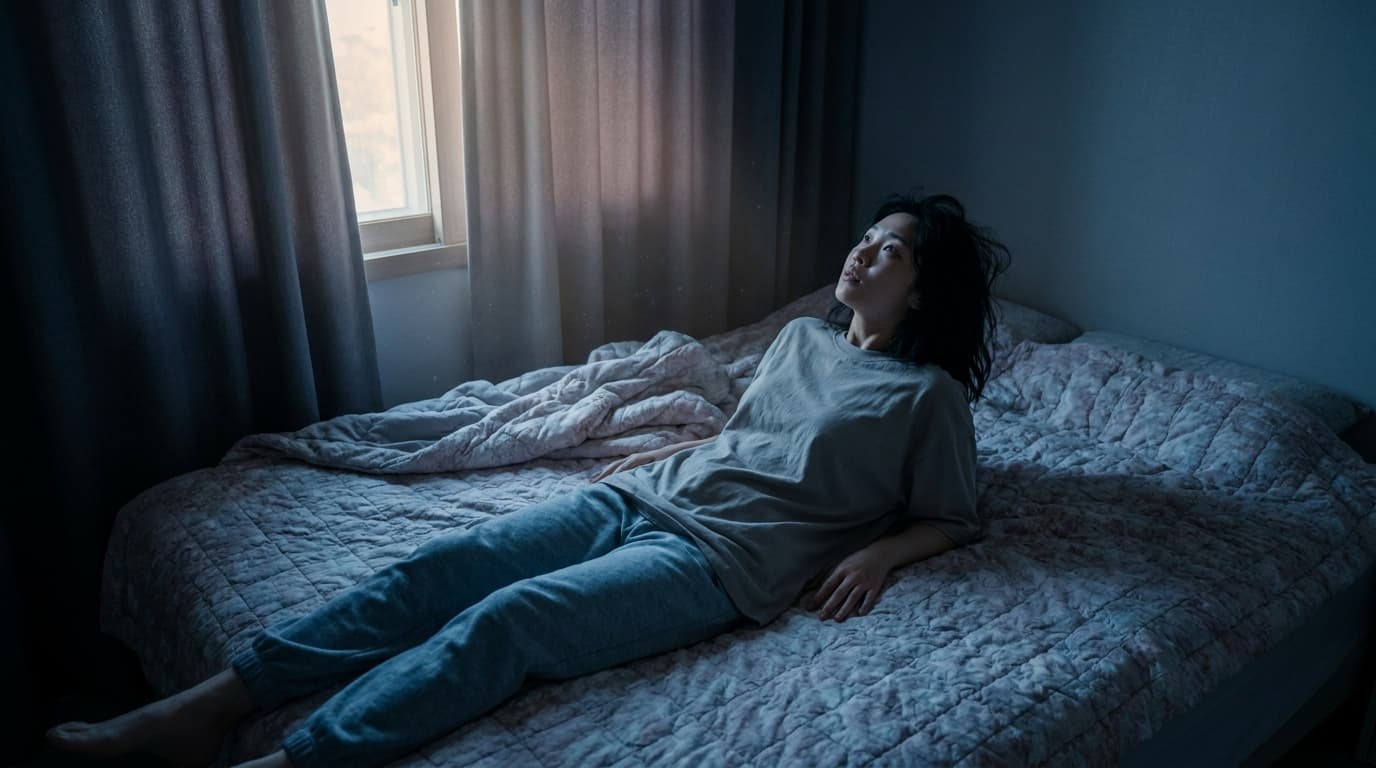
Are you suffering from the pain of not being able to sleep every night and worrying, "Can I take Western sleep medicine and Korean medicine together?" Insomnia, where your mind is full of thoughts when you lie in bed, you barely fall asleep after tossing and turning until dawn, and you wake up with an unrefreshed morning, ruins your daily life and is accompanied by chronic fatigue and lethargy. Furthermore, worries about dependence on sleep medicine and its side effects become another stress, deepening the vicious cycle of sleeplessness. But don't be too frustrated. Insomnia can be sufficiently improved, and you can regain natural sleep through wise treatment.
💡 [Key Answer] Can I take Western sleep medicine and Korean medicine together? 3 most common causes: ① Autonomic nervous system imbalance / ② Brain fatigue and overactivity / ③ Stress and anxiety Dalimchae Clinic creates an environment where the brain can fall asleep on its own through autonomic stabilization treatment.
Why does insomnia, which is hard to fall asleep without sleep medicine, continue?
Insomnia is a signal representing a complex imbalance in our body beyond simply 'the symptom of being unable to sleep'. In particular, insomnia in modern people is often caused by the collapse of the autonomic nervous system balance due to excessive stress and wrong lifestyle habits. The autonomic nervous system regulates all unconscious functions of our body, and sleep is also greatly affected by the autonomic nervous system. When the sympathetic nervous system is excessively hyperactivated, the body remains in a state of tension and brain activity is not suppressed, making it difficult to fall asleep or causing frequent waking without deep sleep. Since this 'overactive brain' state is difficult to fundamentally solve even with sleep medicine, you may fall into a vicious cycle where the effect of sleep medicine gradually decreases and you have to increase the dose.
Western sleep medicine and Korean medicine combination, is it really okay?
One of the things those taking Western sleep medicine for insomnia are most curious about when considering Korean medicine treatment is 'Is it safe to take Western medicine and Korean medicine together?' To start with the conclusion, in most cases, combination is possible and can rather help increase treatment effect and reduce dependence on sleep medicine.
According to a large-scale cohort study by a Taiwanese research team to be published in the journal 「Alzheimer's & Dementia」 in 2025, the combination of traditional Korean medicine (TCM) and Western medicine for insomnia patients was found to most significantly reduce the risk of dementia. As a result of tracking and observing 941,267 insomnia patients aged 45 or older from 2002 to 2006, the dementia occurrence risk was found to be significantly lower in the patient group that combined Western medicine and Korean medicine (Adjusted HR: 0.41, 95% CI: 0.38-0.42) compared to the Korean medicine only treatment group (Adjusted HR: 0.70) and the Western medicine only treatment group (Adjusted HR: 0.63). In particular, the patient group that combined benzodiazepine sleep medicine and Korean medicine showed the lowest dementia risk (HR: 0.44). This study suggests that using Korean medicine and Western medicine together can reduce the potential risk of cognitive decline and provide benefits for long-term health. Based on these research results, Dalimchae Clinic establishes the safest and most effective combination treatment plan by closely considering the patient's current state and the Western medicine they are taking.
Also, a systematic literature review and meta-analysis published in 「Frontiers in Pharmacology」 in August 2024 reported that East Asian Korean Medicine (EAHM) is effective in improving sleep quality for menopausal insomnia, and showed significant sleep quality improvement (average PSQI score -2.46 points) even when combined with sedative-hypnotics. This study, which analyzed 70 randomized controlled trials (RCTs) including a total of 6,035 participants, emphasized safety by revealing that Korean medicine treatment has a significantly lower incidence of side effects than sedative-hypnotic monotherapy (RR 0.15, 95% CI 0.07-0.34). These data show that effective insomnia management is possible while reducing the potential side effect burden of Western medicine. Dalimchae Clinic, an Incheon insomnia Korean medicine clinic, helps patients regain safe and healthy sleep by applying herbal medicine treatment tailored to individual symptoms and situations based on these Korean medicine studies.
How does herbal medicine solve the fundamental cause of insomnia?
Dalimchae Clinic finds the fundamental cause of insomnia in the imbalance of the autonomic nervous system and focuses on treatment to stabilize it. This is because if the autonomic nervous system balance is broken, the brain cannot rest and is excessively excited, interfering with sleep. We focus on lowering the heat of the nervous system and creating an environment where the brain can rest comfortably on its own — this is called 'Su-seung-hwa-gang' (Cool energy rising, warm energy descending) in Korean medicine.
Autonomic stabilization treatment is performed in the following ways:
- Herbal Medicine Treatment: We prescribe customized herbal medicine suited to individual constitution and symptoms to stabilize the hyperactivated sympathetic nervous system and help the activation of the parasympathetic nervous system, relaxing the tension of body and mind. In particular, herbal medicines effective for insomnia, such as Cheonwangbosim-dan and Gamiguibi-tang, are known to contribute to autonomic nervous system regulation and brain stabilization. According to content published in 「The Pharmaceutical Journal」 in 2026, Cheonwangbosim-dan is effective in alleviating insomnia and anxiety, and was as effective as cognitive behavioral therapy in improving insomnia in cancer patients and showed a better effect in alleviating anxiety. Also, a study published in 「Phytomedicine Plus」 in 2024 reported that Cheonwangbosim-dan (CWBSD) improved sleep quality objectively and subjectively in insomnia patients, with ISI scores decreasing by an average of 6.47~8.33 points after 6 weeks of treatment (p < 0.001).
- Acupuncture and Pharmacopuncture Therapy: By performing acupuncture treatment on specific acupuncture points, we regulate the balance of the autonomic nervous system, alleviate brain tension, and stabilize the mind. In particular, the treatment effect can be maximized by injecting pharmacopuncture into acupuncture points related to the autonomic nervous system. According to a study by the Korea Institute of Oriental Medicine published in 「Nature and Science of Sleep」 in 2021, performing electroacupuncture treatment on insomnia patients resulted in an 8.2%p improvement in sleep efficiency, which was about 1.9 times higher than the sham electroacupuncture group (4.3%p). Also, anxiety and depression scales were improved, and the effect was confirmed to persist until two months after the end of treatment.
- Lifestyle Management and Counseling: We prevent recurrence of insomnia and foster the power to control sleep on one's own by combining education for forming correct sleep habits and stress management counseling.
In this way, Dalimchae Clinic, an Incheon autonomic nervous system Korean medicine clinic, solves the hidden cause of insomnia, the autonomic imbalance, and provides systematic Korean medicine treatment so that the brain can regain a healthy sleep rhythm on its own. Insomnia sometimes accompanies other symptoms such as headaches, dizziness, and indigestion, and treatment that stabilizes the autonomic nervous system also has a positive effect on improving these related symptoms.
Insomnia Self-Checklist
Are you experiencing symptoms like these?
- It takes more than 30 minutes to fall asleep at night.
- It's hard to fall back asleep after waking up at night.
- Waking up too early and unable to fall back asleep.
- Unable to sleep more than 3 days a week.
- Tiredness during the day and not feeling refreshed even after sleeping.
- Concentration drops during the day and work efficiency decreases.
- Feeling annoyed at trivial things and feeling anxious.
- Anxious about whether you can fall asleep without taking sleep medicine.
If 3 or more apply: Insomnia due to autonomic imbalance is suspected. Consider Korean medicine complex treatment. If 5 or more apply: There is a high possibility that insomnia has deepened. Immediate visit is recommended.
FAQ: Questions about Insomnia and Korean Medicine Treatment
Q. Is it safe to take Western sleep medicine and Korean medicine together? A. In most cases, they can be safely combined. However, caution may be needed depending on the type of Western medicine being taken and the patient's health state, so the decision to take them must be made after consulting with medical staff. At Dalimchae Clinic, we will provide a customized prescription considering the fact that you are taking Western medicine if you inform us.
Q. How long does insomnia treatment take with Korean medicine? A. The treatment period can vary depending on the cause, severity, and individual constitution of insomnia. Generally, significant improvement can be expected through 2-3 months of treatment, and management to prevent recurrence thereafter is important. The process of reducing sleep medicine taken for a long time should be carried out gradually with a margin of 3 months or more.
Q. Can I fall asleep with safe Korean medicine instead of sleep medicine tolerance? A. Unlike sleep medicine, herbal medicine focuses on improving the fundamental cause of insomnia without dependence or tolerance. Since it helps the brain induce natural sleep on its own by restoring autonomic balance, it allows you to have a healthy night's sleep even without sleep medicine in the long run.
Q. Are other symptoms treated together besides insomnia? A. Yes, insomnia is often accompanied by various symptoms such as stress, anxiety, headaches, indigestion, and dizziness. Dalimchae Clinic's autonomic stabilization treatment also positively affects the improvement of these accompanying symptoms, helping to recover overall physical and mental health.
Insomnia is not a problem that can be solved by enduring. You no longer have to ignore the signals your body has been sending for a long time. If you approach in the right direction, the body responds faster than you think. Bring your symptoms exactly as they are. At Dalimchae Clinic Incheon Branch, we will find the cause together and help you regain comfortable nights and energetic days.
Where life blooms. For herbal medicine, it's Dalimchae Korean Medicine Clinic. Check your symptoms similar to mine through the AI consultation on the Dalimchae Clinic website first!
Medical Supervision | Brain/Autonomic Treatment Standards, Dalimchae Clinic Incheon Branch, Korean Medicine Doctor Min Jihong (Insomnia Column)