
Hello. This is Dalimchae Korean Medicine Clinic.
Amenorrhea After Dieting, Is It Okay to Just Wait? Causes and Solutions
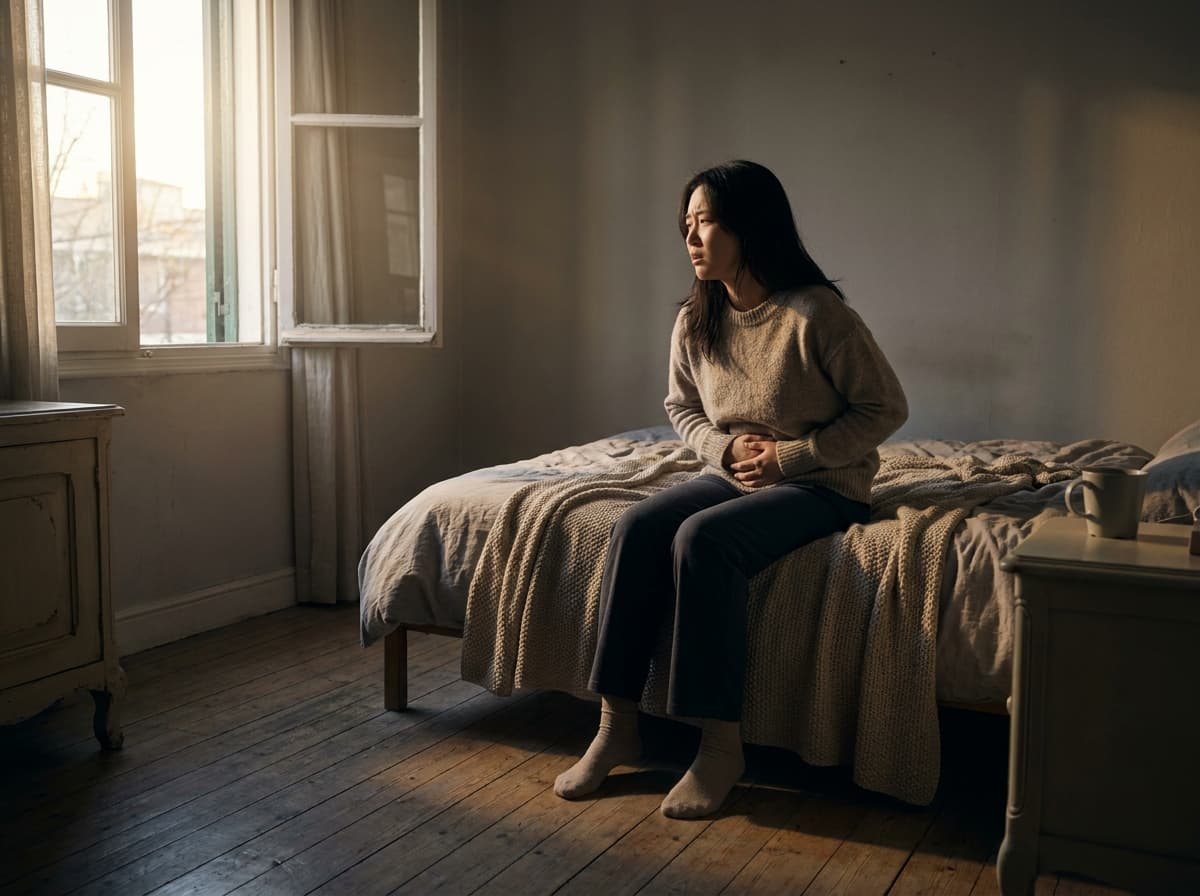
Have you successfully lost weight through hard work, but found that your period has stopped at some point? Many people might think, 'What's the big deal if I don't have a period?' or assume they can just get a period-inducing injection again. However, if this symptom of no period after dieting persists, it could be a serious health warning sign from your body. Especially, rapid weight changes can disrupt hormonal balance, leading to a high possibility of amenorrhea.
💡 [Key Answer] The 3 most common causes of no period after dieting: ① Hypothalamic Amenorrhea: Disruption of the brain's hormone secretion system due to excessive weight loss or stress. ② Hormonal Imbalance: Decreased female hormone production due to lack of essential nutrients and body fat. ③ Autonomic Nervous System Disruption: Collapse of physical rhythm due to the stress of dieting breaking the autonomic balance. Dalimchae Korean Medicine Clinic helps the body regain its balance through constitutional improvement so that it can recover a healthy menstrual cycle on its own.
No Period After Dieting, Is It Just Simple Fatigue?
Excessive dieting goes beyond simple fatigue and directly affects the menstrual cycle, one of the most delicate systems in our body. In particular, rapid weight loss, extreme exercise, or restrictive diets can disrupt the hypothalamus in the brain and stop menstruation. This is called 'hypothalamic amenorrhea,' which occurs when the secretion of gonadotropin-releasing hormone (GnRH) from the hypothalamus decreases, leading to a reduction in follicle-stimulating hormone (FSH) and luteinizing hormone (LH) secretion, thus failing to stimulate the ovaries. When menstruation stops, it affects the health of the uterus and ovaries, as well as overall health, and can be a direct cause of decreased bone density, increased risk of cardiovascular disease, and infertility.
Amenorrhea, How Can Herbal Treatment Help Regain the Body's Rhythm?
In Korean medicine, amenorrhea is viewed not simply as the absence of menstruation, but as a result of an imbalance in the circulation of qi and blood throughout the body and a decrease in organ function. Especially during the dieting process, the body's essence and blood are consumed, and the balance of the autonomic nervous system is often broken due to stress, leading to abnormalities in the female hormone secretion system. Dalimchae Korean Medicine Clinic finds these fundamental causes and helps the body recover its menstrual function on its own through customized herbal treatment.
According to a prospective cohort study by Lee et al. in 2019, as a result of applying herbal medicine treatment for 6 months to 45 women suffering from hypothalamic amenorrhea (HA), 70% of participants experienced recovery of menstruation, and an increase in estradiol levels and improvement in body mass index (BMI) were observed. The researchers explained that certain herbal medicines may have contributed to recovering the function of the hypothalamus-pituitary-ovary axis by acting as phytoestrogens, regulating endocrine receptors, or affecting energy metabolism.
In addition, a systematic review and meta-analysis by Lim et al. in 2017 confirmed through 10 randomized controlled trials (total of 867 participants) that acupuncture treatment could significantly improve the frequency of the menstrual cycle and ovulation rate in patients with various types of amenorrhea, including hypothalamic amenorrhea. Acupuncture treatment is known to have a positive effect on the production of steroids in the ovaries through regulation of the sympathetic nervous system, lowering of cortisol levels through reduction of hypothalamus-pituitary-adrenal axis (HPA axis) activity, and improvement of blood flow to the ovaries.
These research results suggest that herbal treatment can be an effective alternative for amenorrhea caused by hormonal imbalance and autonomic nervous system disruption. In particular, a study published in the Journal of Korean Obstetrics and Gynecology in 2016 showed an improvement rate of 85.7% as a result of conducting herbal treatment for patients with amenorrhea for more than 6 months due to polycystic ovary syndrome. This shows that even if the cause of amenorrhea is somewhat different, herbal treatment can make a high contribution to the recovery of menstrual function. Dalimchae Korean Medicine Clinic, a clinic for amenorrhea in Incheon, provides treatment suitable for each individual's constitution and symptoms based on these grounds.
Dalimchae Korean Medicine Clinic's Constitutional Improvement Treatment: We Create a Body That Doesn't Turn Back On, Rather Than Just Turning Off Symptoms.
Dalimchae Korean Medicine Clinic does not simply induce temporary bleeding with hormone prescriptions for symptoms of stopped menstruation after dieting, but focuses on constitutional improvement so that the body can regain a healthy menstrual cycle on its own. Our body's endocrine system is like a sophisticated clock that is interconnected, and if energy depletion and stress accumulate during the dieting process, it is like the mainspring of this clock stopping.
Dalimchae Korean Medicine Clinic's constitutional improvement treatment proceeds with the following principles. We supplement energy so that our body perceives that it is not in a 'dangerous situation' and reactivates reproductive functions, stabilize the autonomic nerves overheated by stress, and improve overall circulation so that nutrient supply to the uterus and ovaries becomes smooth. Through this, we aim not just to turn off symptoms of irregular menstruation or amenorrhea, but to fundamentally recover the body's function and create a healthy body state where symptoms are not turned on again. This process can restore menstrual function, an important indicator of female health, and further have a positive impact on preparing for infertility for healthy pregnancy and childbirth. At Dalimchae Korean Medicine Clinic in Incheon, we establish a customized treatment plan for each individual by closely identifying lifestyle habits, diet, and stress level.
Could I Also Have Amenorrhea After Dieting? Self-Checklist
If 3 or more of the following items apply, you should suspect amenorrhea after dieting and need consultation with an expert.
- ( ) I haven't had a period for the past 3 months or more.
- ( ) My weight has decreased more rapidly than usual, or a underweight state is persisting.
- ( ) My food intake has decreased significantly, or I am maintaining a diet that extremely restricts certain nutrients.
- ( ) I am doing excessive intensity exercise every day without rest.
- ( ) Stress, anxiety, and depression have worsened after weight loss.
- ( ) In addition to no period, symptoms such as fatigue, dizziness, hair loss, and dry skin appear.
- ( ) My hands and feet are cold and I cannot sleep well, so my overall condition has decreased.
Judgment Criteria:
- 3 or more items apply: Hypothalamic amenorrhea suspected → Consider Dalimchae Korean Medicine Clinic's combined herbal treatment.
- 5 or more items apply: Immediate treatment and lifestyle improvement are needed. Receive detailed consultation at Dalimchae Korean Medicine Clinic Incheon Branch.
FAQ
Q. Why does amenorrhea occur after dieting? A. Rapid weight loss or excessive exercise stresses the hypothalamus in the brain and disrupts the signals involved in female hormone secretion. This reduces ovarian function and becomes a major cause of stopped menstruation.
Q. What happens if I keep leaving amenorrhea unattended? A. If amenorrhea becomes long-term, bone density decreases due to female hormone (estrogen) deficiency, increasing the risk of osteoporosis and the possibility of cardiovascular disease. Also, it can lead to infertility where natural pregnancy becomes difficult because ovulation does not occur, so treatment is absolutely necessary.
Q. Will taking birth control pills or getting period-inducing injections fundamentally treat amenorrhea? A. Birth control pills or period-inducing injections only induce bleeding by artificially supplying hormones, and are not a fundamental treatment that recovers the body's own function of regulating hormones. Rather, long-term use may weaken ovarian function, so it is important to find the cause of amenorrhea and recover the body's function.
Q. How long should I be treated to get my period back after amenorrhea from dieting? A. It depends on individual constitution, duration of amenorrhea, and the degree of lifestyle improvement, but usually, the menstrual cycle is recovered in many cases through steady herbal treatment and lifestyle management for about 3 to 6 months. It takes sufficient time for the body to recover its function.
A stopped period after dieting is a strong warning sound your body is sending you. You no longer have to ignore the signals your body has been sending for a long time. If you approach it in the right direction, your body reacts faster than you think. Bring the symptoms you are experiencing as they are. Dalimchae Korean Medicine Clinic will find the cause together.
Where life blooms. Herbal medicine is, as expected, Dalimchae Korean Medicine Clinic. Check symptoms similar to mine through the AI consultation on the Dalimchae Korean Medicine Clinic website first!
This article is health information compiled by the Dalimchae medical team based on questions frequently received in the consultation room. Medical Supervision | Female/Pregnancy Treatment Standard Dalimchae Korean Medicine Clinic Incheon Branch Oriental Doctor Min Ji-hong (Irregular Menstruation Column)
#Amenorrhea #IrregularMenstruation #DietAmenorrhea #ConstitutionalImprovement #IncheonAmenorrheaClinic #IncheonClinic #HormonalImbalance #HerbalTreatment